
Beyond the Price Tag: When a Surgical Robot Earns its Place in a Hospital
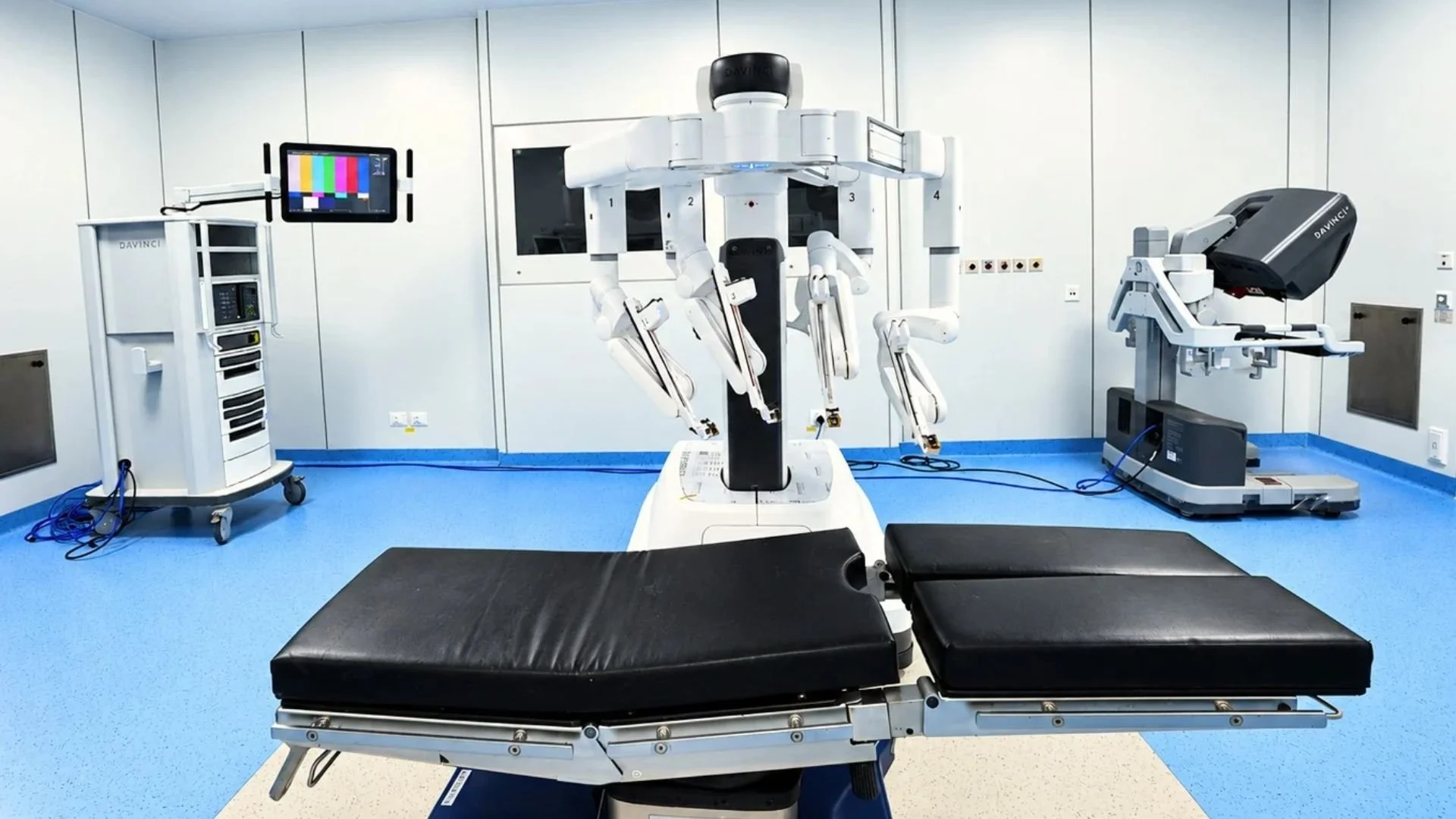
Appropriate cases, trained teams and demonstrable outcomes, not acquisition cost or procedure volume, decide whether a robotic programme succeeds, say healthcare leaders.
A surgical robot earns its place through appropriate cases, trained teams and demonstrable outcomes that justify its full cost. Acquisition and procedure volume alone cannot establish success, say healthcare leaders.
A whole clinical ecosystem
Imagine buying an expensive coffee machine that requires its own pods. What many don’t realise is how overwhelmingly costly those proprietary pods are. A hospital acquiring an expensive surgical robotic programme faces a similar scenario. Buying a surgical robot is not just buying new equipment, but a whole new clinical ecosystem.
Why hospitals buy, and what they choose
Recently, Lilavati Hospital acquired a da Vinci robotic system. “We should evaluate this as a surgical programme, not simply an equipment purchase. To strengthen our advanced surgical capabilities and enhance clinical precision, we made a strategic investment in the da Vinci Xi,” notes Dr Ravindra Karanjekar, chief executive officer, Lilavati Hospital and Research Centre, Mumbai.
“The da Vinci Xi was selected for its potential to strengthen our differentiated surgical offering, attract complex cases, enhance surgeon engagement and improve institutional competitiveness. It won on three counts: surgeon demand already present in urology, gynaecology and oncology, and its fit with our tertiary-care positioning. The investment was considered against competing capital priorities, including critical-care capacity, diagnostic and surgical equipment, bed expansion and other clinical service lines,” explains the CEO.
Platform choices can differ from one hospital to the next. At NU Hospitals, Bengaluru, the decision went to another system. “We evaluated alternative options among other robotic platforms. However, the decision to choose the AMS EDGE was settled by clear data points: its distinct multi-port architecture, built-in AI-enhanced 3D visualisation and integrated telesurgery capabilities that facilitate cross-campus collaboration across our branches,” states Dr Prasanna Venkatesh M K, senior consultant paediatric urologist and managing director of the hospital.
The purchase price starts the cost conversation
“Beyond the capital purchase price, which globally ranges from $0.8M to $2.5M for advanced platforms, our total cost of ownership (TCO) incorporates annual maintenance contracts (typically 8–10% of capital cost), specialised per-case consumables (₹60,000 to ₹1,00,000 per procedure, depending on complexity), continuous simulation training and structured downtime mitigation,” explains Dr Venkatesh.
Dr Karanjekar agrees. “The break-even point and payback period will depend on case volumes, procedure mix, contribution margins and utilisation levels. Contribution shall be calculated after variable costs and against the conventional-surgery alternative.”
Dr Jaydeep Palep, senior consultant, gastrointestinal (GI), bariatric and general surgeon at Lilavati Hospital and Research Centre, points out that acquisition, maintenance and consumable costs are substantial, but total episode-of-care costs matter. “Local data should test whether fewer complications, less resource use or earlier discharge offset the added expense,” explains the surgeon.
Who pays the difference
From the hospital’s cost to the patient’s bill.
Robotic procedures are priced at a premium of ₹80,000 to ₹1,50,000 over conventional laparoscopy, driven strictly by the cost of the articulated instruments. Corporate insurers and third-party administrators (TPAs) increasingly recognise and cover robotic urology interventions up to approved standard caps, while government schemes often lag or require partial co-payments. “Consequently, patients currently self-fund approximately 30% to 40% of the incremental technology cost, which they balance against the economic value of a shorter hospital stay (1–3 days) and a faster return to work,” observes Dr Venkatesh.
Insurance cover and reimbursement depend on policy terms, approvals by the insurance company and TPA, package rates and applicable government scheme guidelines. “Any additional out-of-pocket expense depends on the patient’s coverage and allowable amount. We offer transparent pricing, pre-authorisation and financial counselling to enable informed choices for patients,” affirms Dr Karanjekar.
“Patients are told that robotic surgery is an approach to minimally invasive surgery, but not a guarantee of fewer complications, faster recovery or better long-term outcomes. The pros and cons, alternatives and additional costs must always be explained,” adds Dr Palep.
Which cases earn it
The robot pays off only on the right operations.
“Robotics is most compelling when three-dimensional vision, wristed instruments and precise suturing offer meaningful technical advantages, including selected pelvic, colorectal, foregut, revisional bariatric and abdominal-wall procedures. Evidence of improved long-term outcomes or cost-effectiveness remains procedure-specific,” maintains Dr Palep.
“We discovered that complex, reconstructive and oncological cases must make up at least 60% of the programme’s volume. While routine surgeries provide baseline consistency, specialised procedures such as retroperitoneal partial nephrectomies and paediatric pyeloplasties maximise the robot’s utility, justifying the programme’s resource allocation through significantly reduced conversion rates to open surgery,” shares Dr Venkatesh.
He continues: “We advise against using it for simple, superficial urological conditions, or for cases with extensive dense adhesions where tactile feedback is critical.”
The team behind the console
A robot idles without credentialed surgeons and a trained theatre team.
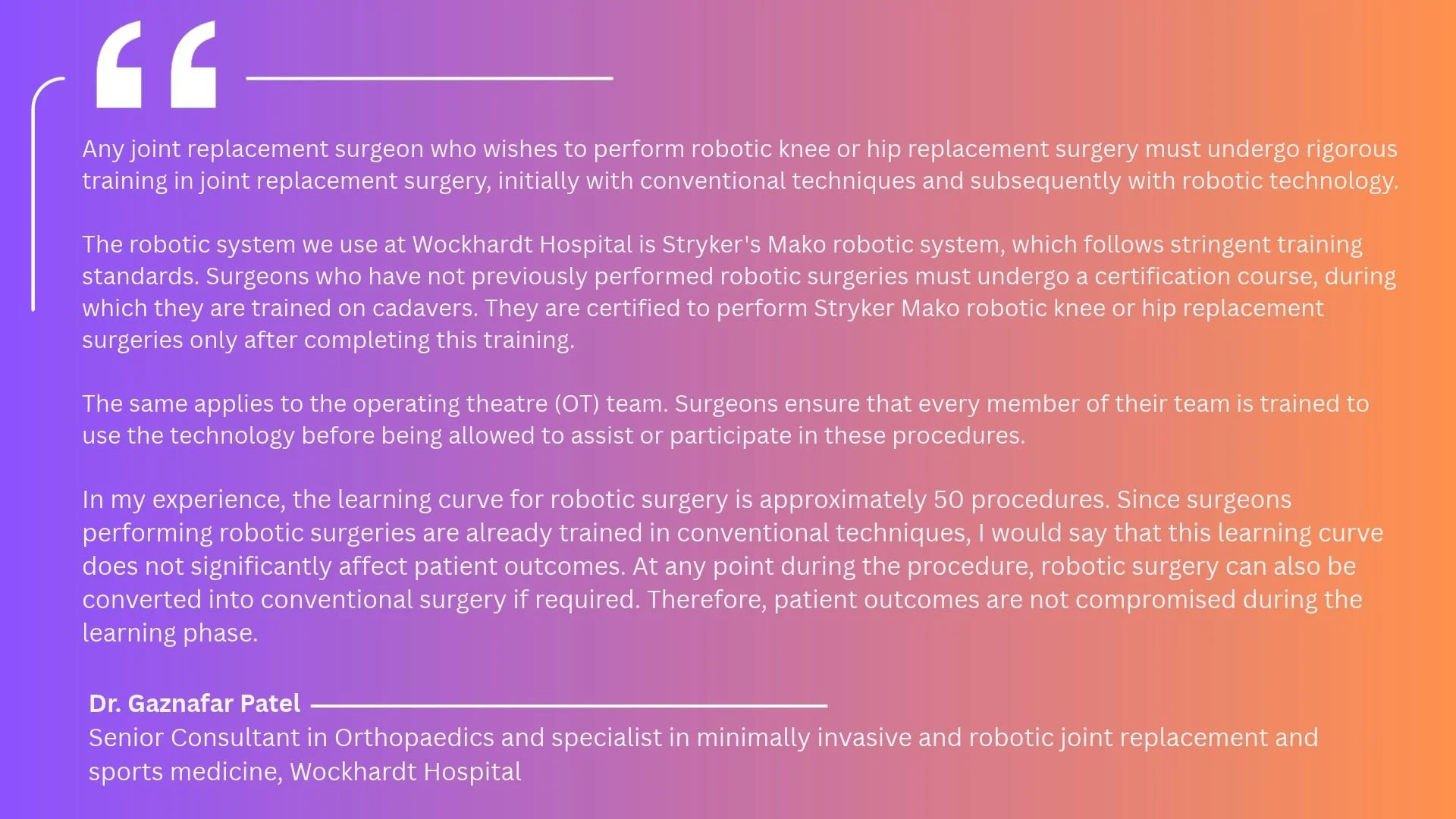
“Before operating independently, surgeons must complete a mandatory multi-tiered credentialing pathway: 30 hours of console simulation, dry-lab training, hands-on clinical observation and a minimum of 10 proctored cases under an experienced mentor,” adds Dr Venkatesh.
“Nurses, bedside assistants, anaesthetists and technical staff also need training in docking, troubleshooting, emergency undocking and system failure,” points out Dr Palep.
Define the review point before approving the investment
The measures, and the point at which a hospital would admit it is not working.
“We would measure success through a balanced scorecard, not procedure volume alone,” emphasises Dr Karanjekar. “Financially, we shall track contribution per case, cash generation, maintenance expenditure and capital recovery. Operationally, we shall monitor utilisation, specialty mix, docking time, OT turnaround, cancellations and downtime. Clinically, we should compare risk-adjusted complications, conversions, length of stay and 30-day readmissions with conventional surgery,” he elaborates.
“Clinical quality: intraoperative blood loss (targeting a decrease of more than 40% compared with open surgery), 30-day unplanned readmissions (below 1.5%) and margin-negative tumour resections,” highlights Dr Venkatesh. “Financial health: asset utilisation efficiency (more than 80% block allocation) and contribution margins per operating-theatre hour,” he adds.
“My proposed governance would include quarterly reviews and a formal reassessment after 18–24 months. Persistent underutilisation, unfavourable financial performance or a lack of demonstrable clinical value would trigger a structured corrective-action plan,” stresses Dr Karanjekar.
Availability doesn’t establish value
Dr Palep cautions, “These benefits are not universal; laparoscopy delivers excellent results for routine operations, and technical advantages do not automatically mean better cancer control or long-term function.” He concludes: “Robotics is valuable when clinical outcomes justify its cost, not simply because the technology is available.”
Got a story that Healthcare Executive should dig into? Shoot it over to arunima.rajan@hosmac.com—no PR fluff, just solid leads.