
Doctors at Nanavati Max Hospital, perform India’s first Robotic Strassmann Metroplasty to correct Rare Uterine Condition
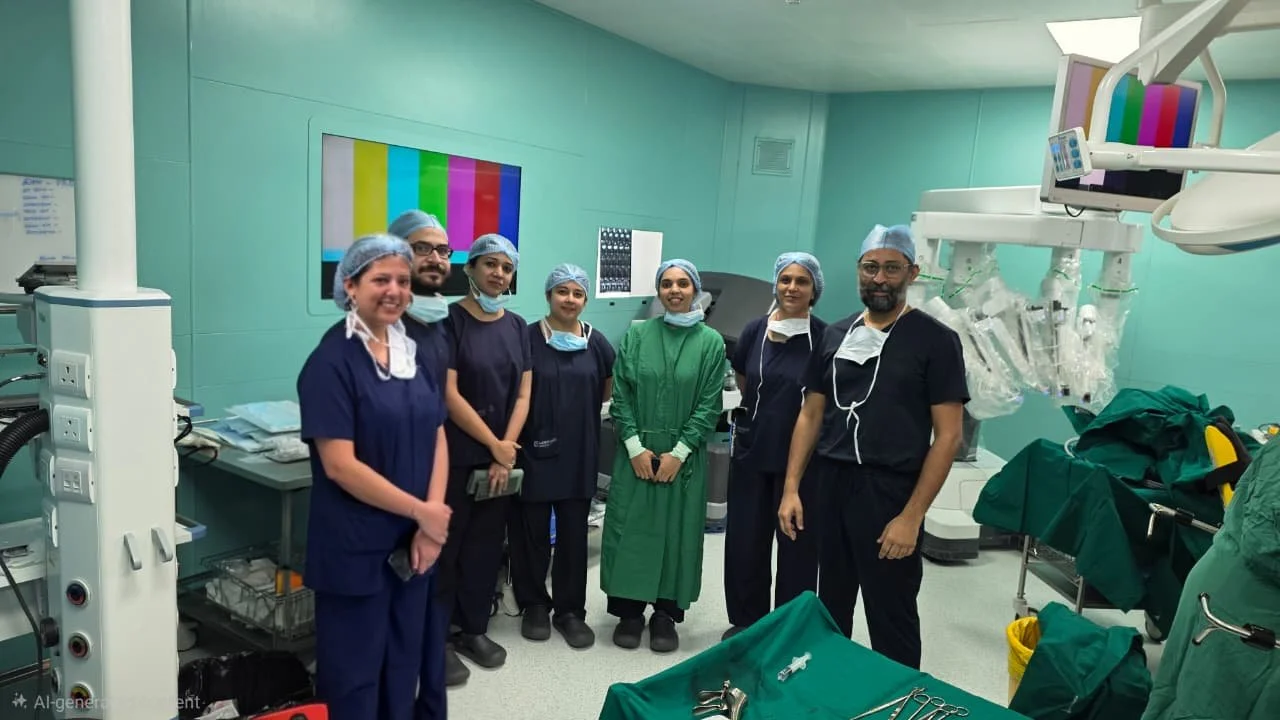
In a significant medical milestone, doctors at Nanavati Max Super Speciality Hospital, have performed India’s first robotic Strassmann Metroplasty in a young woman, correcting a rare congenital uterine condition that can severely impact fertility and pregnancy outcomes. The successful procedure has significantly improved her chances of carrying a pregnancy safely in the future.
A 23-year-old who had been struggling with severe menstrual pain, irregular cycles, and three recurrent pregnancy losses in the 2nd trimester came to Dr. Uddhavraj Dudhedia, Director and Head (Chief), Advanced Robotic Gynaecology and Centre for Advanced Endometriosis, seeking specialised care. Investigations revealed that she had a bicornuate uterus: a condition present from birth in which the uterus develops in two separate chambers instead of forming one single cavity. In her case, there was also a duplication of the cervix, making the condition more complex. Such congenital uterine anomalies are uncommon but are known to increase the risk of infertility, miscarriage, and preterm delivery.
To address this condition, doctors recommended a robotic Strassmann Metroplasty, which is a reconstructive surgery that joins the two separate halves of a divided uterus to create one single cavity capable of supporting pregnancy. The robotic approach was chosen for the high level of precision required to reconstruct the delicate uterine muscle.
The surgery was led by Dr. Uddhavraj Dudhedia, along with his team- Dr. Anukriti Singh and Dr. Nimrah Shaikh. Using advanced robotic-assisted technology, surgeons operated through small incisions with magnified three-dimensional visualisation. During the procedure, the two separate chambers of the uterus were carefully connected, the tissue dividing them was removed, and a single unified uterine cavity was reconstructed. The uterine wall was then rebuilt in layers to restore its natural shape and strength, which a critical factor in supporting future pregnancies. The surgery was completed successfully, and the patient had a smooth and stable recovery during her hospital stay.
Commenting on the case, Dr. Dudhedia said, “This surgery represents more than a technological milestone — it represents hope for women who have been told that carrying a pregnancy safely may not be possible. Correcting the structure of the uterus can dramatically improve pregnancy outcomes in selected cases. With robotic precision, we are able to perform complex reconstruction more safely and effectively than ever before. Advanced medical care should be accessible to every woman who needs it, especially when it can redefine her reproductive future.”
This case highlights how advancements in robotic technology are expanding the scope of minimally invasive gynaecological surgery in India, particularly for rare congenital conditions that previously required more invasive treatment approaches.
Got a story that Healthcare Executive should dig into? Shoot it over to arunima.rajan@hosmac.com—no PR fluff, just solid leads.