
Preventive Cardiac Care in India: How Heartnet Is Building a ‘Heart Data Spine’
By Arunima Rajan

Arindam Sen is the CEO and Director of Heartnet India, a health-tech company, focused on making cardiac care more accessible and affordable, especially in semi‑urban and rural India. Heartnet India is a cardiac health-tech venture that combines advanced ECG, telemedicine, and remote monitoring to bring specialist heart care closer to patients outside the big metros.
What was the precise outlier moment or personal trigger that made you bet your career on preventive cardiac care with Heartnet?
I began to see a significant divide in healthcare, especially in cardiac care and preventive cardiology, where preventable risk was repeatedly turning into emergency intervention.
The “outlier moment” was not one dramatic moment, but rather a collection of moments over time. A combination of conversations with clinicians, increasing cardiac incidents among young adults, and the lack of early cardiac detection revealed the need for improved data architecture within the healthcare industry. This was the focus behind founding the company.
When you look at India’s current “attack response” mindset in cardiology, what is structurally broken in how we design care pathways, incentives, and accountability?
The cardiology environment in India still functions primarily to deal with emergencies. The focus is paid after serious heart diseases like heart attack and not before, when the silent risk accumulates. Due to the lack of longitudinal patient monitoring systems integrated into primary care screening, the glaring gap in the diagnosis of cardiovascular disease will continue to rise. Without embedding predictive diagnostics at the GP level and aligning reimbursement toward early detection, the system will continue reacting to events instead of systematically reducing them.
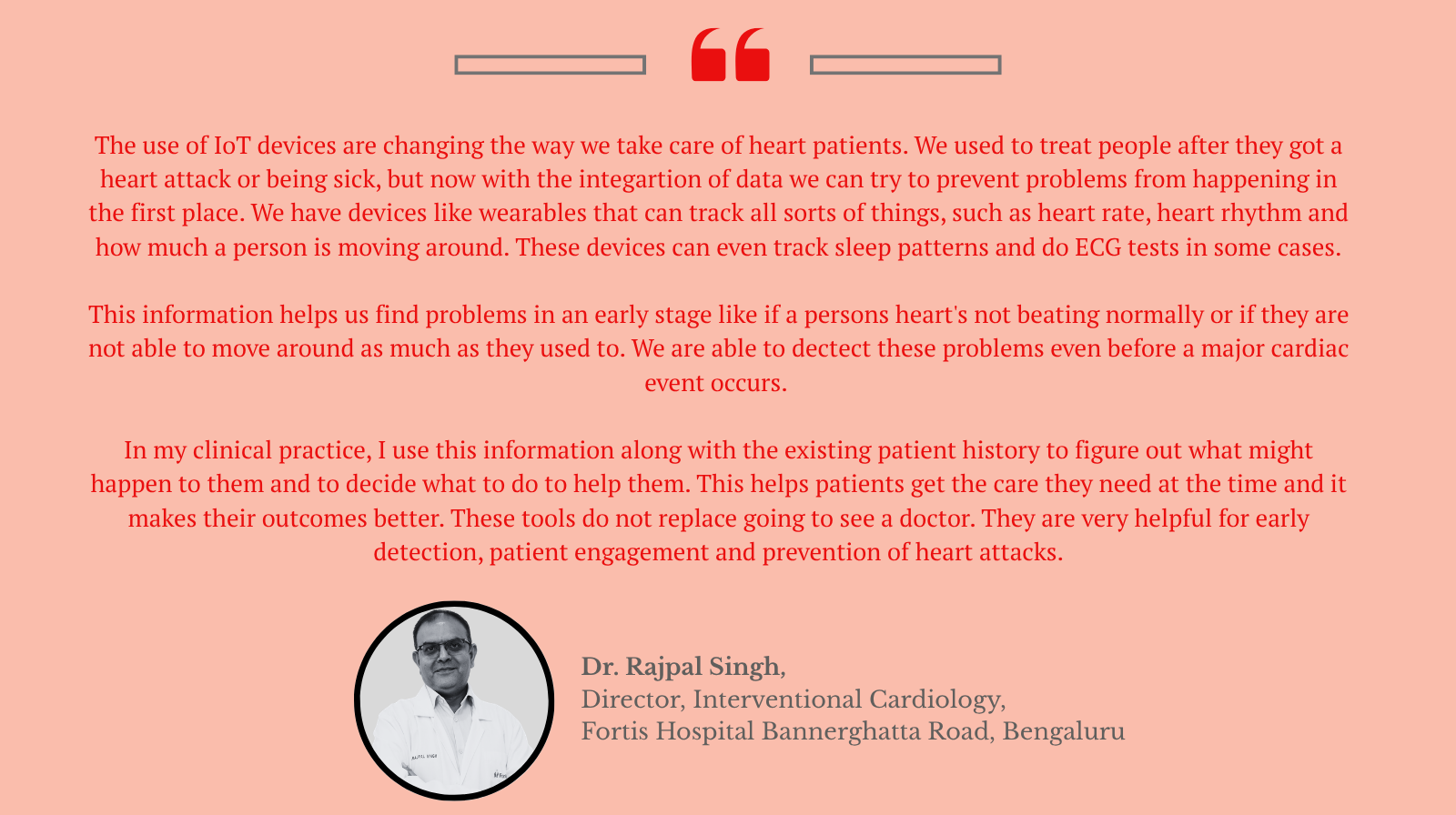
What have you learned about the blind spots in Indian healthcare system, when you put data and devices at the centre of their clinical practice?
The primary reasons for GP clinics not adopting IoT-enabled diagnostics were not related to their beliefs about technology; it was due to fear of disruption to workflows, overload of data, or potential risk related to the algorithm. Additionally, some felt technology would replace the need for a clinical perspective. Ultimately, we understood that building trust occurs when the data can provide support to the practitioner rather than replacing the practitioner's medical intuition.
You argue that data infrastructure is now as critical as clinical expertise in cardiac care; if you had to map the ideal “data spine” for India’s heart health, from the patient’s first symptom to rehab, what would that architecture look like in practice, and who owns what?
The major challenge in cardiac healthcare is the unstructured data. Research in the field of cardiovascular health with accurate data could lead to improved diagnostic analysis. A perfect cardiac data system would start with primary care and create a shared digital record of patients' vitals, ECGs, lifestyle predictors, and family history data elements. Algorithms for risk stratification would generate alerts for abnormal values in real-time for a remote review by a cardiologist.
You argue that data infrastructure is now as critical as clinical expertise in cardiac care; if you had to map the ideal “data spine” for India’s heart health, from the patient’s first symptom to rehab, what would that architecture look like in practice, and who owns what?
The major challenge in cardiac healthcare is the unstructured data. Research in the field of cardiovascular health with accurate data could lead to improved diagnostic analysis. A perfect cardiac data system would start with primary care and create a shared digital record of patients' vitals, ECGs, lifestyle predictors, and family history data elements. Algorithms for risk stratification would generate alerts for abnormal values in real-time for a remote review by a cardiologist.
We keep telling Indians to eat better, exercise more, and reduce stress, yet the country’s cardiac burden keeps rising; what does your data from the field reveal about why this behaviour-change narrative is failing, and what a more honest prevention playbook should look like?
According to field data, the real gap is translation, rather than awareness. Patients do know that diet and exercise are important but encounter structural barriers such as a long workday and urban stress that diminish their motivation.
The framework for prevention has framed prevention in moralistic terms rather than in measurable terms. A more realistic playbook would incorporate routine cardiac risk scoring into everyday health care visits, supported by continuous heart health monitoring. Once people have quantifiable data to experience improvement or deterioration in health, behavioural shifts will become everyday habits.
Can you walk me through a real case where Heartnet’s always-on monitoring or algorithmic early-warning system spotted trouble before the patient even felt it—and what that experience taught you about the current limits of AI in the clinic?
There have been multiple instances where abnormalities were detected significantly earlier through Heartnet India’s IoT-enabled infrastructure. By integrating connected devices, cloud computing, and specialist clinical oversight, the system enables continuous monitoring and faster identification of potential risks, often before symptoms become evident. Notably, nearly 20% abnormal findings in random screening data point to a silent and growing cardiovascular burden in society.
Building an IoT-led, always-on heart network in urban and semi-urban India means dealing with patchy connectivity, mistrust around data, and fragmented records; what have been your hardest failures on data security and interoperability, and how did they reshape your product and governance choices?
The implementation of IoT-Enabled diagnostics and Remote Patient Monitoring in semi-urban areas of India has revealed significant problems with device connectivity, device synchronisation, and fragmented electronic health records. Initial integration of devices added to the lengthy process of adopting the technology due to a high volume of manual reconciliation. Additionally, robust cybersecurity measures and compliant infrastructure are essential to securely procure, store, and maintain sensitive patient data.
If you were to write a candid open letter to policymakers and hospital leaders on what needs to change in the next five years for “Healthy Heart for All” to be more than a slogan, what are the three uncomfortable truths you would put on the table, and what is Heartnet prepared to do differently to back those words?
The three truths that I would present to policymakers, and hospital leaders would stand out as. Prevention cannot remain a slogan while reimbursement favours intervention. Data Security & interoperability are not a technical luxury; it is a necessity for healthcare management. Primary care must be focused on early detection of diseases as a risk-management anchor.
Heartnet India is committed to investing in GPEs, providing transparency through data security standards, and establishing measurable outcomes rather than volume-driven growth. The goal is to build a scalable, telecardiology Network that reduces avoidable emergencies before they occur.
Got a story that Healthcare Executive should dig into? Shoot it over to arunima.rajan@hosmac.com—no PR fluff, just solid leads.