
Deep Chand Dialysis Centre (DCDC): Scaling Affordable Dialysis Across India
By Arunima Rajan
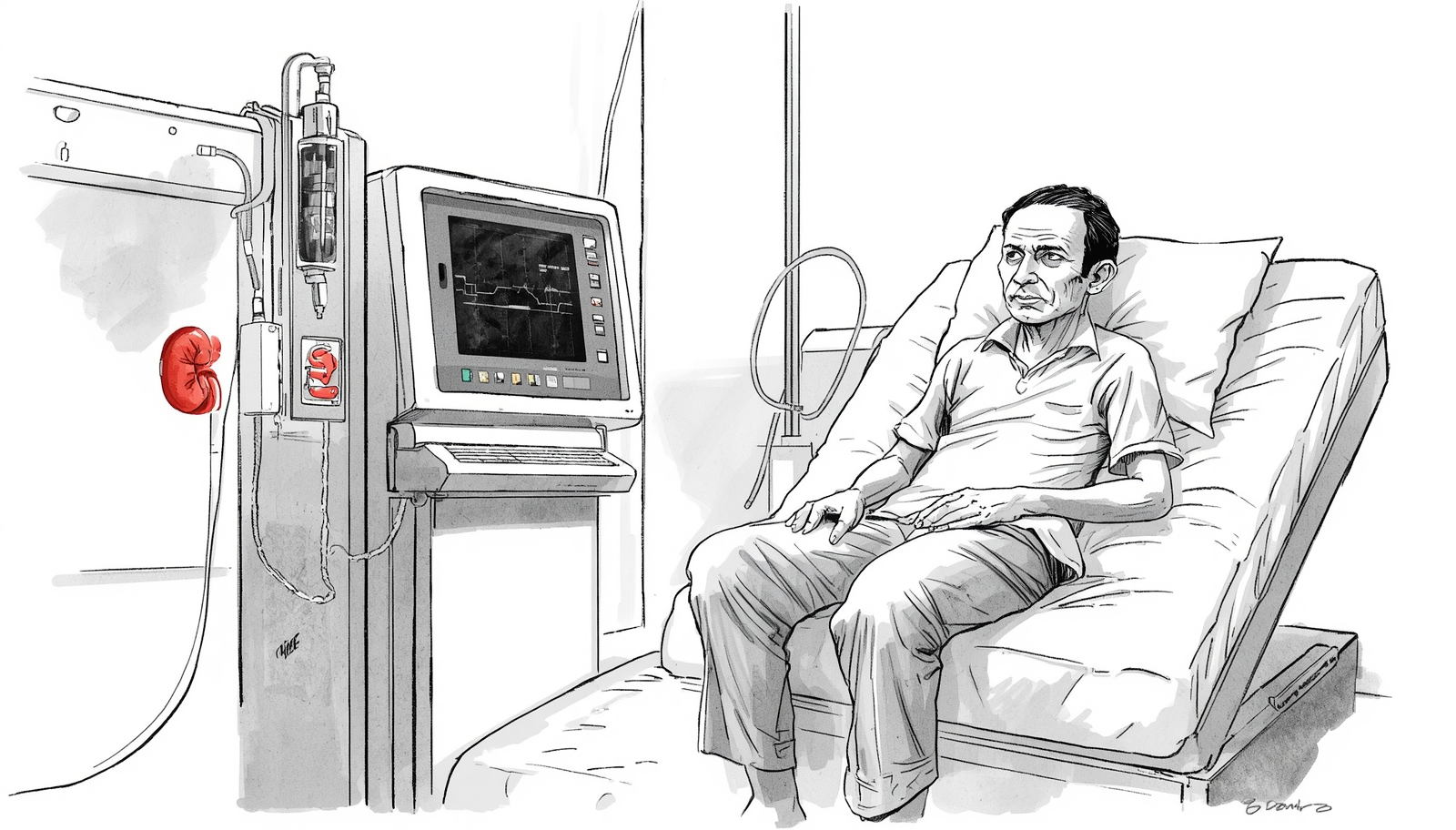
Profitable only past 100 centres, DCDC Kidney Care, a dialysis chain, now runs over 300 centres across India, mostly in government facilities via public-private partnerships (PPPs). Its edge: standardised protocols, in-house training, and higher machine utilisation.
In an interview with Arunima Rajan, Dr. Deepak Agarwal, VP of Clinical Operations & Excellence at DCDC Kidney Care, explains that cutting patients' waiting time, not dialysis time, allows a centre to run more sessions per day on the same machine.
What is the core philosophy of your organisation, and how are you different from a dialysis centre within a hospital?
Fifteen or seventeen years ago, chronic kidney disease was called a "rich person's disease." When we opened our first standalone DCDC centre in Multan Nagar in 2009, our main goal was that patients coming in every other day shouldn't feel lonely. In 2011, the Employees' State Insurance Corporation, Basai Darapur, visited our centre and expressed confidence in our setup.
Would your unique selling proposition be affordability, cleanliness, patient experience, or patient-centric design?
First and foremost, affordability — if a patient can't afford dialysis, they'll never come to you. Beyond that, patients now expect a good experience. They'll complain if the air conditioning or television isn't working, and now they even ask for Netflix or Amazon Prime.
How do you balance cost per procedure with quality, and ensure consistent quality across India?
We have standard operating procedures and protocols that we never compromise on. We realised that cutting patients' waiting time — not their dialysis time — lets us run more sessions per day on the same machine. Most hospitals operate 24/7 but average only two dialysis sessions per machine per day; we've optimised that to three or four, using the same infrastructure.
Our scale helps us maintain quality without compromise. We weren't profitable until we crossed 100 centres, after that, profitability followed. We've also built a protocol to be ready for the next dialysis session within 40 minutes.
Our centres open at 7 a.m. Many patients travel 40-50 kilometres, leaving home as early as 5 a.m. They finish dialysis by 11 a.m. and then go to work. We always encourage patients not to quit their jobs, since that often leads to other mental health issues
How much does a single dialysis session cost?
In 2011, when we started, hospitals typically charged Rs. 3,500-4,000 per haemodialysis session (we only offer haemodialysis, not peritoneal dialysis). Today, with greater awareness, the cost has come down to about Rs. 1,800-2,000 per session. Seventy-five per cent of our centres operate under the PPP model.
Are your centres primarily standalone, or located inside hospitals?
We operate three types of models: about 75% of our centres are within government setups, 15% are standalone, and around 10% are located in private hospitals.
What is the biggest challenge when working with government partners?
Timely payment. There are still delays, though things have improved significantly compared to earlier.
What is your policy on dialyser reuse, and how do you balance cost with patient risk?
We follow government guidelines, which vary by state. Telangana and Karnataka require single-use dialysis. Where reuse is permitted, we use each dialyser only four to five times, discarding it once its efficacy drops below 80%.
Do you publish data on clinical outcomes, survival, and complications?
We have the data, I've digitised all our records across every centre. However, due to government memoranda of understanding, we can't disclose patient names or identities. Mortality and survival data can be shared officially with government authorities; for example, the Telangana government publishes data from our centres. Globally, dialysis mortality is 9-13%. In India, it's around 28%.
Why is that?
The biggest factor is that 48% of our dialysis patients die within their first year of treatment. The first issue is acceptance, patients often don't want to accept that they urgently need dialysis. The second is access. In the US and Australia, patients diagnosed with kidney failure at an early stage get an arteriovenous fistula, the gold standard for dialysis access. In India, by the time a patient reaches stage five, we often spend two to three months convincing them they need dialysis. Some turn to alternative remedies instead, and by the time they return, it's sometimes too late. Acceptance, awareness, and accessibility remain our biggest challenges.
Can standardising the process improve quality given the shortage of nephrologists and trained technicians?
When we relied on nurses for dialysis, they showed little interest despite high pay, so we decided to build our own workforce. We founded the Academy of Healthcare in 2021 and have since trained 300 students at our centres, in fact, major players like Max and Fortis now hire our dialysis technicians.
How do you attract specialists to small towns?
When we signed our first memorandum of understanding with the Uttar Pradesh government, it required a nephrologist at every dialysis centre. We explained that there simply weren't enough nephrologists available, so we proposed connecting MD physicians in Tier 2 and Tier 3 cities with nephrologists in major cities. Now, every five to eight centres are served by a nephrologist who visits two to three times a week.
Could you focus more on standalone centres rather than the PPP model?
We've already been shifting in that direction over the past two years. This transition from PPP to standalone centres has accelerated recently, partly due to Ayushman cards and other schemes that make dialysis more affordable for patients who otherwise couldn't pay.
Where do you see DCDC in five or ten years?
We currently operate 300 centres. In the next five years, we aim to reach around 700.
Got a story that Healthcare Executive should dig into? Shoot it over to arunima.rajan@hosmac.com—no PR fluff, just solid leads.