
Making CSR donations work
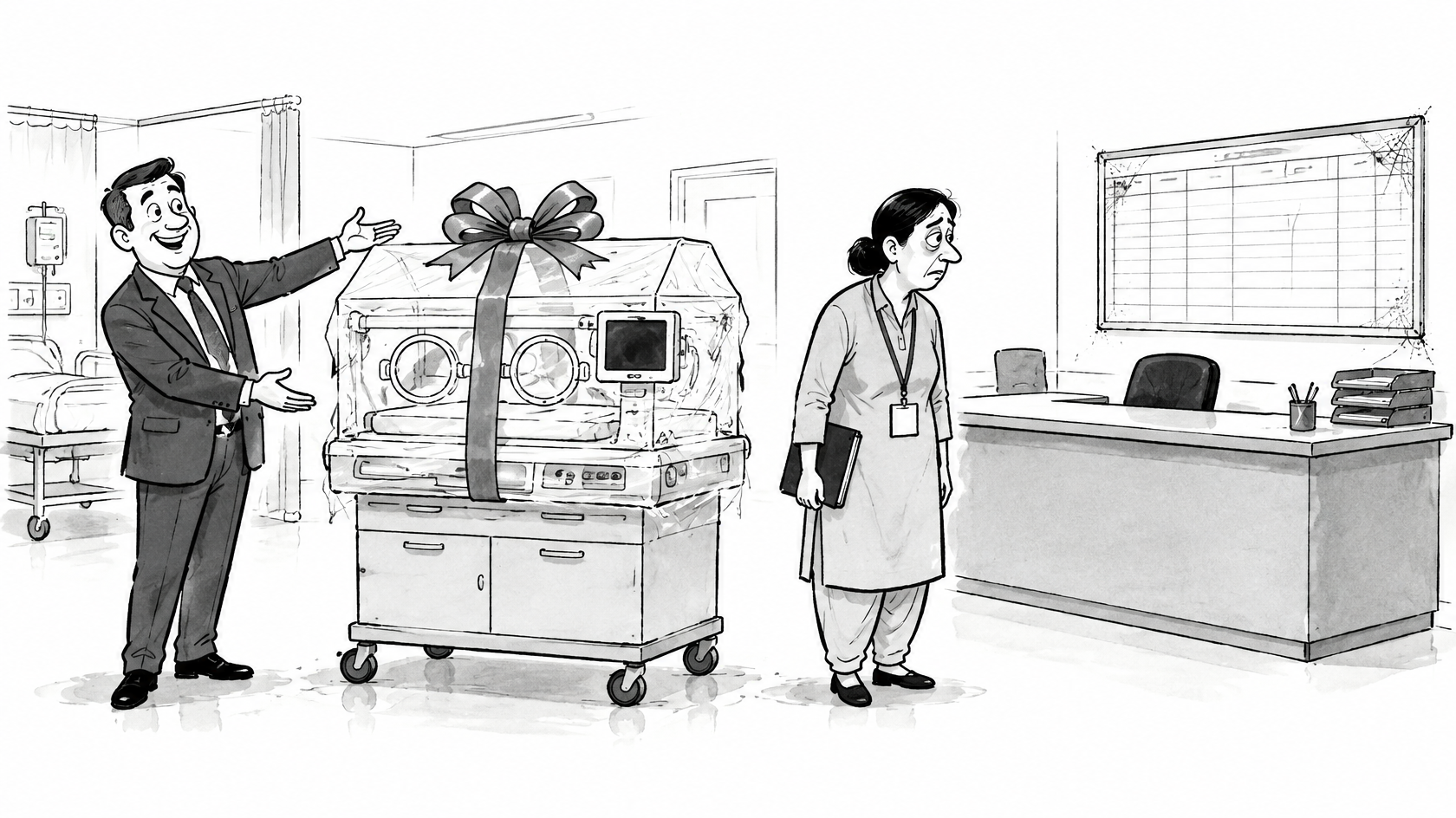
Donated ICUs are the easy part. Running them is where India’s CSR model gets tested. A non-profit that channels CSR and philanthropic money into critical care says the hard part of its work begins after the equipment is delivered. Its Pune experience shows why.
For companies writing corporate social responsibility (CSR) cheques, hospital equipment has an obvious appeal – the spend is visible, the asset is photographable, and the project has a clear end date. For the hospital at the receiving end, the arithmetic is less tidy: the machines are a one-time grant, while the staff, maintenance, consumables and associated expenses they demand constitute a recurring expenditure every year.
Compassionate Patient Response, Inc. (CPR) sits in the middle of that arithmetic. A US 501(c)(3) public charity co-founded during the pandemic by Dr Satya Garimella, a US-based cardiologist, and Krishna Kottapalli, a healthcare entrepreneur, it began by distributing emergency ventilators and ICU beds. It has since moved to equipping hospitals, strengthening clinical and nursing teams, and partnering with local governments on longer-term infrastructure. Hospitals are selected through due diligence; the funding comes from CSR programmes and philanthropy. CPR’s stated values are diligence, compassion, integrity and sustainability.
In an interview with Healthcare Executive Magazine, the two co-founders set out what it takes to convert donated equipment into functioning critical care in under-served Indian communities. The conversation keeps returning to one project.
Beds Without People
Garimella frames the access problem in two parts. India has advanced considerably in vaccines and communications, he says, but critical care has not moved in step. Gaps in diagnostics and equipment, unevenly distributed beds and workforce shortages leave Tier 2 and Tier 3 towns and remote areas bereft. He adds low spending, administrative challenges and fragmented planning to the list of problems, while conceding that no healthcare system is ideal.
Where a unit does function, its catchment effect is considerable. A working ICU, he says, becomes an “oasis for healthcare” for the surrounding villages and taluks. He proffers an example: Imagine a baby born prematurely at 32 weeks weighing 1,000 gm, who can be treated close to home at a subsidised cost.
The binding constraint, in Garimella’s account, is rarely the machine. Equipment requests do not always match clinical needs, he notes. And the units depend on people who are in short supply: intensivists, dialysis nurses, trained ICU nurses and biomedical personnel. In practice, clinicians often end up training the ancillary staff themselves, and neonatal and advanced intensive care demand rigorous preparation before a unit can run safely.
Funding the Running Costs
Kottapalli outlines two operating models. In the first, public or municipal hospitals contribute land and facilities, while private or CSR partners supply equipment, expertise and one-two years of operating funds before handing over ongoing operations. In the second, non-profit or trust hospitals provide lower-cost care, with government insurance subsidies helping to cover costs.
CPR’s own safeguard is to stay engaged after delivery. It provides three years of equipment maintenance and connects hospitals with biomedical staffing firms. Kottapalli says he sees growing interest in long-term healthcare investment.
On donors, his principle is to stay focused on the mission and “treat investors’ (donors) money like it is your own money,” which he takes to mean being ethical and transparent. CPR says it has drawn repeat donations and returned to support hospital partners more than once. Its funding has come from Indian CSR programmes, US corporations and individuals. Next, it is seeking one to three years of operating support, multi-year CSR relationships focused on specific regions and US institutional grants for global and community health.
The 2047 Benchmark
Garimella’s aspiration for 2047 is that location or resources should not deny anyone critical care. “That is the tough ask,” he says. The best scenario, in his view, is access within a 30-minute travel radius, backed by a network of ambulance services and, for remote areas, facilities that can stabilise patients and have access to tele-services.
For hospital leaders, the Pune instance is the more immediate takeaway. A donated unit needs staff, maintenance and an operating budget before it can deliver care.
About the Founders
Dr Satya Garimella, Co-Founder, CPR
Garimella is a US-based cardiologist and cardiac electrophysiologist with more than three decades of experience. He practises at Baptist Health Floyd and is a former Chief of Cardiology at Baptist Floyd Hospital.
Krishna Kottapalli, Co-Founder, CPR
Kottapalli founded SCIO Health Analytics and grew it to its acquisition by EXL Service. He has held leadership roles at EXL, Abacus Insights and Cohere Health, and drives CPR’s hospital selection, fundraising and operational strategy.
Got a story that Healthcare Executive should dig into? Shoot it over to arunima.rajan@hosmac.com—no PR fluff, just solid leads.