BMH and DeepInfinity.AI take an integrated approach to hospital AI
By Arunima Rajan

Baby Memorial Hospital (BMH) and DeepInfinity.AI have signed a Memorandum of Understanding (MoU) to introduce an integrated AI Partner model across BMH Group’s clinical and operational workflows. Announced during the UK-India Diagnostic Cohort Mission 2026, which brought stakeholders together to strengthen bilateral healthcare and diagnostics collaboration, the partnership aims to move beyond standalone AI applications to a coordinated approach across hospital functions.
The partnership will bring AI applications for clinical documentation, radiology and laboratory reporting, intensive care unit (ICU) notes, discharge summaries, medical record digitisation and back-office operations under one framework. Designed to work with Hospital Information Systems, it aims to simplify vendor management and support consistent adoption across workflows.
As healthcare providers seek practical improvements from AI, BMH Group sees an opportunity to coordinate implementation, governance and performance measurement across multiple workflows. The group operates nine hospitals with more than 2,800 beds across Kerala, Tamil Nadu and Telangana.
The potential benefits extend beyond technology adoption. Automating routine documentation and reporting could give clinicians more time with patients, while more complete records, timely reports and prompt discharge summaries could support continuity of care. For management, a coordinated approach could improve operational visibility, reduce integration complexity and provide a scalable framework for AI adoption across the network.
In an interview with Arunima Rajan, Dr. Anup Warrier and Rama Krishna Boya explain why an integrated partner, rather than separate vendors, makes sense for the hospital group.
Dr. Anup Warrier, Group Chief of Medical Services, Baby Memorial Hospitals Group

Why an integrated partner rather than separate vendors?
Clinical AI shouldn't be a collection of disconnected tools. Separate vendors mean separate integrations, separate governance, and no common way to measure results. An integrated model gives us one framework for implementation, safety review and performance measurement across the network. Clinicians also get a consistent experience, and we can hold one partner accountable.
Which hospitals and workflows go first, and what does the rollout look like?
We start where the documentation burden is high and the risk is manageable, and we prove value before scaling. Each phase has defined entry and exit criteria: we expand only when quality, safety and clinician feedback meet the bar. Lessons from the first sites shape how we deploy across the rest of the network, including hospitals that join us later.
Is it exclusive, and how does it fit with existing AI tools?
The goal is a coherent architecture, not lock-in. Where existing tools work well, we'll integrate or retain them. Where they overlap, we'll consolidate against common governance and performance standards. Every tool, whoever supplies it, should meet the same safety, data and interoperability expectations.
Who governs AI outputs, and how are errors caught?
AI drafts and clinicians decide. Every clinical output has a named accountable clinician who reviews and signs off before it becomes part of the record. Behind that sits network-level oversight with defined roles for clinical, quality, informatics and risk. It covers:
ongoing audits of output accuracy;
a clear way to report errors and near-misses;
a route to correct and learn from them;
the authority to pause a workflow if safety signals emerge.
We also have a Group AI Governance Committee that reviews AI use and provides oversight.
How will you measure ROI?
We measure outcomes that matter to patients and clinicians, not just cost. That means clinician time on documentation, note and report quality, turnaround times, and throughput. We set baselines before go-live, compare like with like, and track clinician experience alongside efficiency. If a gain comes at the expense of quality, it doesn't count.
How do you drive adoption of ambient voice documentation?
Adoption follows trust, and trust follows usefulness. That means involving clinicians and nurses in design and pilots, using respected peer champions rather than top-down mandates, and providing practical training in real workflows. It also means listening to feedback and acting on it quickly. The technology has to fit the language, accents and pace of how our teams actually work. The time saved on documentation has to translate into increased patient engagement and satisfaction, better documentation quality and better clinical care.
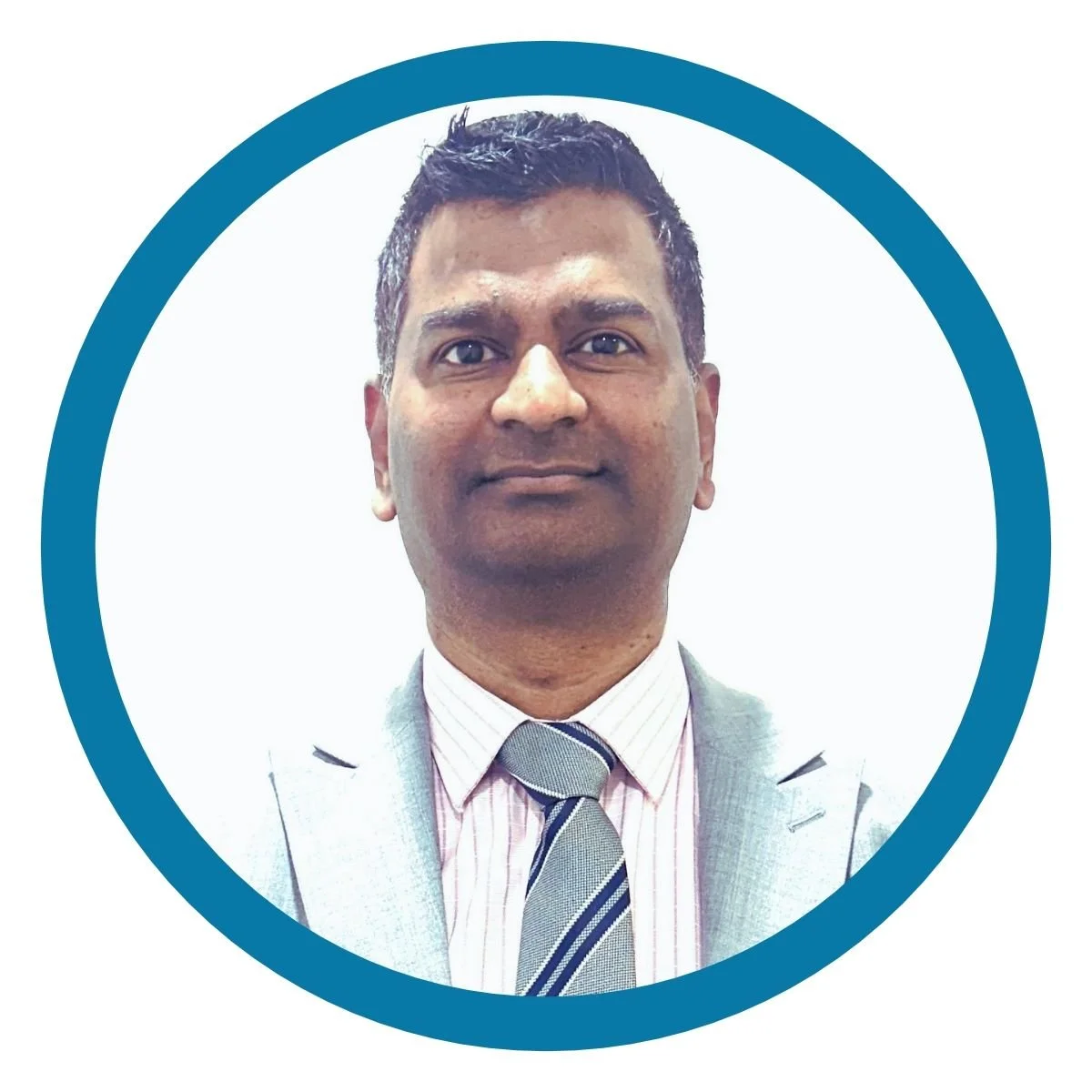
Rama Krishna Boya, Co-founder and CEO, DeepInfinity.AI
How do your tools integrate with BMH’s existing Hospital Information System, and what were the main interoperability challenges?
The AI Partner model starts from a simple rule: AI has to work inside the systems clinicians already use, not alongside them as another screen. With BMH, we are at the start of a phased rollout, and the first step is mapping each workflow to the hospital’s existing HIS, PACS/RIS and laboratory systems. For each use case, we agree where the AI output lands and who signs it off.
Our platform is built to sit on top of what a hospital already runs. We integrate using healthcare standards such as HL7, FHIR and DICOM where they are available, and through APIs or structured exports where they are not. We have already done this with HIS and imaging partners such as Akhil Systems and Kranium, and we have integrations with Nihon Kohden and MedSynaptics under way. We have also done it across live deployments in government and private hospitals. At GGH Ananthapuramu, for example, we have supported around 700 imaging studies a day for more than 14 months.
From that experience, the real interoperability challenges are rarely about technology alone.
They include:
Variation between sites: a multi-brand group has different systems, templates and versions in different hospitals, so one integration pattern doesn’t fit all of them.
Unstructured legacy data: handwritten notes, scanned prescriptions and free-text reports have to be digitised and structured before AI can use them reliably.
Workflow fit: if a clinician has to copy and paste AI output into the HIS, adoption stalls. The output needs to arrive in the right field, in the right format, ready for review.
Ownership: AI touches clinical, IT and administrative teams at once, so governance has to be agreed up front.
That last point is exactly why a single partner helps. The hospital integrates once, with one accountable team, instead of repeating the exercise for every point solution.
How are patient data privacy and DPDP Act compliance handled, particularly for ambient voice capture?
Privacy is designed into the product from the start. Ambient voice is the most sensitive capability, so we treat it with the most care.
Notice and consent: patients are told when ambient capture is used, through notices in the consultation room and clinician prompts, and can decline at any point. The clinician stays in control of when recording starts and stops.
Purpose limitation and minimisation: audio is used only to generate the clinical note. [Audio is processed and deleted after transcription and is not used to train models.]
Human in the loop: every AI-generated note, report or summary is a draft. Nothing enters the patient record until a clinician has reviewed and approved it.
Data residency and security: [patient data for Indian hospitals is hosted in India / on the hospital’s premises], encrypted in transit and at rest, with role-based access and full audit trails.
Certified frameworks: our Indian subsidiary is certified to ISO/IEC 27001:2022 and ISO 9001:2015 and runs a data protection framework aligned with the DPDP Act 2023. In the UK, three of our products are registered with the MHRA as Class I medical devices, and we meet NHS standards including DTAC, the Data Security and Protection Toolkit and DCB0129 clinical risk management. We bring the same discipline to every Indian deployment.
Under the DPDP Act, the hospital is the Data Fiduciary and we act as its Data Processor. We work strictly to the hospital’s instructions, under a data processing agreement that sets out purpose, retention, breach notification and patients’ rights.
What makes a hospital network ready for a single AI partner, and what should CXOs elsewhere watch out for?
A hospital is ready when its leadership sees AI as a strategic platform rather than a series of experiments. In practice, the signs of readiness include:
Leadership sponsorship spanning clinical, operational and IT leaders, not one department running a pilot.
A clear view of the problems: where clinician time goes on documentation, where reporting turnaround is slow, where records are still on paper.
A reasonably stable digital core, meaning a HIS, PACS or LIS that AI can plug into, even if it is not perfect.
Willingness to measure: agreeing up front how success will be judged, such as turnaround times, documentation quality and clinician hours saved.
What should CXOs watch out for?
Pilot fatigue: ten disconnected AI pilots from ten vendors create ten integrations, ten contracts and ten safety reviews, and rarely scale. The cost of complexity is usually larger than the cost of the software.
Choosing on demos alone: ask for live deployments, regulatory credentials and evidence of clinical safety management, not just a good demo.
Weak data governance: be clear who owns the data, where it is stored, how long it is kept and whether it is used for model training.
Leaving clinicians out: if doctors and nurses aren’t involved in the design and rollout, adoption won’t follow, however good the technology is.
Lock-in without accountability: a single partner should mean a single point of accountability, with phased scope, agreed outcome measures and the freedom to review progress. It should not be a blank cheque.
We are a startup, and we’re grateful that a group of BMH’s scale trusted us to help define this model. Our hope is that it becomes a blueprint: hospitals spend their energy on care, and one accountable partner handles the complexity of AI.
Got a story that Healthcare Executive should dig into? Shoot it over to arunima.rajan@hosmac.com—no PR fluff, just solid leads.