
Why Does a Young Girl Need a Cancer Vaccine?
By Arunima Rajan
Ask the 80,000 Women India Loses Each Year
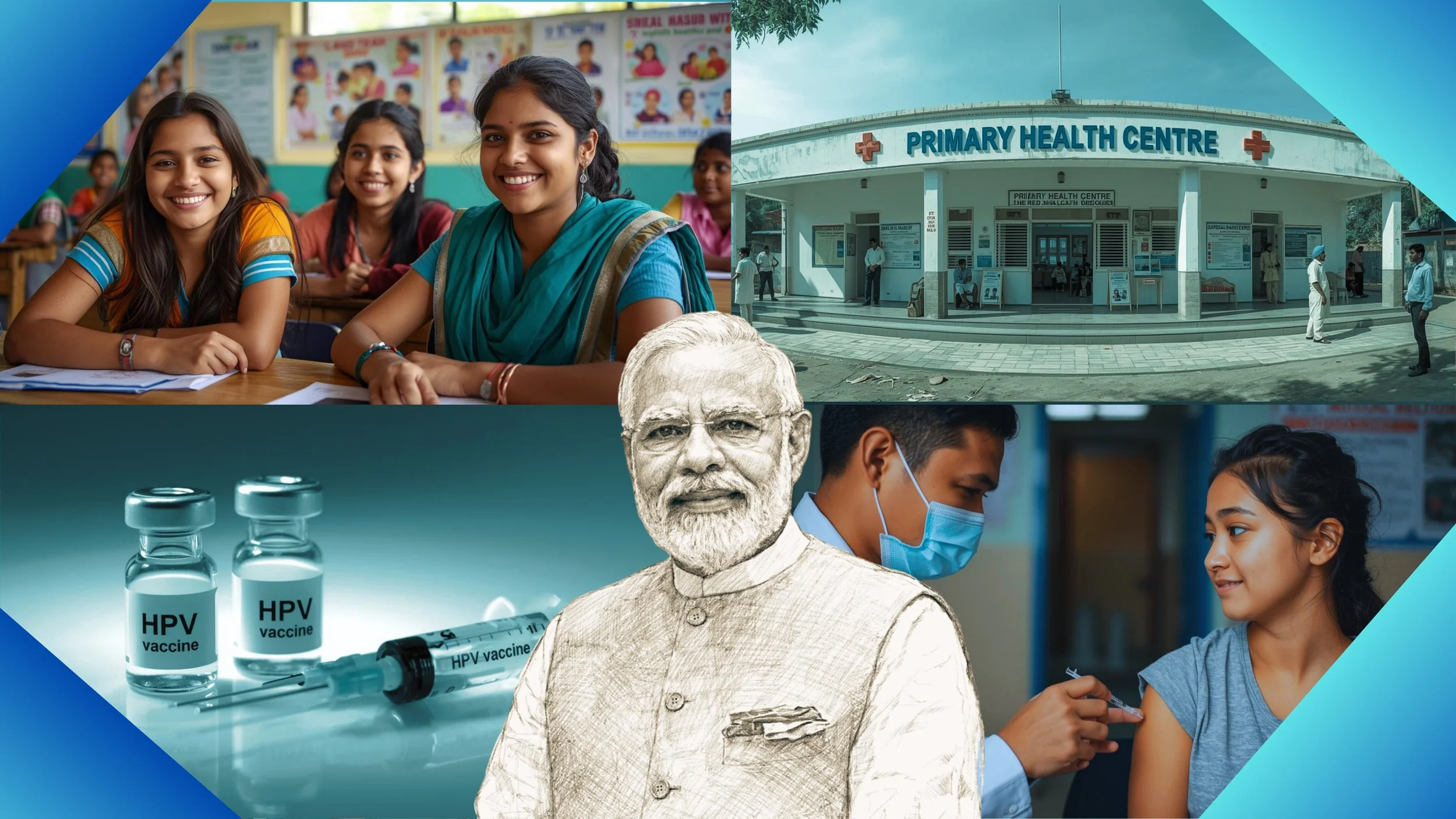
On 28 February 2026, Prime Minister Narendra Modi launched a nationwide Human Papillomavirus (HPV) vaccination campaign from Ajmer, Rajasthan. Joined virtually by Union Health Minister Jagat Prakash Nadda and other key health officials, the launch marks a watershed moment in India’s public health history.
According to the WHO GLOBOCAN 2022 report, cervical cancer claims the lives of 80,000 Indian women every year. It remains the second most common cancer among women in the country. Yet, unlike most malignancies, cervical cancer is almost entirely preventable.
The Science of Prevention
The World Health Organization (WHO) has established that nearly all cases of cervical cancer are caused by persistent infection with high-risk types of HPV. While HPV is a common sexually transmitted infection: affecting the skin, genitals, and throat, most people clear the virus naturally. However, when the immune system fails to do so, persistent infection can lead to abnormal cell growth, eventually developing into cancer.
Key Features of the National Programme
India’s strategy focuses on early intervention to break the transmission chain before exposure occurs.
The Vaccine: The programme deploys Gardasil-4, a quadrivalent vaccine covering HPV types 6, 11, 16, and 18.
Target Demographic: The campaign specifically targets 14-year-old girls (those who have completed 14 years but not yet 15). This cohort represents approximately 1.2 crore (12 million) girls annually.
Access & Cost: Vaccination is voluntary and free of cost at government facilities, including Ayushman Arogya Mandirs (AAM), Primary Health Centres, and District Hospitals.
Consent & Digital Tracking: Parental or guardian consent is mandatory. Progress is tracked via the U-WIN digital platform, which allows for pre-registration and digital recording of consent.
The "Dinner Table" Barrier: Cultural Resistance
Despite the policy's strength, the distance between a clinic and a living room is often measured in silence. Because HPV is sexually transmitted, the vaccine sits at a sensitive intersection of sexual health and oncology.
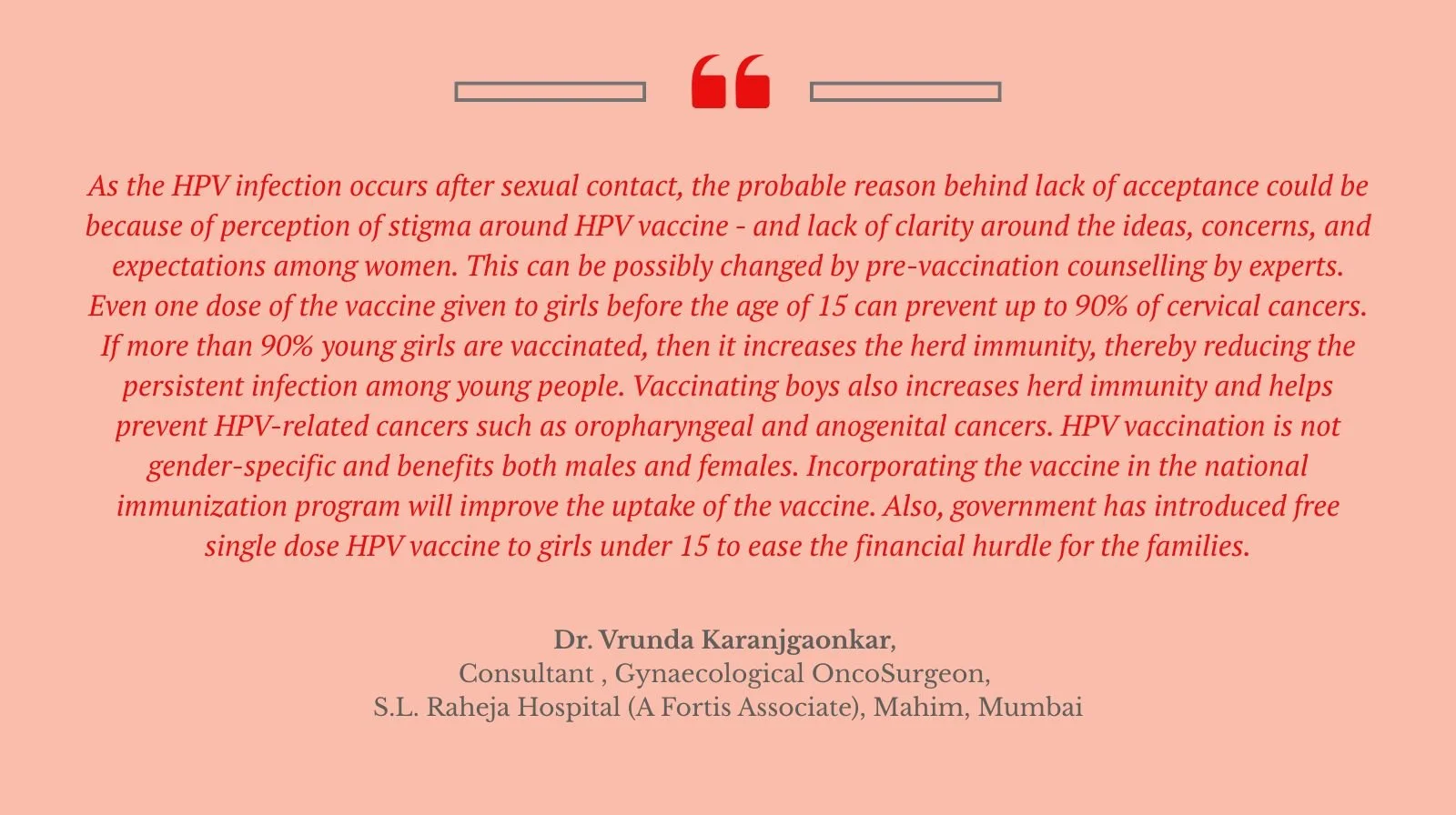
"The topic is often awkward in an Indian family," says Aswathy Sujith, an engineer from Trivandrum. "Many ask, ‘What is the need for a vaccine for your young daughter?’ But if there is a cancer she can be protected from, why take the risk of not giving a vaccine?"
Dr. Kanika Batra Modi, Clinical Lead at Max Cancer Care, notes that framing is essential. "I focus the discussion on health protection rather than the mode of transmission. I tell parents: ‘The HPV vaccine is not about sexuality; it is about cancer prevention.’ Once framed this way, most families feel comfortable."
The Economic vs. Educational Bottleneck
While cultural taboos exist, experts argue over which barrier is the most formidable: cost or awareness.
Aditya B. Saran, a researcher in HPV vaccination barriers, argues that cost is the primary "hard wall." Unlike awareness, which can be built gradually, a family either can or cannot afford a private vaccine. By making it free, the government provides an implicit "stamp of legitimacy" that can dismantle misinformation.
However, Saran warns that supply alone isn't enough. "Our review found that even among medical personnel, only 4.1% were vaccinated themselves. If the vaccine is free but sits unused on shelves due to lack of demand, the mission fails."
A Hybrid Strategy: The "Rwanda-Australia" Model
Dr. Sudip Bhattacharya of AIIMS Deoghar suggests India should look to international success stories to bridge the implementation gap. He proposes a hybrid of two specific models:
Rwanda’s Mobilization: Utilizing school-based delivery and high political commitment to achieve over 90% coverage.
Australia’s Systems Approach: Embedding vaccination into a long-term "elimination framework" that includes rigorous screening and treatment.
The Road Ahead: Screening and VaccinationModel
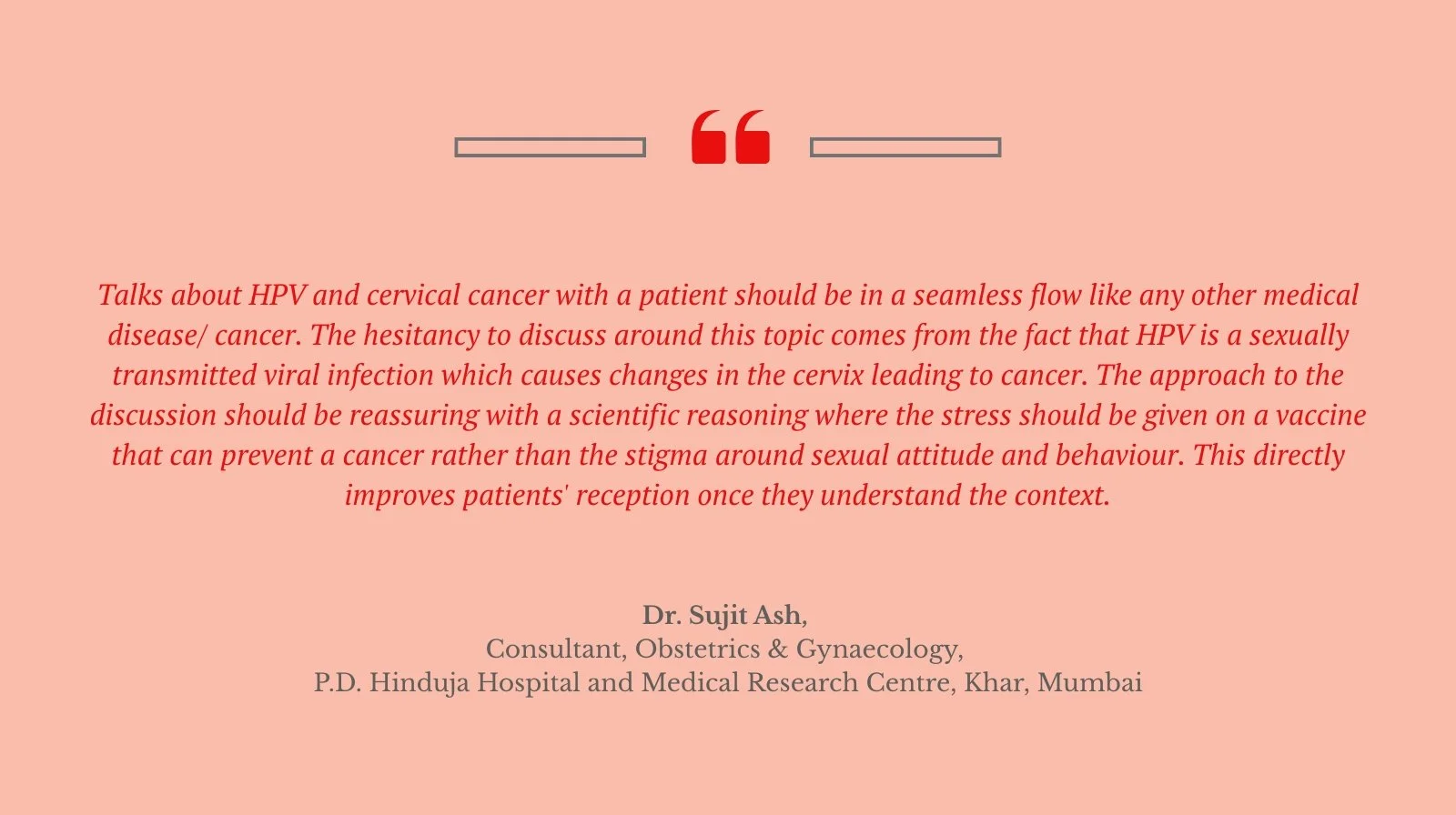
Dr. Bhattacharya emphasizes that vaccination and screening are not competing priorities but parallel tracks. While the vaccine protects the next generation, screening is the only lifeline for adult women. Current data shows a disconnect: while the government reports 10.18 crore screenings, survey data suggests only 1.9% of women aged 30-49 have ever been screened.
The goal for the next two decades is to ensure that while 14-year-olds are being vaccinated in schools, their mothers are being screened at Ayushman Arogya Mandirs.
Bottom Line
India now possesses the tools to eliminate a major killer. The HPV vaccine is 93-100% effective against the targeted types and has a proven safety record of over 500 million doses worldwide. The infrastructure is ready; the challenge now lies in ensuring that a girl in a remote village in Uttar Pradesh receives the same protection as a girl in an urban metropolise.
Cervical cancer is the only cancer we can truly prevent with a shot. The question is no longer if we can do it, but how quickly we can talk our way past the taboos to save the next 80,000 lives.
Got a story that Healthcare Executive should dig into? Shoot it over to arunima.rajan@hosmac.com—no PR fluff, just solid leads.