What a Cancer Biotech CEO looks for in a Hospital partner
By Arunima Rajan
Dr Arnab Roy Chowdhury, founder and CEO of Mestastop, on the company’s core offerings, the 45 minutes a hospital has to preserve a tumour sample, and its plan for low-cost access in India.
What does Mestastop do, and what gap in cancer care led you to set it up in 2018?
At Mestastop, our aim is to prevent cancer from spreading from its primary site to other parts of the body, a process known as metastasis. We have approached this through two verticals. The first is understanding the biology of metastasis through our in-house research platforms and correlating the findings with patient sample-based longitudinal survival data using machine learning. The second is applying this understanding to novel drug discovery, drug repurposing and companion diagnostics.
The gap we set out to address came from our own discovery journey in cancer research. We realised that metastasis accounts for approximately 90% of cancer-related deaths. Most cancer treatments today focus on stopping tumour growth. However, once cancer has spread to multiple parts of the body, controlling it becomes extremely difficult. We felt that we needed to look beyond tumour growth and understand the underlying biology of how cancer spreads.
We spent the first four years conducting in-depth research into metastasis and developing our own platforms. We are now applying this knowledge to develop novel drugs that can delay metastasis in patients with primary tumours. We do not want to wait until metastasis has occurred to intervene. Alongside novel drug discovery, we are also exploring existing drugs that can help delay the spread of cancer.
The other important aspect of our work is companion diagnostics. Approximately four out of every ten patients with solid tumours eventually develop metastasis. We are working towards identifying those patients who are at a higher risk and would benefit from treatment.
Where patients go missing
Patients do not go missing at the start. “In my experience, attrition occurs less often at initial confirmation and more often during long-term monitoring, lifestyle modification and treatment intensification,” says Chopra. “Patients may seek multiple opinions, discontinue follow-up once glucose improves, or underestimate the progressive nature of diabetes.”
Read the middle of that list again. Patients stop coming when their numbers get better.
Dr Vasim Shaikh, Consultant General & Laparoscopic Surgeon at Wockhardt Hospitals, Mira Road, sees a second break in the chain. “The biggest challenge is fragmented care,” he says. “Patients may consult a diabetologist but overlook foot examinations or delay referrals to surgeons.”
The chain breaks at the eye too. “A patient may undergo screening, but if the findings aren’t communicated, referrals are delayed or follow-up is missed, an opportunity to prevent avoidable vision loss can be lost,” says Dr Samer Al-Diri, Medical Centre Manager and Director of Healthcare Services at Sharjah Consultancy Centre for Modern Medical Care.
It is tempting to treat all this as a scheduling problem, but the research points beyond the appointment diary. A 2020 systematic review of 34 studies, published in Diabetic Medicine, found that younger adults, smokers and people under financial pressure were less likely to attend diabetes outpatient appointments, and that non-attendance was associated with higher HbA1c.
Al-Diri learnt this on a 2025 assignment in Nauru, in the South Pacific, where he worked on diabetic retinopathy care. One patient needed retinal laser treatment and injections for severe diabetic eye disease. “We spoke to him repeatedly, and he confirmed that he would attend, yet he missed three appointments,” he says.
A district nurse visited the man at home. “In person, he explained that he lived remotely and had no transport,” says Al-Diri. “He worried that requesting transport would be disrespectful to the clinicians or burden the service, something he had not been willing to say on the phone.” The nurse arranged transport. The patient attended treatment and follow-up, and his vision improved.
“That experience changed how I think about non-attendance,” says Al-Diri. “We had kept asking whether he would come, when we should have asked what was stopping him.”
How do your three platforms work, and how does the company make money today?
We have developed three platforms that help us understand the biology of metastasis.
METASSAY dissects metastasis biology in the laboratory. We then use our other platform METSCAN where we use patient samples and correlate the biological findings with actual patient survival data over time using machine learning algorithms.
Next is METVIVO. Once we understand the process of metastasis, we can identify the proteins playing an important role in them and target those proteins for drug discovery. We have now identified several such proteins and are running a couple of discovery programmes around them. These are first-in-class targets because they have not been pursued for drug discovery before, and there are no approved drugs against them.
Alongside this, we have also undertaken drug repurposing and identified a couple of potential candidates. One of these has received approval in India for a Phase II clinical trial,. We are also preparing an FDA IND application for the same drug.
We are currently in the pre-revenue phase. Over the last four years, we have presented our work at 18 international conferences and engaged with clinicians across Europe and the US, many of whom have acknowledged our findings.
We believe that progressing our FDA IND programme over the next two years will put us in a position to secure our first out-licensing deal.
Why start with high-risk colorectal cancer patients, and what would delaying metastasis mean for them?
We are trying to prevent disseminated cancer cells from forming colonies in secondary tissues. Therefore, our treatment is intended for patients with primary cancer, before metastasis occurs, and not for those who have already developed metastatic disease.
We chose colon cancer for two reasons. First, its epidemiology in India is changing. Colon cancer is increasingly being diagnosed in younger Indians. In our own patient sample of 52 individuals, at least 20% were between 20 and 30 years of age. Second, obtaining primary colon cancer tissue from surgical samples is relatively easier, which was an important consideration for our research.
The potential impact is significant. Globally, the top five approved drugs for metastatic colon cancer generate around US$8 billion annually, yet the average survival benefit is only about five months. Our objective is to intervene much earlier, before metastasis develops. In our initial clinical trial, we aim to demonstrate that metastasis can be delayed for up to 24 months. If successful, that would be a significant improvement over the survival benefits offered by existing treatments.
Your findings are not yet in peer-reviewed journals. What would convince a sceptical oncologist?
We focus on presenting our findings at international conferences to build visibility and credibility, while protecting our intellectual property. Both repurposed drugs have been submitted for new method-of-use patents globally, with national phase applications already filed in the US and Europe.
What is interesting is that clinicians have often seen patients with very small primary tumours develop metastasis within three to six months, while patients with much larger tumours may develop it only after two years. Our platform helps explain why this happens. The conventional understanding is that the larger the tumour, the higher the probability of metastasis. However, our data shows an inverse correlation, where smaller tumours can have a higher probability of metastasis. By uncoupling metastasis and proliferation biology, we are explaining something clinicians have observed but could not always make sense of. This is also why our findings have received positive feedback.
What do your hospital partners contribute, and what do they gain?
Our collaboration with Rajiv Gandhi Cancer Hospital involved patient samples and longitudinal survival data for a prospective study of 52 patients, comprising 26 colon cancer and 26 oral cancer patients. We also conducted two retrospective studies with 100 patients each, covering colon and head and neck cancers. At St. John's Hospital, we conducted a retrospective study involving over 300 breast cancer patients.
For us, hospital collaborations are not just about accessing samples or data. We want hospitals to be equally invested in the science. There are ethics committees, tumour boards and legal processes involved, and hospitals are compensated for the samples and data they provide. But we don't want to work with institutions where the interest is limited to the financial aspect.
We are fortunate to have Dr Anurag Mehta and Dr DC Doval from Rajiv Gandhi Cancer Hospital on our scientific advisory board.
In our prospective study, we analyse primary tumour samples using our 30-step assay platform, while the hospital follows up with patients over two to three years to track metastasis. In the retrospective studies, we examined patient records and follow-up data to understand metastasis patterns and assess whether patients who had taken the drugs we are exploring for repurposing showed any survival benefit.
We are currently in discussions with Mazumdar Shaw Medical Centre for a potential collaboration.
What does a hospital need to become a research partner?
One of the key requirements for our research is the ability to follow up with patients over time and connect their clinical data with subsequent visits. We need to correlate the biological data from tumour samples with the patient's clinical journey, including whether they eventually develop metastasis. This requires a robust follow-up system, something Rajiv Gandhi Cancer Hospital and St. John's Hospital have been particularly good at.
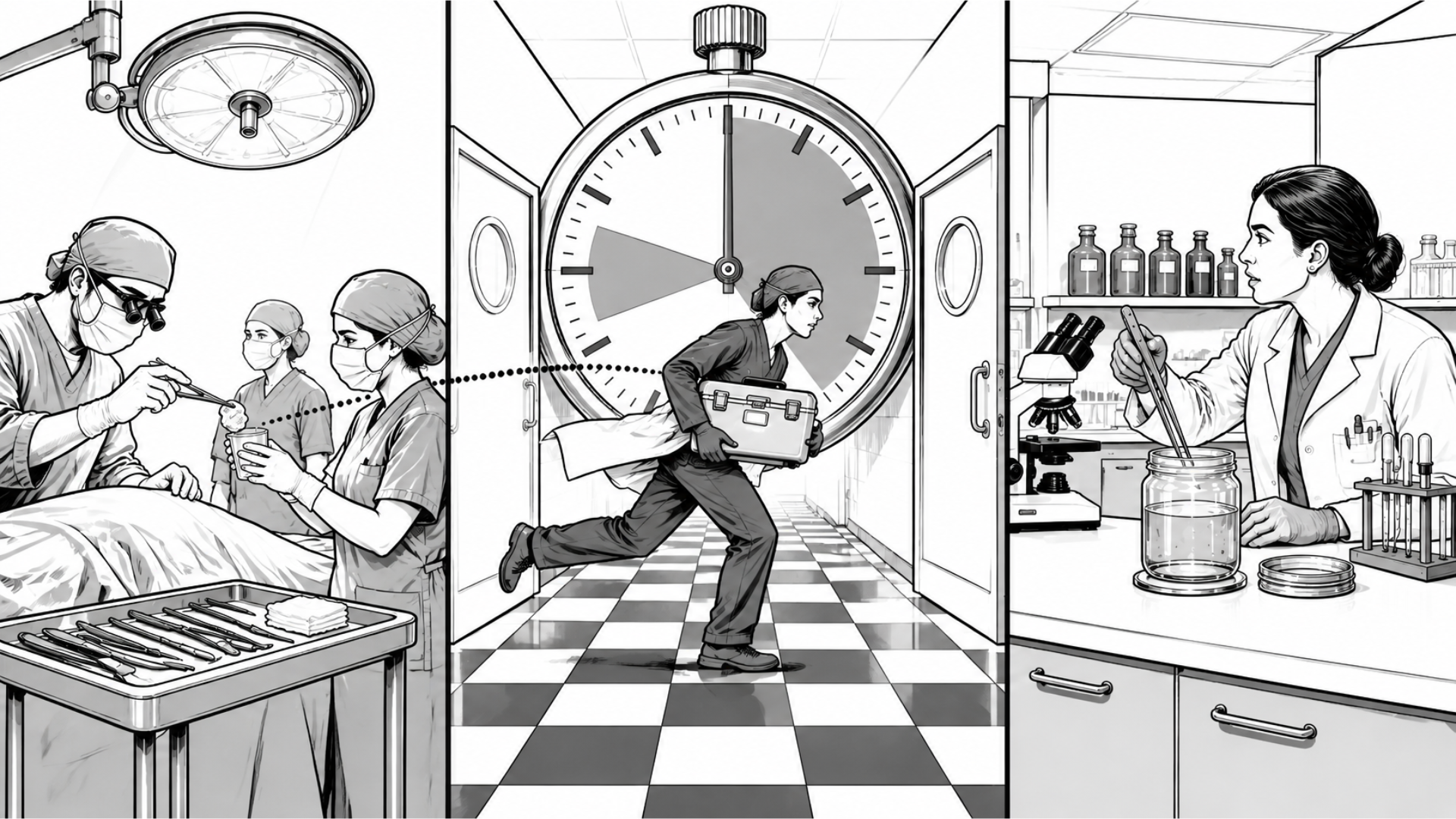
The other important aspect is maintaining tumour sample integrity. Once a tumour is removed during surgery, it needs to be placed in an appropriate buffer within 45 minutes to minimise ischaemic time and preserve the sample.
For hospitals looking to collaborate, the two key requirements are long-term patient follow-up and proper handling of tumour samples within the required timelines.
Repurposed drugs are cheap and off-patent. How will Mestastop make money from them?
We have very different strategies for India and global markets. In India, we want to make these drugs available at a very low cost. The goal is not to make money from them, but to generate strong clinical data and establish proof of concept.
Our novel drug discovery programmes are still 5-7 years away from demonstrating efficacy in clinical trials. Repurposing allows us to generate proof of concept in the meantime. We have encouraging data, and one of our candidates has received approval to begin a Phase II trial in India.
Globally, we have filed new method-of-use patents and are working on combining the two molecules in a novel formulation, focusing on certain rare cancers. Through the US FDA's 505(b)(2) pathway, we are aiming for five to seven years of market exclusivity, subject to regulatory approval.
So, the idea is to make the treatment accessible in India, use the clinical evidence to strengthen our global development programme, and build a commercial opportunity internationally. By then, our novel drug candidates should also be moving towards clinical trials.
What has been hardest about building a deep-tech drug discovery company in India?
Building a deep-tech drug discovery company in India has been challenging, particularly because biotech requires patient capital. Unlike a conventional product business, drug discovery is driven by research, data and intellectual property, and the real impact may take years to materialise. One of the biggest challenges is helping investors understand the science and its long-term potential, rather than looking only at near-term revenue.
What has helped us is staying focused on the science and letting the data speak for itself. As the research progresses and the evidence builds, it becomes easier to bring experienced clinicians and industry experts into the conversation. I believe India needs more investors with a strong understanding of science and biotechnology to support deep-tech companies working on complex problems.
Got a story that Healthcare Executive should dig into? Shoot it over to arunima.rajan@hosmac.com—no PR fluff, just solid leads.