
Behind the Tremors: Charting India’s Struggle to Build a Care Pathway for Parkinson’s Patients
By Arunima Rajan
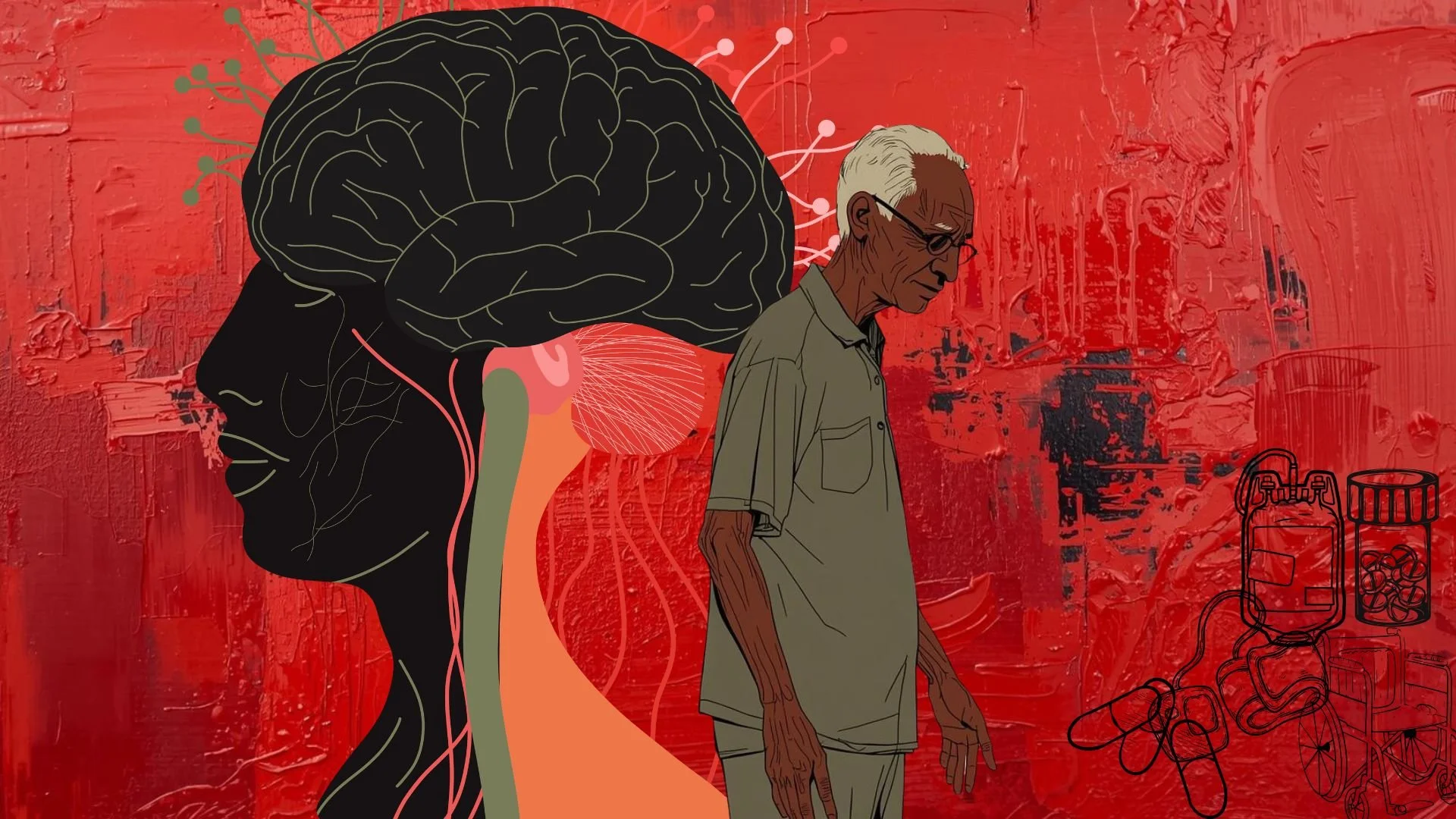
Parkinson’s disease is a progressive neurological disorder that primarily affects movement and worsens over time. It disproportionately impacts seniors, gradually eroding independence and quality of life. Because many of its early symptoms mirror the normal course of aging, patients often reach a neurologist only in the later stages of the disease. For families and caregivers, the decline can be heartbreaking — watching elderly relatives struggle to walk, maintain balance, or communicate clearly. With no definitive diagnostic test or cure, Parkinson’s care requires long-term medical management, rehabilitation and emotional support.
India is grappling with mounting challenges in Parkinson’s disease care, driven by a rapidly growing patient burden that is projected to become the world’s highest. Adding to this is a troubling rise in early-onset Parkinson’s, with many patients developing symptoms before the age of 50. These trends are unfolding against a backdrop of systemic healthcare gaps an acute shortage of neurologists, physiotherapists and a stark rural–urban disparities in access to care, high out-of-pocket treatment costs, and low public awareness. Together, they underscore the urgent need to integrate Parkinson’s management into primary healthcare, and, perhaps, expand the use of telemedicine, and strengthen public awareness initiatives to better address both early- and late-onset disease.
Against this backdrop, Dr Anish Mehta, consultant, Department of Neurology, and movement disorder specialist, Ramaiah Institute of Neurosciences, Ramaiah Memorial Hospital, underscores the urgent need for more specialists and allied health professionals in India. His insights come as the world marked World Movement Disorders Day on November 29, aimed at raising awareness about conditions that severely affect mobility and daily functioning.
In simple terms, what is Parkinson’s disease, and how does it usually present? Can people in their 40s and 50s also develop it?
Parkinson’s disease is a progressive neurological disorder caused mainly by the loss of dopamine-producing nerve cells in a part of the brain called the substantia nigra, which plays a key role in movement control. Dopamine is essential for smooth, coordinated movement.
As dopamine levels fall, patients develop motor symptoms such as a resting tremor often starting in one hand slowness of movement (bradykinesia), muscle stiffness (rigidity), a shuffling gait or sudden freezing while walking, and balance problems that increase the risk of falls.
There are also important non-motor symptoms, including constipation, reduced sense of smell, sleep disturbances (particularly REM sleep behaviour disorder), depression, anxiety, cognitive slowing, urinary problems and dizziness on standing.
Awareness of these symptoms is very low in India. Early signs are often mistaken for normal aging or arthritis. And yes, Parkinson’s can affect people in their 40s and 50s — this is called young-onset Parkinson’s disease. These patients often have a slower disease course, different medication sensitivities and a higher likelihood of genetic factors playing a role.
Why does someone develop Parkinson’s disease? Do diabetes or genetics increase risk?
Parkinson’s is a multifactorial disease and its exact cause is still unknown. Age is the strongest risk factor. Environmental exposures particularly pesticides, certain herbicides and industrial toxins have been associated with increased risk. Genetic mutations such as Parkin, LRRK2 and SNCA are known, but most patients do not have a family history of Parkinson’s. Head injuries and air pollution have also been linked to a higher risk, although the exact causal mechanisms need further research. Importantly, having a family member with Parkinson’s does not mean one will necessarily develop the disease.
In India, which risk factors matter more age, genetics or environmental exposure?
The contribution varies from person to person. At a population level, age remains the strongest risk factor. Genetic causes are more commonly seen in younger-onset cases. Environmental risks, such as pesticide exposure in rural areas and poor air quality in large cities, are relevant in India. Studies show associations, but association does not always mean causation.
If a 70-year-old person is diagnosed today, what treatment options are available — and where do gaps exist?
Treatment is individualised. In very early stages, patients may only need reassurance and periodic follow-up. When symptoms begin to affect daily life, medications are introduced.
The cornerstone drug is levodopa, usually combined with a peripheral decarboxylase inhibitor. Other medications include dopamine agonists like pramipexole and ropinirole; MAO-B inhibitors such as selegiline and rasagiline; amantadine; and COMT inhibitors, such as entacapone and tolcapone.
Monthly medication costs typically range between ₹1,500 and ₹2,000 for two or three drugs. When motor fluctuations develop or tremors respond poorly to medication, Deep Brain Stimulation (DBS) may be considered.
Rehabilitation including physiotherapy, occupational therapy and speech therapy is essential but often underused. Major gaps include a shortage of specialists outside metros, weak rehabilitation networks, limited insurance coverage for long-term care and high out-of-pocket expenses.
What exactly is Deep Brain Stimulation, and why do relatively few patients opt for it?
DBS involves surgically implanting electrodes in specific brain regions, such as the subthalamic nucleus or the globus pallidus interna. These electrodes are connected to a pulse generator placed in the chest, which helps modulate abnormal brain circuits.
DBS is highly effective when patients are appropriately selected and can significantly reduce tremor, rigidity and motor fluctuations. However, uptake is limited due to high costs — typically ₹25–35 lakh the small number of experienced centres, and fear of brain surgery. Safety data for DBS is robust, so safety itself is not the main barrier.
Are non-invasive procedures like radiosurgery useful in Parkinson’s disease?
Radiosurgical options include Gamma Knife Thalamotomy and MRI-guided Focused Ultrasound. These non-invasive procedures create a small, targeted lesion in specific brain areas and are mainly used for medication-resistant tremor, often on one side of the body.
Availability in India remains limited, long-term outcome data is still evolving, and costs range from ₹20–25 lakh.
Are Parkinson’s patients at higher risk of silent strokes?
No, Parkinson’s disease and stroke are not directly related. Stroke occurs due to reduced blood supply to a part of the brain and can affect anyone above 60. Parkinson’s does not increase stroke risk.
Why do many Indian patients reach neurologists at a late stage, and what makes long-term care difficult?
Low awareness is the biggest reason. Early symptoms are subtle and often dismissed as aging. Many general practitioners do not refer patients to neurologists early. Access to neurologists and rehabilitation professionals outside large cities is limited.
Long-term rehabilitation is costly around ₹800–1,200 per session, which can add up to ₹30,000–40,000 per month. Social stigma, transportation challenges and high out-of-pocket expenses further delay care.
Are there tests to detect Parkinson’s early, and can it be prevented?
There is no single definitive test. Diagnosis is primarily clinical, based on medical history, neurological examination and response to medication. DAT-SPECT scans can support diagnosis but do not track disease progression.
Experimental tests such as skin biopsies or cerebrospinal fluid tests for misfolded alpha-synuclein — are still restricted to research. Rare immune-mediated forms exist but are considered only when symptoms progress rapidly in younger individuals.
Preventive steps include regular exercise, good sleep, avoiding pesticide exposure, wearing helmets to prevent head injury, managing diabetes and hypertension, and seeking early evaluation when symptoms appear.
What advice would you give families caring for someone with Parkinson’s?
Awareness and early screening are crucial. Non-motor symptoms like sleep disturbances, constipation or subtle motor changes should not be ignored. Families should understand treatment options and engage in shared decision-making with specialists.
While Parkinson’s has no cure, symptoms can be effectively managed and quality of life significantly improved through medication, exercise, physiotherapy, speech therapy, emotional support, fall-prevention strategies and caregiver training. India urgently needs stronger local Parkinson’s support networks.
Have government schemes expanded coverage for advanced therapies?
Recently, DBS surgery has been approved under the Central Government Health Scheme (CGHS), with coverage up to ₹15 lakh a significant step forward. However, this benefits only CGHS beneficiaries. Coverage under Ayushman Bharat for advanced Parkinson’s therapies remains limited and needs expansion.
Got a story that Healthcare Executive should dig into? Shoot it over to arunima.rajan@hosmac.com—no PR fluff, just solid leads.