The Kerala-Born Startup Building the Reliability Layer Voice AI Has Been Missing
By Arunima Rajan
SuperBryn, a deep-tech start-up, has raised $1.2 million in pre-seed funding led by the Kalaari Capital CXXO Initiative, with participation from angel investors including Rikant Pitti, co-founder of EaseMyTrip; Arjun Pillai, founder of Docket AI; Sharath Keshava Narayanan, founder of Sanas AI; Harish Manian, group CEO of BMH; and actor Nivin Pauly.
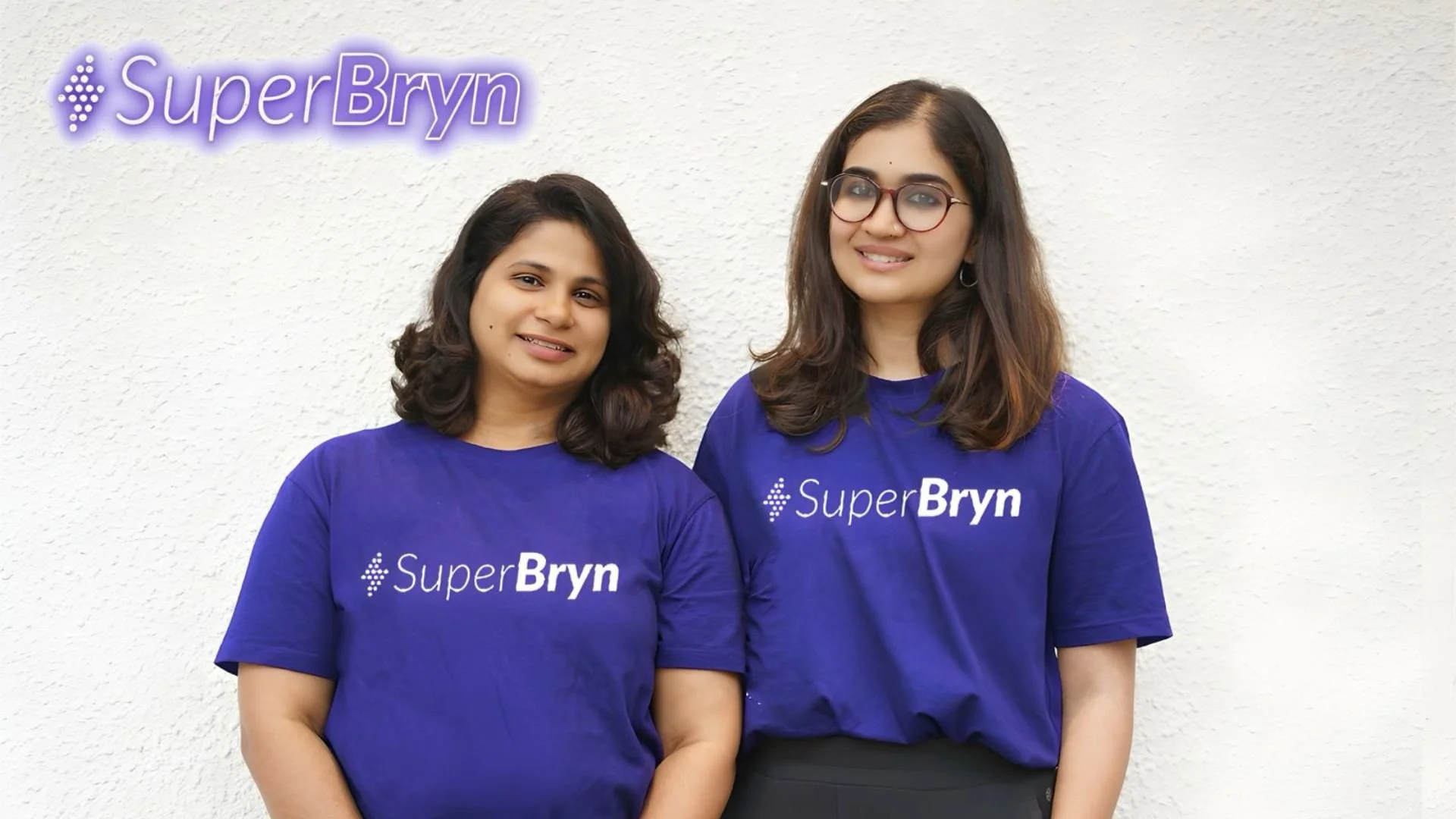
The start-up was founded nine months ago by Nikkitha Shanker, a second-time founder and NIT Calicut engineer, and Dr. Neethu Mariam Joy, a voice AI researcher with a PhD from IIT Madras and postdoctoral work at King’s College London. Founded by two women technologists from Kerala, SuperBryn emerged from a clear insight, voice agents excel in pilots but fail in production, especially with accents, noisy environments, multi-turn dialogue, and edge cases current platforms miss. Seeing the pattern, they set out to fix it by building the reliability layer that makes enterprise voice AI scalable.
In an email interview with Healthcare Executive, Nikkitha Shanker, Co-founder, SuperBryn says that the real test of voice AI isn’t the model, it’s whether it can stay reliable the moment it meets real accents, real noise and real customers.
You speak of the “production gap” in voice AI where pilots succeed but real-world deployment fails. What have you observed as the single most surprising root-cause behind these failures?
The most surprising root cause of failure is that enterprises have almost no visibility into what actually happens once a voice agent goes live. Pilots succeed because everything is controlled, clean audio, predictable flows, familiar accents, limited edge cases. But the moment the agent enters the real world, three things break at once: real accents and dialects it’s never heard before, real background noise and overlapping speech, and completely unpredictable user behaviour. And the surprising part is that enterprises usually don’t realise any of this is breaking until customers complain. It’s rarely a model problem, it’s the lack of a reliability layer that can continuously monitor failures, detect drift, and help the agent adapt to real-world conditions. That visibility gap, what we call the ‘production gap’ is exactly why pilots look great, but deployments fall apart.
“Evals, Observability & Self-Learning” - what do these mean in plain business language for a CXO?
When we talk about Evals, Observability, and Self-Learning, we’re really talking about three practical ideas every CXO cares about. Evals are just a way to measure how well your voice agent is actually performing automated checks across thousands of real simulated calls under a large number of scenarios that show where it misunderstands or gets stuck, so issues are caught early instead of surfacing through complaints or churn. Observability means you can see failures the moment they happen, before customers feel them. With live dashboards, error heatmaps, and tracing across the entire stack, enterprises get fewer escalations, fewer surprises, and a single source of truth across all their voice-agent vendors. And Self-Learning is what keeps the agent improving on its own retraining on real failure patterns so it gets better with accents, noise, ambiguous intents, and complex flows without relying on big engineering teams. Put simply, we help enterprises catch problems early, fix them automatically, and keep their voice agents reliable and trustworthy at scale.
What three metrics do you track closely and what results have you achieved so far?
We track three metrics that directly show whether a voice agent is truly reliable in the real world. First, Resolution Rate, how many conversations actually reach a successful outcome. Most enterprises start below 40%, and with SuperBryn we routinely see that jump to 80%+ within about 60 days. Second, Failure-to-Detection Time - how quickly a team knows something is breaking. Earlier, failures were discovered days or weeks later through customer complaints; with SuperBryn, detection drops to seconds or minutes through real-time alerts and failure-path tracing. Third, Cost per Resolved Call, how much it costs to successfully complete an interaction. As reliability improves and human interventions drop, customers typically see a 25-40% reduction in cost per resolved call. Taken together, these metrics show a clear pattern: more successful calls, fewer failures, and a meaningful reduction in operational cost.
How do you address data governance, compliance and auditability for regulated sectors?
We built SuperBryn ground-up for regulated industries, so governance and compliance aren’t add-ons, they’re built in. All data stays within the enterprise’s chosen cloud region, isn’t used for training without explicit approval, and is protected through strict role-based access. Our workflows are HIPAA-ready, SOC2-aligned, and include native redaction and encryption to minimise risk. And because every model decision and tuning step is fully logged, enterprises get complete traceability and exportable audit trails. At its core, we help organisations deploy AI so they can confidently stand behind regulators, boards, and auditors.
You are India-based but global-facing. How will you scale engineering, localisation, and enterprise sales while maintaining reliability?
We may be India-based, but we’re built for global scale. On the engineering side, we operate with a distributed team focused entirely on reliability infrastructure, with deep specialization in speech, accents, multilingual STT/TTS, and evaluation, supported by partnerships across cloud, LLM, and voice platforms for fast integration. For localisation, we don’t try to pre-build for every accent on day one; our system evaluates, observes, and adapts to real call failures the moment we enter a new geography, allowing it to learn local speech patterns organically. And on enterprise sales, we’re expanding through design partners in the US and Middle East, taking a regulatory-first approach in sectors like healthcare and finance, and anchoring our GTM on reliability outcomes rather than feature checklists. Our north star is simple: every new market should increase the reliability of the system, not the complexity.
Large cloud and voice-AI vendors could build these layers themselves. What is SuperBryn’s moat?
Large cloud and voice-AI vendors can certainly build monitoring for their own stack, but SuperBryn’s moat is that we’re completely model-agnostic. Vendors see their piece of the puzzle; we see the entire lifecycle - STT, LLM reasoning, TTS, workflows, telephony, and integrations and that cross-stack observability is extremely hard for any single provider to replicate. We also see patterns across enterprises and industries, not just usage stats: accent drift, edge-case clusters, cross-model degradation, the real signals that determine reliability. On top of that, our IP isn’t just in monitoring but in automated remediation and self-learning, which is far harder to copy. And ultimately, enterprises prefer a neutral reliability layer. Just as cybersecurity and observability became independent categories, we believe Voice Reliability will stand on its own and that’s the ecosystem we’re building.
Many enterprises struggle not with tech but with change management. What resistance do you see from CXOs and how do you help them overcome it?
Most resistance from CXOs has little to do with the technology itself and everything to do with change management. The first concern we hear is, ‘We don’t want surprises.’ Leaders worry about outages, failed customer interactions, and brand risk, so we address that by giving them complete, real-time visibility into how their voice agents behave in the wild. The second is, ‘We don’t have the AI expertise to maintain this.’ Our self-learning and guided remediation reduce dependence on specialised ML teams, so reliability improves without adding headcount. And the third is, ‘We don’t want to overhaul our workflows.’ SuperBryn plugs into existing voice stacks without forcing a rip-and-replace. Ultimately, we take enterprises from AI anxiety to AI confidence by making reliability predictable and operationally simple.
What does success look like in 12-18 months? What narrative do you want enterprise buyers to tell?
In the next 12–18 months, success for us means becoming the default reliability layer for voice agents in regulated industries. We want enterprise teams to be able to say, ‘Our resolution rates doubled,’ ‘We can finally see what’s going wrong,’ ‘Our agents are improving every week without manual tuning,’ and most importantly, ‘We trust our AI in production.’ If we do our job right, the industry conversation will shift from ‘Does voice AI work?’ to ‘Does it have a reliability layer?’ At the end of the day, success looks like voice agents delivering natural, human-quality experiences, not the inconsistent, frustrating calls we all deal with today.
Got a story that Healthcare Executive should dig into? Shoot it over to arunima.rajan@hosmac.com—no PR fluff, just solid leads.