
A Working Lifespan Approach to Health Human Resources
By Mathew George

The recent debate among policy circles on whether to adhere to the WHO norm of 1 doctor for every 1000 population in India by the government and the counter arguments that it is only a standard available for consideration has exposed some of the serious challenges in health human resource policy. One of the justifications for raising the number of medical colleges in India in the recent past was to improve the doctor: population ratio. This was recently quoted by the union minister as an achievement that as a nation we have outperformed the doctor: population norm proposed by WHO by increasing the number of medical colleges. Does this improve the life of the people in terms of better access to health care, increased coverage and so on when the total number of medical colleges in the country has almost doubled from 387 in 2014 to more than 808 in 2025? Unfortunately, No. What are the implications of this on Indian health care? This is not just a problem of medical profession but points to the failure to have a robust human resource policy relevant for the Indian health care sector.
Human resource management proposes three stages to understand the challenges of a nation’s health system from a working lifespan perspective. They are the (i) entry stage, which involves the production through education and ethical recruitment practices and (ii) active workforce, which is the process of enhancing workforce performance through better human resource management in public and private sectors and finally (iii) exit, which is managing migration and attrition to reduce wasteful loss of human resources.
Unaffordable Medical Education
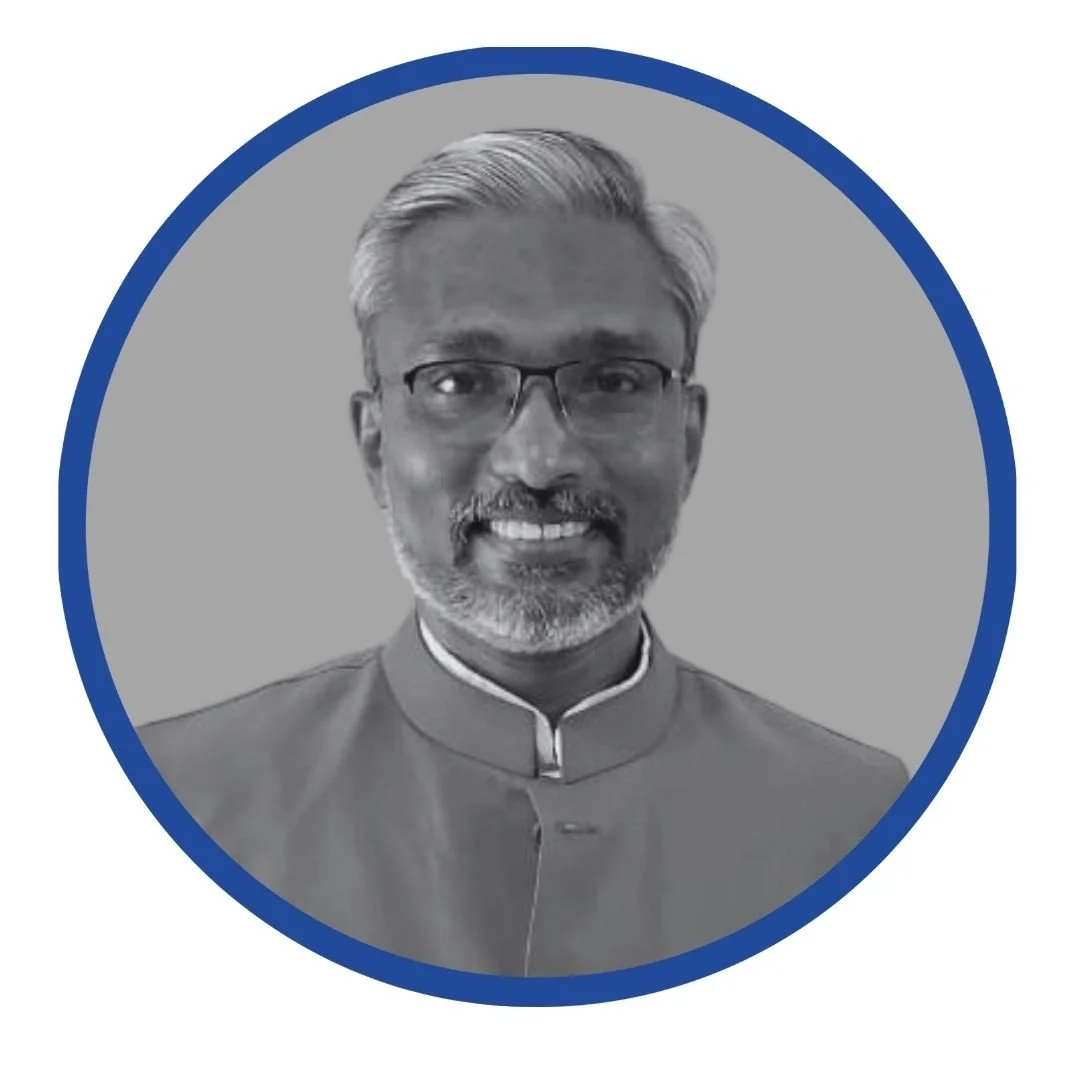
Mathew George, Professor, Department of Public Health and Community Medicine, Central University, Kerala, Kasaragod.
The first stage is characterized by the rise in medical colleges and raised cost of medical education to an unaffordable level when the government policy on medical education was favoring the private sector. The rise in number of medical colleges has led to the total seats for MBBS and PG seats increased to the tune of 140%. Despite this, the alarming rise in the cost of medical education has resulted in a situation that an average middle class family cannot afford medical education for their children. A conservative estimate puts the annual fees for MBBS course to ₹ 10-35,000/- for a fully govt seat, 3.5 to 8 lakh under govt quota in private medical colleges and 12 to 25 lakh for fully private seats. What it translates is that a student is expected to spend around ₹ 50 lakhs to 1 Crore to complete a MBBS course if one fails to get a fully merit seat, which is the case with majority of MBBS seats in India. Further, to become a specialist, the student needs to acquire a PG degree which costs another ₹ 50 lakh to 1 crore. In other words, more than 2/3rds of the total specialist are investing approximately ₹1 crore to 2 crores to become a specialist doctor in India. Most of the families in the country cannot afford this amount and is dependent on huge educational loans from the banks that result in a debt situation for those completing medical education.
Specialist Shortage
This takes us to the second stage, which is active workforce, The case of specialist doctors in the country reveals this better. There is significant difference in the compensation (salary) offered for a specialist doctor in public and private sector hospitals. The difference is in the tune of 5-10 times higher in the private sector than in the public sector depending on the popularity and other factors. Further, the conditions of working of a specialist in a public sector is far too constrained and demotivating as compared to a private sector. This has resulted in low morale and compensation of specialist doctors in public sector. The reason why there is shortage of specialist in public sector and never in the private sector is due to the fact that salary paid in public sector hospitals is not commensurate with the cost of producing a specialist in the country. The HR policies of the government is not in favor of protecting the specialist doctors economic, social, and cultural needs and hence doctor shortage in public sector is a continued problem as reflected in the data from rural health statistics (RHS). This clearly reflects the failure of the second stage of HR planning, which is to create a satisfactory working environment for health care professionals in the government sector so that the workforce can productively contribute to the societal needs.
Similar is the case with the Dental and AYUSH professionals in India, where the stage of active workforce is either non-existent due to lack of opportunities in the public sector or are grossly underdeveloped. For instance, in the state of Maharashtra, there are more than 50 homeopathic medical colleges, one of the highest across states. With only a single medical college under the public sector, it is shocking to note that there are no government positions for homoeopathic physician earmarked within the state government for graduating professions. It is a truism that a whole lot of BDS and AYUSH practitioners are exiting from their parent profession and finding greener pastures in fields like public health, health administration, health care IT, insurance and so on.
Brain Drain Vs Contractual Employees
The third and the most challenging aspect of the human resources is the stage of exit, or high attrition rates. Exit stage in the traditional context was when the employees superannuate after completing a long career. In Indian context, equally relevant is the migration of health personnel after getting trained in educational institutions. This is obvious from the migration of health personnel, most important being the nursing professionals and a range of paramedical professional moving abroad in search of greener pastures. In Indian health care sector, there is yet another challenge, which is the over-dependence on the contractual employees, who are appointed and working as health care professionals for longer periods. This becomes obvious from the fact that the second medical officer of most of the primary health centres (PHCs) in our country is a contractual employee for more than a decade. Thanks to the National Rural Health Mission that has initiated contractual employment as a short-term strategy to address the human resource crisis that plagued the health sector then as part of its larger goal to strengthen the rural health infrastructure. Currently, more than half of the total employees who are in key positions of the government health departments are on contract. Not only does this create a huge insecurity and low morale among the employees but more importantly has resulted in greater attrition rates of health care professionals from the system, without any career progression options and facing serious power imbalances within their work environment. The strike of ASHAs, and the employees of the National Health Mission (NHM) in recent times across several states reflects the failure of a strong human resource policy for the health sector.
Failure to have an effective human resource policy for the government health sector is a serious shortcoming and is obvious from the diverse challenges faced by the health care professionals at each stage from a working lifespan perspective. If the public sector is serious in strengthening its institutions of health care delivery, it is important to note that basic human resource policy is a prerequisite. It is important to address this shortcoming before rolling out Ayushman bharat digital health mission as even in classical management, fixing human resources attain priority over information systems, while trying to strengthen the building blocks of any country’s health system.
Author: Mathew George, mathewg@cukerala.ac.in, is Professor at the Department of Public Health and Community Medicine, Central University of Kerala, Kasaragod.
Got a story that Healthcare Executive should dig into? Shoot it over to arunima.rajan@hosmac.com—no PR fluff, just solid leads.