
Most Transformative Change in India Is the Dramatic Rise in Life Expectancy: Ganesh Pillay
By Arunima Rajan
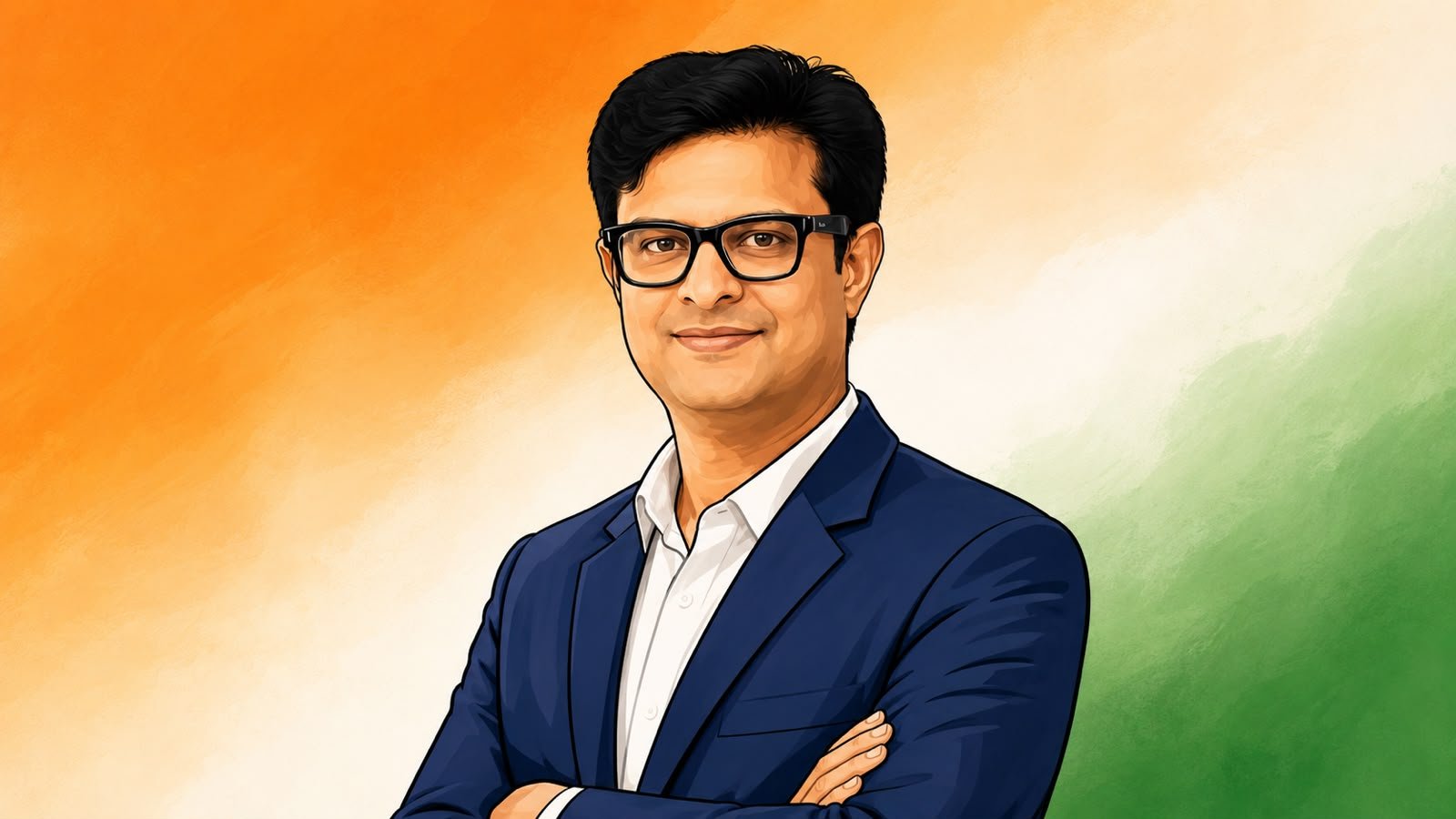
In an interview with Arunima Rajan, Dr Ganesh Pillay, Chief of Research and Academics and Regional COO (Central India) at ASG Eye Hospital, says that the most transformative change is the dramatic rise in life expectancy from just 32 years in 1947 to over 70 years today
What is the single biggest change in Indian healthcare since independence?
From just 31 years in 1947 to over 71 years today, it is the precious gift of life by virtue of an increase in life expectancy that has been the single biggest change in health since independence. This has been driven by success in controlling infectious diseases through better sanitation, nutrition and medicines, expanding immunisation, improving maternal and child health, and building a vast public health infrastructure supported by private healthcare.
The challenge going forward is to ensure that access and quality remain uneven even as the demographic shift has led to an epidemiological transition, fundamentally altering the disease profile, which has shifted from infectious to chronic conditions. While death rates from acute infectious diseases have dropped, non-communicable chronic diseases like heart disease, diabetes, cancer and eye disorders such as cataract and diabetic retinopathy are now the dominant health challenges.What is the percentage of patients who still rely on out-of-pocket spending currently has it fallen over the last few years due to the introduction of Ayushman Bharat scheme or has it not changed?
While out-of-pocket expenditure (OOPE) as a share of Total Health Expenditure has declined significantly from 64.2% in 2013-14, it still remains high at 43.4% in 2022-23. Overall, since its launch, AB PM-JAY has saved families over Rs. 1.52 lakh crore in OOPE healthcare expenses.
Ayushman Bharat (AB PM-JAY) has contributed to this decline - Government Health Expenditure as a share of Total Health Expenditure (THE) has increased from 28.6% to 43.7% during the same period. Over 45.6 crore Ayushman cards have been issued and the AB PM-JAY has covered over 11.29 crore hospitalisations with a cost of Rs.1.62 lakh crore since inception. At present, there are 38,499 public and private hospitals empaneled under AB PM-JAY.
What percentage of patients still rely on OOPE?
Yes, Ayushman Bharat has broadened access, but the core patient profile in specialty hospitals like ASG remains largely middle-income and self-pay. PM-JAY has enabled millions of low-income families to access secondary and tertiary care they previously could not afford, particularly for procedures like cataract surgery, which is a high-volume service for eye hospitals. Having said that, many beneficiaries still face out-of-pocket costs for medicines, diagnostics, and transport, which can limit utilisation among the poorest.
ASG’s patient mix continues to be dominated by self-pay and insured middle-class patients, with PM-JAY beneficiaries forming a smaller, though growing, segment, especially in tier-2 and tier-3 cities where ASG has expanded and has a significant presence. While the scheme has increased awareness and willingness to seek care, financial and logistical barriers persist to some extent.
Has Ayushman Bharat changed the demographic profile of your patients?
Brain drain is driven by better pay, working conditions, and career opportunities abroad. Retention requires a multi-pronged approach with a focus on internal training, better growth opportunities and attractive remunerative practices.
Competitive compensation and benefits that match global standards for specialists, especially in high-demand fields like ophthalmology will definitely encourage specialist doctors to stay in India and practice. A core pillar of ASG’s Vision 2030 is training local talent to become world-class ophthalmic professionals. ASG is deploying significant resources into long-term fellowship programmes in super subspecialties like vitreo-retina, phacoemulsification, paediatric ophthalmology, and cornea surgery, with stipends and no course fees. Mentor-led clinical training at high-volume centres ensures hands-on surgical experience under expert supervision. There are also standardised academic protocols across ASG centres, enabling consistent, high-quality training regardless of location. By creating these clear, funded pathways for career advancement within India, ASG reduces the incentive for ophthalmologists to seek training or employment abroad.
Vision 2030 prioritises research and development in advanced surgical techniques, diagnostics, and clinician training by 2026. This includes AI-driven diagnostics and cutting-edge imaging (e.g., OCT) to enable early disease detection and precision care, laser-assisted cataract surgery and other innovative procedures that keep clinicians engaged with the latest technology, and access to world-class technology and research opportunities makes ASG an attractive employer for top talent, countering the pull of overseas centres. Centralised procurement and digital workflows ensure consistent standards of care across the network.
ASG’s HR strategy emphasises clear career progression and internal mobility. Lateral and upward movement takes place through a permanent careers desk and portal, with over 100 roles mapped to 12 competencies. In-house leadership development programmes (e.g., Launchpad, high-potentials identification) and an in-house mini-MBA give impetus to aspiring leaders.
How can we address brain drain in Indian healthcare?
The capital infused by private equity (PE) enables investment in clinical standardization and processes that drive accountability and efficiency. PE-backed hospitals increasingly adopt independent boards. Clinical outcomes are tracked and standardized protocols implemented, which are rare in traditional family-run hospitals. PE investors push for efficient bed turnover, reduced wait times, and better patient experience, which can improve clinical throughput. PE investment has enabled rapid expansion, technology upgrades (AI diagnostics, tele-ophthalmology), and professional management enhancing both scale and quality.
What is the impact of PE on Indian healthcare system?
Private equity (PE) brings more than capital—it drives clinical standardisation, accountability, and efficiency. PE-backed hospitals increasingly adopt independent boards, clinical outcome tracking, and standardised protocols, which are rare in traditional family-run hospitals. PE investors push for higher bed turnover, reduced wait times, and a better patient experience, which can improve clinical throughput. PE investment has enabled rapid expansion, technology upgrades (AI diagnostics and tele-ophthalmology), and professional management, enhancing both scale and quality.
Has digitisation altered your operations?
Ayushman Bharat Digital Mission (ABDM) and telemedicine have had the most tangible operational impact. Over 96.55 crore ABHA cards have been created enabling seamless health record linkage. Hospitals integrated with ABDM report 30–40% faster patient onboarding and reduced administrative costs. As for telemedicine, the government’s eSanjeevani telemedicine service has seen over 49.3 crore consultations since inception in November 2019. At ASG, we have also invested in tele-ophthalmology and remote screening have expanded reach to tier-2/3 cities, allowing hub specialists to support spoke centres without proportional cost increases.
What remains to be implemented is full interoperability of electronic health records (EHRs) across providers, AI-driven predictive analytics for population health, and widespread adoption of digital prescriptions and e-pharmacy integration.
What changes would you want in the next 10 years?
We believe priorities for the next decade could be on the following areas:
Primary and preventive care: Strengthening Ayushman Arogya Mandirs (1.87 lakh operationalised) and expanding outpatient coverage under PM-JAY.
Non-communicable diseases (NCDs): Scale up screening and management for diabetes, hypertension, and eye care. This is critical as life expectancy rises.
Digital health infrastructure: Expand ABDM, ensure data privacy (DPDP Act compliance), and integrate AI for diagnostics and triage.
Health workforce: Address shortages and brain drain through better pay, training, and rural incentives
Got a story that Healthcare Executive should dig into? Shoot it over to arunima.rajan@hosmac.com—no PR fluff, just solid leads.