
If No One Pulls Up a Chair for You, Bring Your Own
By Arunima Rajan
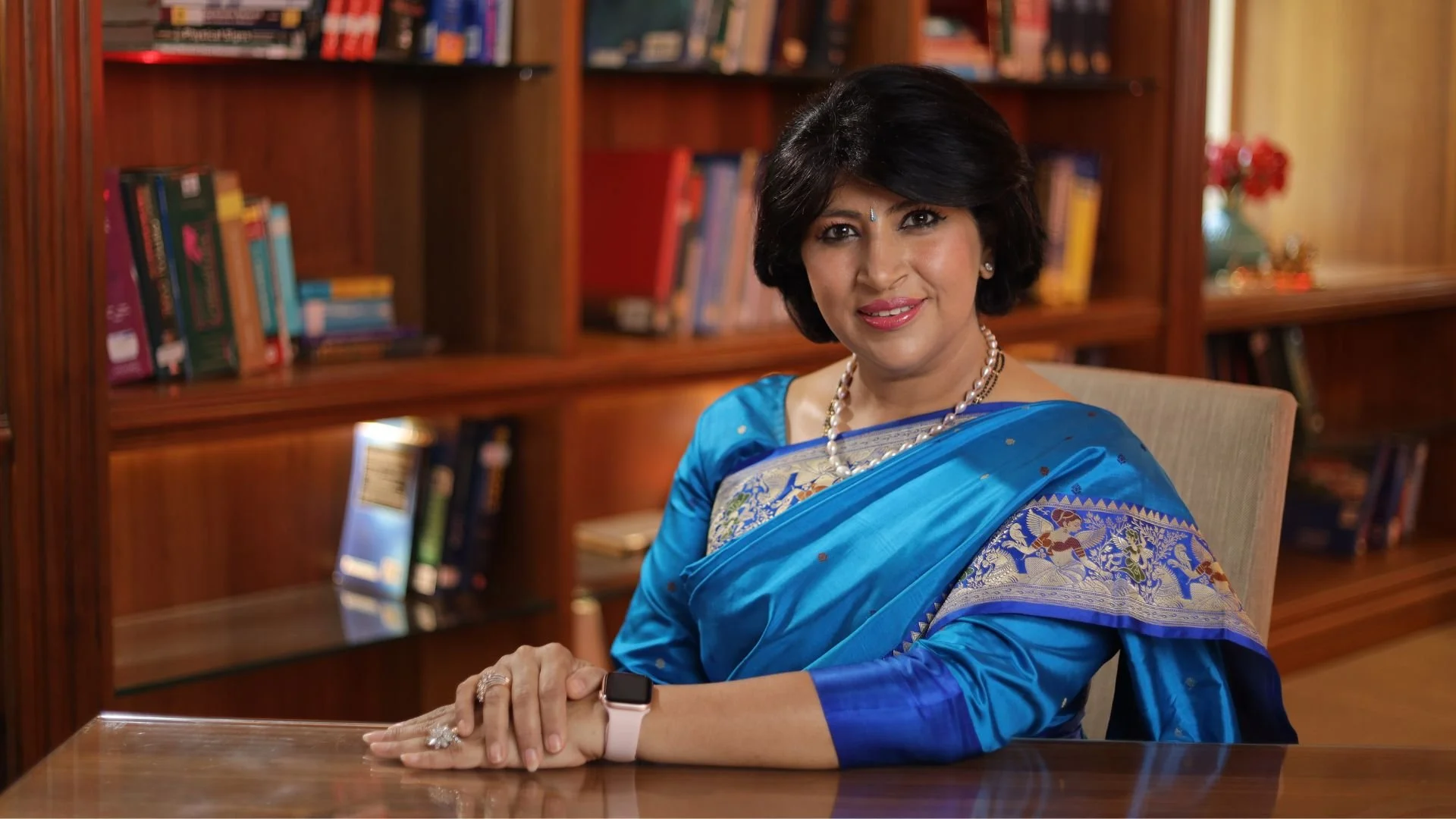
Dr. Tarang Gianchandani, Group CEO Healthcare initiatives and chief executive officer, is an orthopaedic surgeon turned administrator. She believes the healthcare system needs more women in positions of power to become more empathetic. She advises women to be confident and trust in themselves.
You trained in orthopaedics and practised briefly in Delhi and Singapore before pivoting into hospital administration after getting an MBA. It was an early-career switch. Most doctors take decades to consider the management track, if at all. What was pulling you toward the administrative side even while you were still doing knee replacements and arthroscopies? Was there a moment in Singapore that confirmed the pivot was right?
During those years of being an orthopaedic surgeon, I was conscious of the fact that the holistic recovery of the patient was dependent on multiple factors that extended far beyond the operating theatre. I found myself being driven towards an understanding of why systems were working well for some patients and not for others, how well infection control practices were being carried out, how well handovers were being done, how well rehabilitation plans were being developed and how well expectations were being set out for families. It was during my time in Singapore that this instinct sharpened to a clear focus. I could see the power of well-designed processes to drive down variation and improve outcomes for large numbers of patients. There was no single moment, it was a gradual process. The choice to pursue an MBA felt more like a broadening of what I might do for healthcare than a departure from it. It enabled me to create an impact on more lives in a significant manner.
You've run hospitals inside Singapore's public system and inside India's private and trust-run systems. How would you explain to a first-year medical student the single biggest difference in how a hospital runs day to day in those two countries?
I would say the most fundamental difference is that Singaporean hospitals are designed around predictability, while Indian hospitals are designed around adaptability. In the Singaporean public healthcare system, operations are driven by a set of very deeply ingrained protocols and standardisation, with very little variation in the delivery of care. The systems are designed as if the future will be predictable. In India, whether in private or trust hospitals, you are dealing with much more diversity on a daily basis in terms of patient awareness, socio-economic factors, sources of funding and family engagement. There is a lot to learn from both systems.
You have been at the helm of major hospitals and healthcare initiatives. Did you come across any gender bias? Can you tell me about one specific meeting, negotiation or decision where you were aware that being a woman in the room changed the dynamic, for better or worse, and what you did in that moment?
The position of women leaders in the healthcare industry has rapidly evolved, and I am humbled to serve as a testament to this myself, as are my colleagues who are globally renowned for their expertise. Having said that, we need more women leaders in senior positions to bring about change. More women leaders in senior positions will help us shape policies and bring about a more inclusive and compassionate healthcare system. I have been lucky to have women leaders support me in my journey, and I believe in developing women leaders in my hospital. My advice to young women who aspire to have a career in the healthcare industry is to be committed, intelligent and confident about their capabilities. Trust yourself for others to trust you. Carry your chair with you if others don't extend you one.
Surgeons are trained to make fast, decisive, often irreversible calls. CEOs are told to consult, build consensus and sometimes delay. How do you handle the tension between those two instincts? Can you give me an example of when your surgeon's reflex clashed with the CEO’s playbook?
Being a medical professional demands that one be swift yet patient and thoughtful in decision-making, as every second matters when it comes to saving lives. To balance clinical knowledge with administrative expertise, one has to have a deep understanding of both. As an orthopaedic surgeon, my first passion is patient care and practice, and through my management experience and years of running hospitals, I bring the ability to apply strategic thinking and sustainability. The clash regularly happens when the patient safety and patient care instinct of a surgeon clashes with the CEO's focus on business, be it infection control costs or preventing unnecessary surgeries and procedures. I am glad the surgeon's reflex wins.
Hospital leaders all say 'patient-centric'. I'd like to get specific. Can you point me to a design decision or protocol change at RFH that a patient might never notice, but one that meaningfully changed their safety, dignity or experience? Tell me how it came about.
We aim to minimise hospital stays, enabling patients to return to their daily lives as soon as possible. To support continued recovery, we offer home care packages and follow-up services, bringing healthcare to the patient instead of the other way around. It's a behind-the-scenes change, but it makes a world of difference to the patient experience by making sure that it’s never simply a set of notes being handed off.
A lot of hospitals now say they want more women in leadership. But the numbers between middle management and the C-suite barely move. In your honest view, what is the single biggest structural reason –something the institution controls – that keeps the pipeline so thin?
This is subject to a lot of factors and cannot be a one-size-fits-all answer. But I can say that this is fast becoming a thing of the past and we will see more women leaders taking up C-suite roles in the Indian healthcare ecosystem.
If you could go back and talk to a 30-year-old Dr Tarang, still early in orthopaedics, what's the one risk you'd tell her to take sooner and the one compromise you'd warn her never to make on the way up?
I would tell her not to wait so long to say yes to leadership opportunities just because she didn't feel fully ready. At 30, I was very focused on getting things right, being technically strong, being prepared and not making mistakes. What I didn't realise then is that growth often happens after you step into responsibility, not before. Taking that risk would have saved a lot of self-doubt. And I would tell her very clearly to continue not to compromise on her self-respect, even in small, uncomfortable moments when it might seem easier to stay quiet, go along or avoid friction. Those moments shape who you become as a leader. Titles come and go, and skills can always be built, but once you lose your own sense of credibility or values, it's incredibly hard to get them back.
Got a story that Healthcare Executive should dig into? Shoot it over to arunima.rajan@hosmac.com—no PR fluff, just solid leads.