
Sankara Eye Hospital Hosts “CSSD 360” Workshop to Strengthen Patient Safety and Infection Prevention
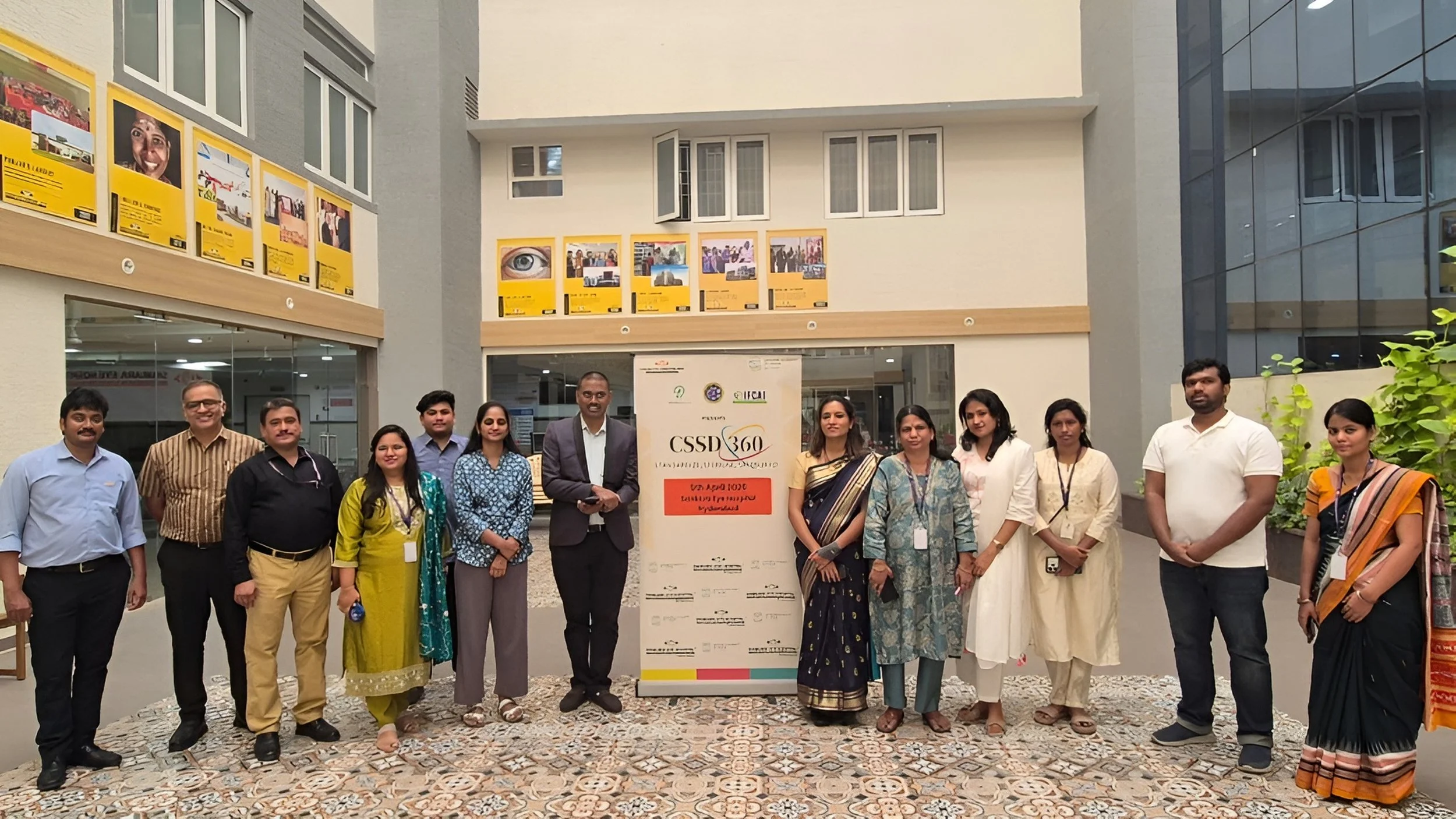
Sankara Eye Hospital, Hyderabad, successfully organized the “CSSD 360 – Standardize, Sterilise, Safeguard” workshop, underscoring the critical role of the Central Sterile Supply Department (CSSD) in ensuring patient safety and preventing healthcare-associated infections. The program was conducted by Sankara Eye Hospital under the guidance of Dr. Sai Shruthi, Chief Microbiologist.
The workshop brought together a diverse group of healthcare professionals, including microbiologists, infection control specialists, quality managers, hospital administrators, and CSSD technicians. The program focused on evidence-based sterile processing practices, improving adherence to national and international standards, and enhancing overall patient safety outcomes.
Dr. Sriram Simakurthy, Chief Medical Officer, Sankara Eye Hospital, highlighted the indispensable role of CSSD in clinical care, particularly in ophthalmology where even minimal contamination can lead to severe complications.
The scientific sessions featured insights from an esteemed panel of national and international experts. Dr. Vijendra Kawle, Consultant Microbiologist, Rainbow Children’s Hospital, elaborated on CSSD fundamentals and workflow optimization. Dr. Safaa Muneer Ahmed, Group Head – Microbiology and Infection Control, Renova Hospitals, spoke on microbiological considerations and infection prevention strategies.
Mr. Shailesh Mehta, Director, Medovation Inc., presented on kill kinetics and sterilization validation processes, while Dr. Ramakrishna Pai, Additional Professor, AIIMS Mangalagiri, discussed advancements in cleaning, disinfection, and sterilization technologies.
Further strengthening the discussions, Dr. Pragathi K., Senior Consultant Microbiologist and Infection Control Officer at AIG Hospitals, addressed quality management systems in CSSD. Dr. Mustafa Afzal, Consultant Microbiologist and Infection Control Officer at Care Hospitals, provided insights into regulatory standards and guidelines, including NABH and JCI requirements.
Dr Sriram Simakurthy said that “In ophthalmic care, precision is everything—and that extends beyond the surgeon’s skill to the sterility of every instrument used. Even the smallest lapse in sterilization can have serious consequences for patient outcomes. Strengthening CSSD systems is not optional; it is fundamental to delivering safe and high-quality eye care,”.
Adding a global perspective, Dr. Clive Graham, Consultant Microbiologist from the NHS, United Kingdom, shared international best practices and their applicability in the Indian healthcare context.
The workshop featured interactive discussions and case-based learning sessions, enabling participants to engage actively and gain practical insights into real-world challenges and solutions in sterilization practices.
The event reinforced the importance of standardized protocols, continuous monitoring, validation processes, and multidisciplinary collaboration in strengthening CSSD systems. It concluded with a strong emphasis on sustained efforts to ensure safe surgical practices and improved patient outcomes.
Got a story that Healthcare Executive should dig into? Shoot it over to arunima.rajan@hosmac.com—no PR fluff, just solid leads.