
Max Smart Saket Performs Advanced Robotic Bladder Cancer Surgery on Sudanese General
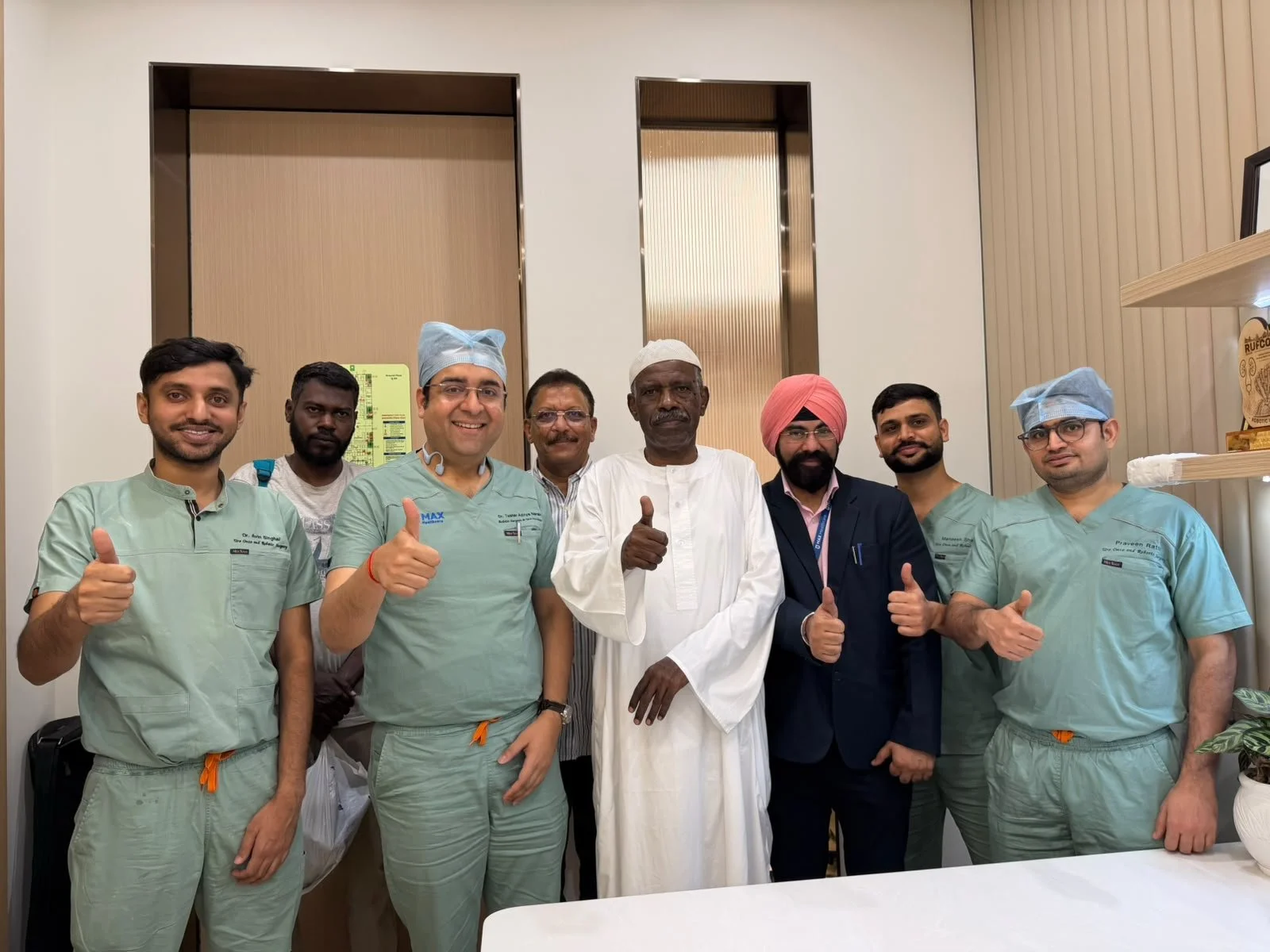
Max Smart Super Speciality Hospital, Saket, Performs Advanced Robotic Bladder Cancer Surgery on Sudanese Army General
In a significant example of advanced robotic surgery, Max Smart Super Speciality Hospital, Saket, successfully treated a 68-year-old Sudanese Army General diagnosed with bladder cancer that had spread to the muscle walls of the bladder. The patient travelled to India for specialised treatment and underwent robot-assisted surgery to remove the urinary bladder and prostate, along with nearby lymph nodes, followed by reconstruction to create a new pathway for urine drainage.
The patient, Mr. Yhya Mohammed Khair Ahmed, was initially diagnosed with bladder cancer in Sudan, following which he travelled to India for further evaluation and specialised surgical treatment. He presented with a history of episodic blood in urine for two months, accompanied by burning sensation during urination. Upon arrival, the medical team at Max Smart Super Speciality Hospital, led by Dr. Tushar Aditya Narain, Director - Urological Oncology and Robotic Surgery, Max Smart Super Speciality Hospital, Saket conducted a comprehensive evaluation to assess the extent of the disease and determine the appropriate treatment approach. Based on the findings, the team recommended surgery to remove the urinary bladder and prostate, along with nearby pelvic lymph nodes to check for any spread of cancer.
The surgery was performed using the da Vinci Xi robotic surgical system, which allows surgeons to operate using specialised instruments. During the surgery, the doctors also found enlarged lymph nodes in the pelvic area, which were removed from both sides.
The robotic-assisted approach enabled the surgical team to create an alternative pathway for urine drainage using a 15 cm segment of the patient's ileum (the end part of the small intestine). This reconstruction, which allows urine to drain into an external collection bag, was performed entirely inside the body using robotic assistance, avoiding the need for a large abdominal incision for this part of the procedure.
Dr. Tushar Aditya Narain, Director - Urological Oncology and Robotic Surgery, Max Smart Super Speciality Hospital, Saket, said: “Surgery for bladder cancer is complex, as it involves removing the urinary bladder and creating a new way for urine to leave the body. In this case, our aim was to perform both the surgery and reconstruction using a minimally invasive robotic approach. The da Vinci Xi robotic system enabled us to carry out the procedure with precision and create the new urinary passage entirely inside the body. This avoided the need for a large abdominal incision for the reconstruction. Advances in robotic surgery are making it possible to treat complex urological cancers through minimally invasive techniques. We are pleased that the patient could undergo definitive surgical treatment and return to his home country with a plan for continued follow-up.”
The patient recovered well and was discharged in a stable condition after a week, with a urine drainage bag and instructions for postoperative care and follow-up.
The case highlights how robotic surgery is expanding the scope of treatment for complex urological cancers, allowing bladder removal and urinary reconstruction through minimally invasive techniques. It also reflects Max Smart Super Speciality Hospital’s commitment to advancing patient care through the adoption of advanced surgical technologies and specialised expertise.
Such capabilities further reinforce India’s growing appeal as a destination for advanced medical care, offering international patients access to complex treatments along with continuity of care.
Got a story that Healthcare Executive should dig into? Shoot it over to arunima.rajan@hosmac.com—no PR fluff, just solid leads.