
Stroke Recovery Remains a Costly Burden as Rehabilitation Lacks Insurance Cover, Experts Call for Urgent Policy Reform
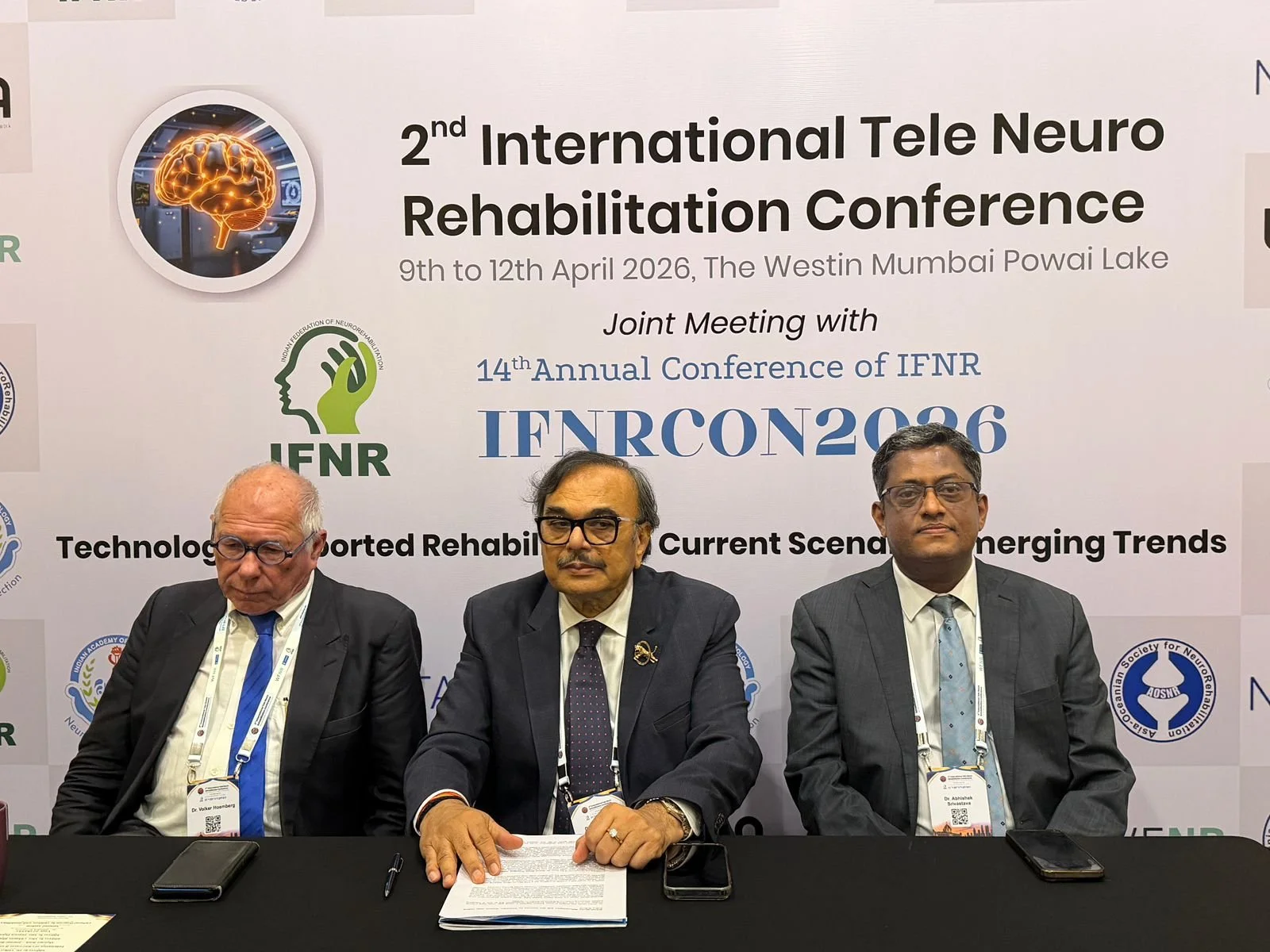
(L to R) Dr. Volker Homberg- President, WFNR; Dr. Nirmal Surya - Founder and President, Indian Federation of Neurorehabilitation; Dr Abhishek Srivastava-Neuro rehabilitation Specialist at Kokilabhen Hospital, Mumbai & Director, IFNR organizing Secretory
As stroke cases rise across India, experts highlight a critical gap: while survival rates improve, lack of insurance coverage for rehabilitation is leaving patients and families to bear heavy emotional and financial strain.
Stroke cases are increasing rapidly in India. While more patients are now surviving strokes and brain injuries due to better medical treatment, the real challenge often begins after they leave the hospital. Recovery requires long-term rehabilitation, which is not only physically demanding but also very expensive. Unfortunately, most insurance policies do not cover these rehabilitation costs, leaving families to manage the burden on their own. Limited access to proper rehabilitation centres and lack of financial support make it even harder for patients to recover fully. Experts highlight the urgent need to include rehabilitation in insurance coverage and to make affordable rehab services more widely available across Mumbai and India.
In line with these efforts, IFNRCON 2026 along with the 2nd International Tele-Neuro Rehabilitation Conference held in Mumbai from April 9–12, 2026. The medical conference brought together top neurologists, rehabilitation experts, and global specialists to discuss the future of stroke recovery and rehabilitation. Experts spoke about new technologies, existing gaps in policies, and ways to improve patient care. A key highlight was a special session by the Lancet Commission and the launch of a White Paper on Neurorehabilitation. One of the main concerns raised during the conference was the urgent need to include post-stroke rehabilitation in insurance coverage, so that patients can access long-term care without financial stress.
Explaining the seriousness of the issue, Dr. Nirmal Surya, President, Indian Federation of Neurorehabilitation, said, “India records over 1.25 million new stroke cases every year, a 51% increase since 1990, accounting for 10% of all strokes worldwide. Stroke is now the 2nd leading cause of death and the 3rd leading cause of disability in the country. While survival rates have improved, access to rehabilitation remains a major concern. Among stroke survivors who need rehabilitation, nearly 1 in 4 receive no therapy at all, and only 17% have access to therapist-supervised care. Advanced rehabilitation technology is available in just 20% of rehabilitation units nationally, and an estimated 70% of India’s population lives in rural areas with virtually no access to neurorehabilitation services.”
Dr. Nirmal Surya further added, “Recovery after stroke does not end at hospital discharge; it requires structured, long-term neurorehabilitation to help patients regain mobility, speech, and independence. However, these services are often expensive, prolonged, and largely excluded from insurance coverage. This places a significant emotional and financial burden on families at a time when they are most vulnerable. There is an urgent need to include post-stroke rehabilitation under insurance policies and expand access to affordable care. Innovations such as tele-neurorehabilitation, robotics, brain stimulation, and AI-driven therapies offer hope, but they must be made widely available to truly bridge this gap.”
Dr Abhishek Srivastava-Neuro rehabilitation Specialist at Kokilabhen Hospital, Mumbai & Director, IFNR organizing Secretory said “Stroke is no longer just an emergency, it has become a long-term condition that needs continuous care. However, rehabilitation services are still out of reach for many patients due to high costs and limited availability. Families often struggle to manage the expenses of ongoing therapy, caregiving, and repeated hospital visits, especially since most insurance policies do not cover these treatments. This creates both financial and emotional stress during an already difficult time.”
Experts warn that without timely rehabilitation; stroke survivors are at a higher risk of long-term disability and reduced quality of life. Early and regular therapy can help patients recover better and regain independence, but lack of awareness, limited facilities, and high costs often delay this care. There is a growing call for urgent action, better policies, more awareness, and inclusion of rehabilitation in insurance coverage, so that every patient gets a fair chance at full recovery, not just survival.
Got a story that Healthcare Executive should dig into? Shoot it over to arunima.rajan@hosmac.com—no PR fluff, just solid leads.