
What Looked Like Heart Disease Turned Out to Be a Rare Lipid Disorder: Wadia Hospital Saves Infant
The multidisciplinary team at Wadia Hospital treated a 2.5-month-old baby girl with life-threatening hypertriglyceridemia caused by Familial Lipoprotein Lipase Deficiency (LPLD), a very rare genetic disorder affecting 1 in 1,000,000 individuals in the general population
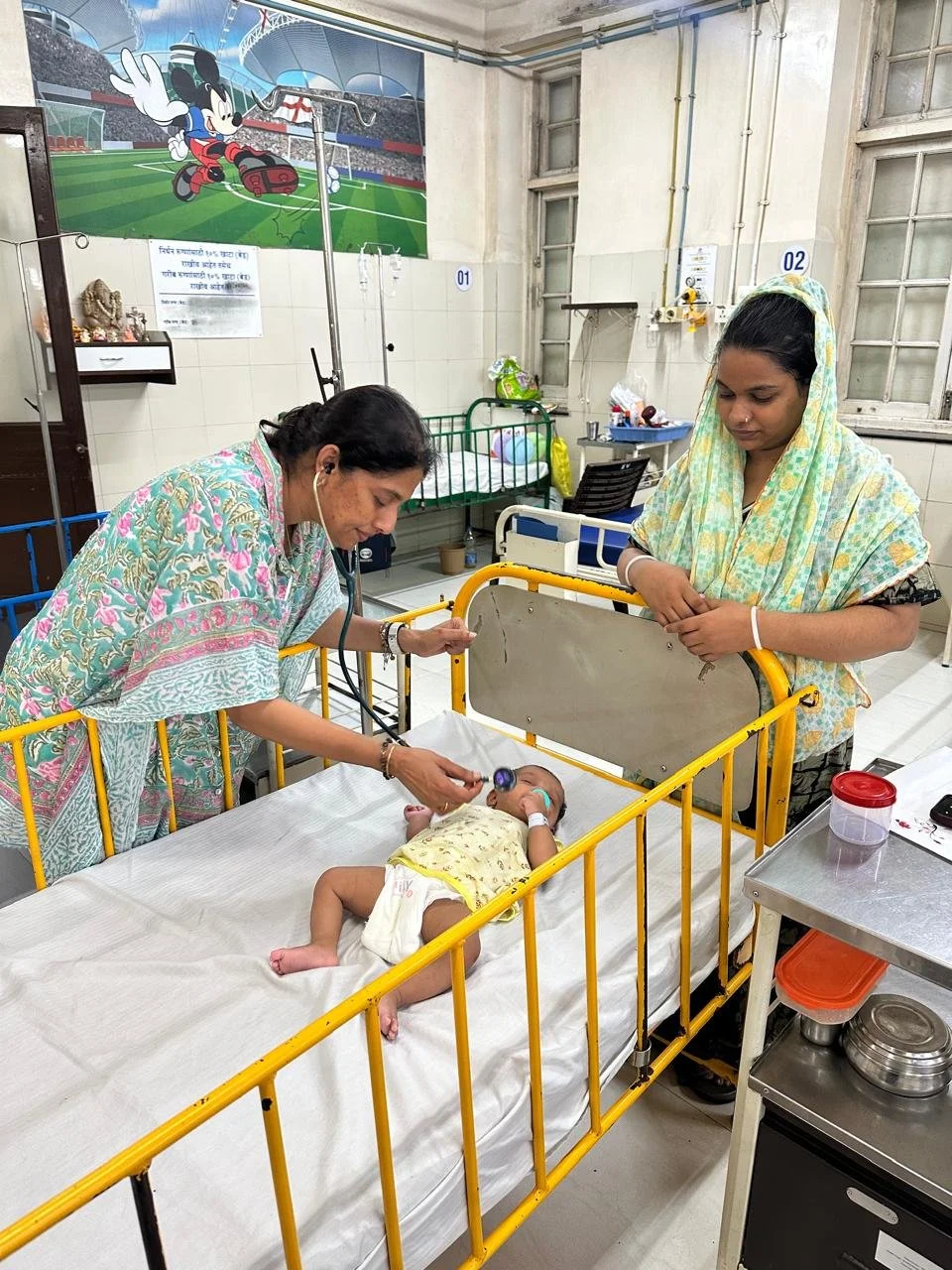
What began as an evaluation for an enlarged heart in a two-and-a-half-month-old baby girl soon turned into one of the rarest and most challenging cases managed at Bai Jerbai Wadia Hospital for Children. Referred to with suspected congenital heart disease, the infant was ultimately diagnosed with Familial Lipoprotein Lipase Deficiency (LPLD), a rare inherited disorder of fat metabolism. Bai Jerbai Wadia Hospital For Children saved the baby's life after dangerously high fat levels in her blood began affecting vital organs, including her heart, liver, blood vessels, and eyes.
The baby Rida Shaikh, the first child of a Bandra couple Mr. Mohammad Shaikh & Mrs. Saniya Shaikh after four years of marriage. The baby was referred to Bai Jerbai Wadia Hospital For Children on May 29 for further care, evaluation, and treatment of a sinister form of congenital heart disease that is hypertrophic cardiomyopathy (HCM), where the heart is enlarged and functions poorly. Dr Sumitra Venkatesh, Paediatric cardiologist, evaluated the child and found there was indeed an enlarged heart. However, during routine blood investigations, doctors noticed something extraordinary: the baby's blood appeared milky white instead of its normal red colour, immediately indicating that something far more serious was happening.
Dr Sumitra Venkatesh, Paediatric Cardiologist, said, “One month ago, patient had come for the routine OPD check up for cardiac opinion .The baby had markedly elevated levels of serum triglyceride of more than 42,000mg/dl, where the typical normal levels are below 100 mg/dl. Such high levels are not seen and are life-threatening. A routine evaluation for an enlarged heart in a 2½-month-old girl soon unfolded into the diagnosis of an exceptionally rare and severe inherited disorder of fat metabolism. The excessive fat had accumulated in several vital organs, including the heart, blood vessels, eyes, and liver, impairing their function and severely affecting the baby's overall health.”
Immediately, a team of specialists involving Paediatric Endocrinology, Paediatric Lipidologist, Pediatric Cardiology, Paediatric Critical Care, Paediatric Hepatology, Pediatric Genetic Nutritionist, Geneticist, and paediatric radiology was formed, and the child was managed through a carefully structured protocol of care aimed at rapidly reducing the extreme lipid burden.
Dr Sumitra Venkatesh, Paediatric Cardiologist, further added, “The infant was kept off oral feeds for 16 days to help lower the fat circulating in her blood and was provided fat-free nutrition intravenously under close monitoring. Managing the nutritional needs of such a young infant during prolonged fasting posed a big challenge for both the treating team and her parents. Serial monitoring of triglyceride levels guided ongoing management. As the levels came down on Day 16 of hospitalization, carefully formulated ultra–low-fat feeds were introduced under strict monitoring. By the nineteenth day of hospitalisation, the baby's triglyceride level had dramatically reduced to 242 mg/dL. Her blood gradually regained its normal red colour, fat deposits in the affected organs began disappearing, and her heart function showed remarkable improvement. Later, genetic testing confirmed the diagnosis of Familial Lipoprotein Lipase Deficiency, caused by the deficiency of an enzyme essential for breaking down fats. Evaluation of both parents also revealed mildly elevated triglyceride levels, supporting the inherited nature of the condition. Over the following days, the child showed steady improvement, along with the disappearance of fat deposited in various organs like the eyes, heart, and liver. Baby Rida Shaikh discharged on 29th june 2026 and doing well and full oral low-fat feeds.
Professor Dr Sudha Rao, Medical Director and Chief Division of Paediatric Endocrinology, said, Familial lipoprotein lipase deficiency is a very rare genetic disorder affecting 1 in 1,000,000 individuals in the general population. I have encountered such cases previously, but not with such life-threatening,, severely high levels of serum triglyceride. This child will need lifelong dietary restrictions limiting fat intake to less than 10 -15% of total calories provided, along with monitoring of blood Triglyceride and other lipid levels. The long-term outcome is good in terms of growth and development, and we need to be watchful of complications like pancreatitis.”
Dr Minnie Bodhanwala, CEO of Bai Jerbai Wadia Hospital for Children, said,” This case stands as a powerful example of how early recognition, precise diagnostics, and seamless multidisciplinary collaboration can transform the outcome of an otherwise devastating rare disease. The coordinated efforts of multiple specialties not only solved a complex medical mystery but also restored health to a critically ill infant. At Bai Jerbai Wadia Hospital for Children, we get many intriguing rare diseases and can provide them with treatment and comprehensive care all under one roof.”
‘Our daughter is our first child, and seeing her fight in such a rare condition was the most difficult phase of our lives. We are deeply grateful to the entire team at Bai Jerbai Wadia Hospital for Children for their timely diagnosis, constant support, and dedicated care that saved our baby's life. Today, seeing her smile again is the greatest blessing for our family,” concluded the parents of the baby.
Got a story that Healthcare Executive should dig into? Shoot it over to arunima.rajan@hosmac.com—no PR fluff, just solid leads.