
'Don't confuse quantity with quality’: ISB's Sarang Deo on India's ₹980-crore allied health push
By Arunima Rajan
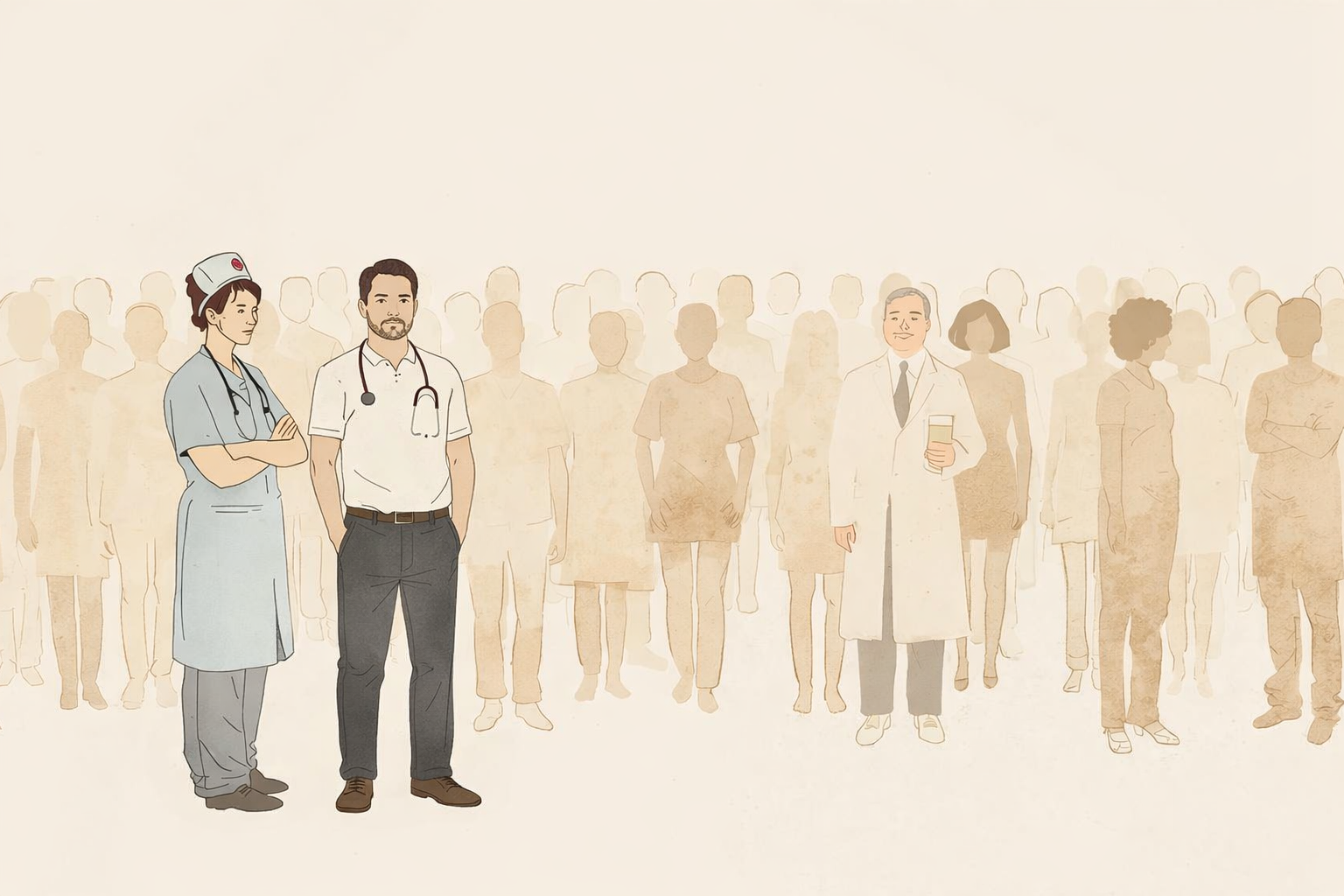
For the first time, the Union Budget 2026–27 has allocated almost ₹1,000 crore (₹980 crore over three years) to train one lakh allied health professionals (AHPs) across 10 disciplines including optometry, radiology, anaesthesia and behavioural health. This is one of the most ambitious policy interventions for AHPs since the National Commission for Allied and Healthcare Professions Act was passed in 2021.
To make sense of this announcement, Arunima Rajan spoke to Professor Sarang Deo, Executive Director, Max Institute of Healthcare Management, Indian School of Business (ISB). Deo is an experts on healthcare delivery systems. He earned a PhD from UCLA Anderson School of Management, an MBA from Indian Institute of Management (IIM) Ahmedabad, and a B Tech from the Indian Institute of Technology (IIT) Bombay. His work examines the impact of operations decisions on population-level health outcomes.
Responding to the Budget announcement, Deo called the measure "timely and necessary". But his endorsement comes with a warning: quantity without quality, integration and sustained financing will not improve the care that patients actually receive.
In a rural district hospital, a patient with diabetes may wait hours to see an overworked doctor, only to be told to come back in a month. There is neither dietician nor physiotherapist nor optometrist to provide the allied support she needs. You called the Budget measure “timely and necessary.” For a patient like the one I’ve described, how will it improve things?
This is a good observation. The number of allied health workers the Budget will add is likely to be lower than the estimated deficit, but it is a start. Any impact of a health system change on marginalised individuals always takes time.
AHPs are not a panacea for all problems. We need to also evolve structures, processes, and behaviours to use their skills effectively for the greater social good. These include who they are accountable to, what they are accountable for, how empowered they feel and how their inputs get integrated into those of the clinicians.
Mushrooming private medical colleges promised world-class training but fell short. Graduates’ clinical skills were not up to par. The National Commission for Allied and Healthcare Profession (NCAHP) regulatory framework is expected to take effect from the 2026–27 academic year. What safeguards matter most right now?
This is an important point. We should not confuse between or equate quantity with quality. We should insist that any quantitative rise in resources must come with good quality. Here, the medical and the broader higher education system are implicated. Given the rapid changes in healthcare delivery models, one should expect the roles of these AHPS will also change quickly.
We don’t want a workforce that becomes obsolete. Hence, we want to ensure that the curriculum is up to date and focuses on more foundational skills – socio-behavioural, such as empathy, communication, and socio-technical, like digital literacy. Second, we want to have a robust competency framework and multiple certification opportunities that help these professionals demonstrate and signal their skills in the marketplace. Third, we need a robust and functioning labour market that demands and pays for the quality of care these professionals offer. The challenge is to achieve this without the cost of care skyrocketing. One broad approach is emphasis on “value-based healthcare”.
Your research team in Hyderabad sent community health workers (CHWs) to screen residents of some of the poorest areas for diabetes and hypertension. But after 12 months of being identified, patient retention is only 16.5%. It’s a pattern familiar to anyone who has reported on health programmes in underserved communities. The initial contact works, but keeping people in the system is another matter entirely. The government now plans to train 1.5 lakh geriatric caregivers and significantly expand the AHP workforce. What did you learn from that experience about preventing patients from dropping out?
One of the main challenges in disease management programs in India (and elsewhere, too) is keeping patients enrolled, especially if they are not “sick” on a day-to-day basis. In other words, the perceived value of such interventions does not match with the cost patients have to incur to use the services provided. One solution might be through innovation in the financing of healthcare delivery. Insurance companies might need to expand their care delivery arm and offer attractive discounts to patients (either directly in individual cases or through corporates in group insurance) who remain engaged in the disease management efforts. Another, of course, is through improved education and engagement with patients.
In many Indian families, the onus of caring for an ageing parent usually falls on a daughter or daughter-in-law, often affecting her career, health, even her marriage. India’s geriatric population is projected to reach 300 million by 2050. You’ve spoken about the need for AHPs who can work outside the hospital, in homes, in rehabilitation centres, in senior living facilities. What kind of care system would actually reach these families, and what training would the AHP need?
Today, we have a fragmented ecosystem of market players who provide bedside attendants to the elderly or patients requiring ongoing care and attention. Many of these players are not organised formally, and attendants are not trained professionally. As I have said, the skillset needed for AHPs needs to include socio-behavioural aspects as much as the clinical aspects.
If these workers are going to enter patients’ homes to provide care, they need to be empathetic and considerate of the broader aspects of the family’s living conditions and environment. Indeed, the burden of caregiving falls disproportionately on women, not just in India, but globally. This is a foundational social and cultural issue. A limited policy intervention of scaling up the allied health workforce is unlikely to address it.
India’s health budget has crossed ₹1 lakh crore for the first time. But public health spending is just about 1.8% of GDP, against the National Health Policy’s 2.5% target. Ayushman Bharat Pradhan Mantri Jan Arogya Yojana (PM-JAY) allocation rose by only 5.6% to ₹9,500 crore, which many health economists say is inadequate to fix reimbursement rates or bring more hospitals into the scheme. For a country where families still sell land or jewellery to pay for treatment, does the current outlay offer a realistic path to universal health coverage?
This is a perennial debate. As I mentioned, we will have to take a hard look at which healthcare investments and expenditures generate value and which ones don’t. I am sure there is a case to increase healthcare expenditure overall, but also to reduce some expenditure that is not delivering the goods. We also have to look for structural changes in governance, financing and delivery that will increase incentives for players to identify and invest in such value-enhancing interventions.
You’ve highlighted that India needs AHPs who understand both technology and clinical care. The Budget has raised the National Digital Health Mission allocation to ₹350 crore. How does this look at ground level? Consider an operation theatre technologist interpreting data from a wearable device on a post-surgery patient. What skills do they need that current AHP training simply does not provide, and how soon does the curriculum need to change?
We need to distinguish between clinical health-tech and administrative health-tech. The former is likely to be the domain of core clinical staff such as physicians and nurses. The latter is likely to be the domain of AHPs and paramedical staff. My suggestion was aimed at improving the AHPs’ data analytical abilities so that they can optimise their interventions and the use of their capacity accordingly. For instance, today we have remote monitoring technology or digital adherence technology (for TB) that can capture real-time, but noisy, information about patients’ health status. We need AHPs who can easily process information about the many patients under their care and decide which ones to prioritise. They should also be comfortable using these devices and tools so that the manual effort required for the service delivery can be minimised. If it works, this could be an example of the value-based care delivery approaches I referred to earlier.
Across your research, whether it’s TB diagnosis pathways in the private sector, vaccine supply chains, eye care telemedicine in rural India or chronic disease management in low-income communities, the difficulty is in reaching people where they actually live, often far from any tertiary hospital. The Budget aims to strengthen district hospitals and expand emergency and trauma care capacity, but buildings and equipment alone don’t deliver care. Where exactly should AHPs be placed within the system, and how can they bridge the gap between a well-equipped government hospital and a patient who lives three hours away?
You are right. AHPs are not monoliths. They have different cadres and different functions. If you were to approach this question conceptually, you would say add capacity where its marginal value is the greatest. Now, the value of an additional allied health worker can vary based on the setting. In some cases, it could free up the capacity of a more qualified health worker, such as a nurse or a doctor. In other cases, it could replace a less qualified one, such as an informal provider or a quack. Hence, it is not possible to provide a simplistic answer to where we should place these workers.
The Budget paints a sweeping vision – five regional medical hubs, a NIMHANS (the second) for North India, a Biopharma SHAKTI initiative, and a “Heal in India, Heal by India” ambition. As someone who studies healthcare delivery at a systems level and serves on the WHO’s Strategic and Technical Advisory Group on TB, you have a wide vantage point. If you were to counsel the government, where would you place allied health workforce development among the many competing priorities that include insurance expansion, hospital infrastructure and digital health? What should come first, and what can wait?
It’s related to the above response. There is no one straight answer. Also, we need to recognise that we have the labour market to contend with. The government cannot optimise the entire system and dictate where to place these workers. But let’s think about it slightly differently. Where can these workers add the most value, and where are clinicians not needed? In my view, there are two broad areas – preventive care and behavioural/mental health. Of course, we might want to use technology to further leverage and augment their capacity.
Got a story that Healthcare Executive should dig into? Shoot it over to arunima.rajan@hosmac.com—no PR fluff, just solid leads.