What a lab test can’t tell you about a product claim
By Arunima Rajan
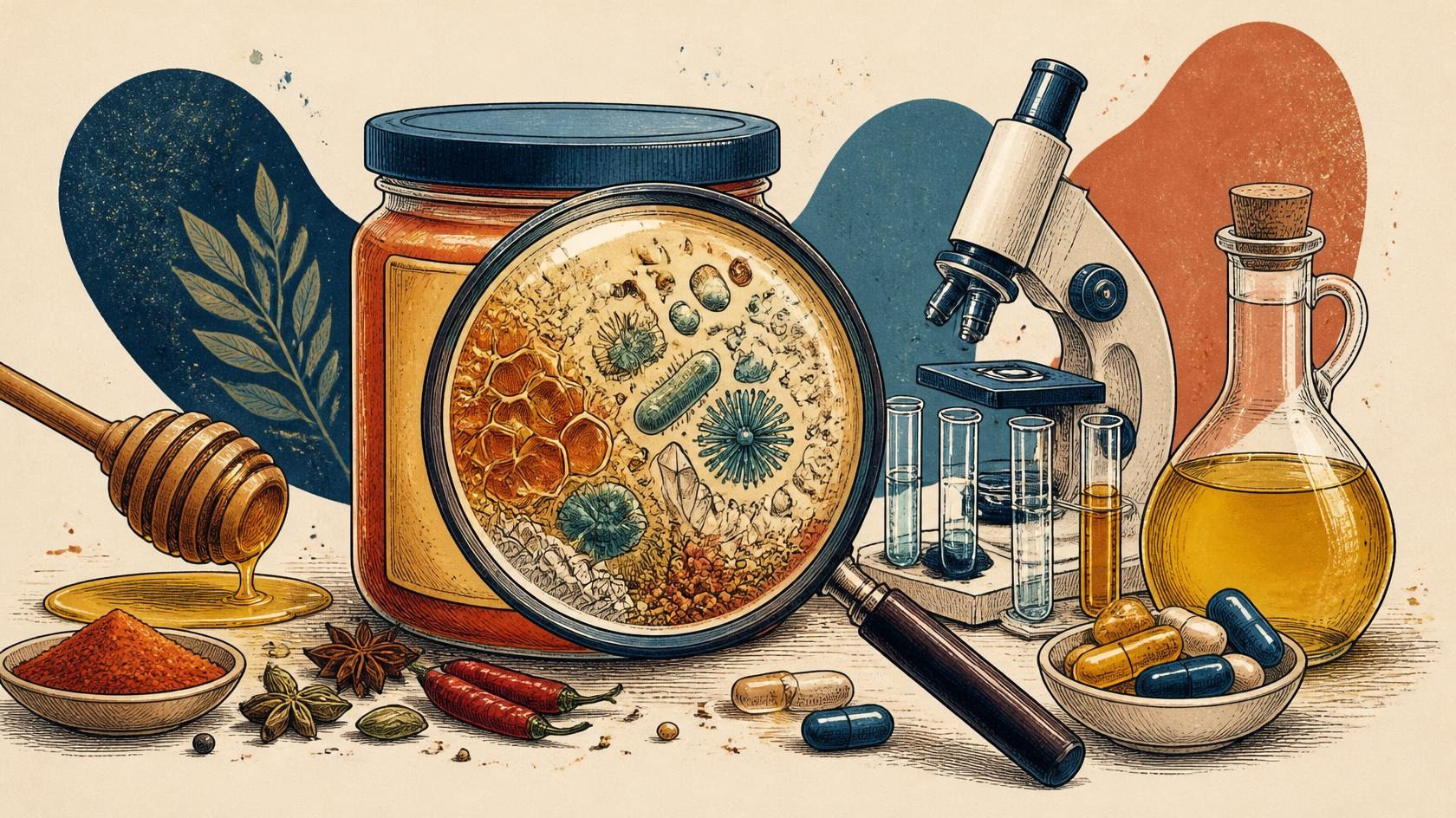
A laboratory can confirm what is in a product, not whether it works. Ashay Mehta of Doctors’ Analytical Laboratories on where compliance, marketing claims and consumer expectations part ways.
What are the most common adulterants or safety failures laboratories encounter, and which categories are especially vulnerable?
Food safety in India has improved considerably, helped by stronger surveillance and growing consumer awareness. Certain categories still need closer attention, mainly because substitution in them is hard to detect by eye. These include dairy products, ghee and edible oils, spices, honey, traditional sweets, and more recently health and protein supplements. Concerns range from dilution and blending with lower-value ingredients to the use of non-permitted colours. Equally important are unintentional contaminants such as pesticide residues, aflatoxins, heavy metals and microbial contamination. These often arise from gaps in storage, handling or sourcing rather than intent, which is why consistent testing across the supply chain matters so much.
When a product claims to be "natural," "chemical-free," "sugar-free," "high-protein" or "clinically tested," what can a laboratory verify?
Claims based on composition are well suited to laboratory verification. "Sugar-free" and "high-protein," for instance, can be measured precisely against defined criteria. For "natural," we can confirm the absence of synthetic colours, preservatives or undeclared additives, although the term also has a regulatory and definitional side. "Clinically tested" belongs to a different kind of evidence, since it depends on study design, participants and outcomes in a clinical CRO and not in a testing lab. To put it simply, a laboratory can tell you what is in a product; whether it delivers a health benefit is a question for clinical science.
Where are the biggest gaps between regulatory compliance, marketing claims and consumer expectations?
Regulations are designed to ensure safety and establish a common baseline, and they do that well. The gap tends to appear in how products are communicated. Consumers sometimes read a confident claim as proof that it has been independently validated, when what has been confirmed is regulatory compliance. This is most visible in fast-growing wellness categories, where scientific language is widely used. FSSAI's framework on advertising and claims has brought welcome clarity, and the next step is ensuring that the evidence behind a claim keeps pace with how it is presented.
What warning signs suggest a claim may be misleading or unsupported?
Absolute terms such as "100% pure" or "toxin-free" deserve a closer look, as do benefit claims that are not supported by references to underlying studies. Test reports should state the laboratory, the date and the parameters covered. A report covering only a few parameters
may not reflect a product's overall safety. As a general principle, well-supported science tends to be specific and measured in its language, and consumers can reasonably expect claims to reflect that.
How reliable are labels and certificates, and what else should consumers look for?
Labels and certificates are valuable, provided they are read in the right context. A certificate typically relates to a particular sample, batch and set of tests. It is also worth remembering that food products are built on natural raw materials, and their composition can vary with season, region and source. When a brand changes suppliers or sourcing regions, the nutritional values and other parameters on its label may no longer hold. Good practice, therefore, is to re-validate label claims at least once a year, and whenever there is a significant change in the supply chain. For consumers, the FSSAI licence number, batch details and dates on the label are good starting points. Where test reports are shared, it helps to confirm that the laboratory is NABL-accredited for the relevant tests and that the report is recent. More brands are now sharing batch-wise results through QR codes, which is an encouraging step towards transparency.
Why is independent third-party testing more important, and how can brands show their laboratory is impartial?
Supply chains have become broader and more specialised, and many brands now work with contract manufacturers. Independent testing adds an objective layer of assurance that benefits everyone: brands, regulators and consumers. Brands can demonstrate impartiality by choosing laboratories accredited under ISO/IEC 17025, a standard that specifically requires laboratories to safeguard impartiality, and by confirming that the relevant tests fall within the accredited scope. Other good signals are a clear separation between testing and any advisory role on the same product, reports that can be verified directly with the laboratory, and a laboratory's own record under regulatory inspection. In our 20 years, we have found that transparency about our own processes is what builds lasting confidence.
What regulatory and compliance challenges do food, pharmaceutical and personal-care companies face, particularly start-ups and D2C brands?
Across all three sectors, the common thread is that expectations are rising, and that is largely a positive development. In pharmaceuticals, global attention to areas such as nitrosamine impurities, elemental impurities and data integrity, together with the revised Schedule M, has raised the bar for manufacturers of every size. In food, standards and claims requirements continue to evolve, and companies must stay current with amendments. Brands that export face the added task of meeting different limits in different markets. Personal-care products now call for stronger safety substantiation, covering heavy metals, microbial quality and preservative efficacy.
For start-ups and D2C brands, the challenge is often one of pace. They move quickly from concept to market, sometimes faster than their compliance systems can keep up. Many also rely on contract manufacturers, yet responsibility for the product stays with the brand. The companies that do well treat compliance as a continuous process rather than a one-time
approval, and they involve accredited laboratories early as partners rather than as a final checkpoint.
How will rapid testing, automation and advanced analytics change safety monitoring and trust?
We are entering an exciting phase. Rapid screening tools will enable more frequent checks closer to sourcing and distribution. Techniques such as LC-MS/MS and high-resolution mass spectrometry allow detection at trace levels and broader screening for unexpected substances. Automation and digital laboratory systems will improve speed, consistency and traceability. Rapid tools and accredited laboratories will complement each other, with screening identifying concerns early and confirmatory analysis providing certainty. Over the next few years, I believe trust will increasingly be built on accessible evidence rather than on claims alone.
Double-click to edit...
Got a story that Healthcare Executive should dig into? Shoot it over to arunima.rajan@hosmac.com—no PR fluff, just solid leads.