
Experts Stress on Breaking Stigma, Open Conversations and Community Participation for Mental Health
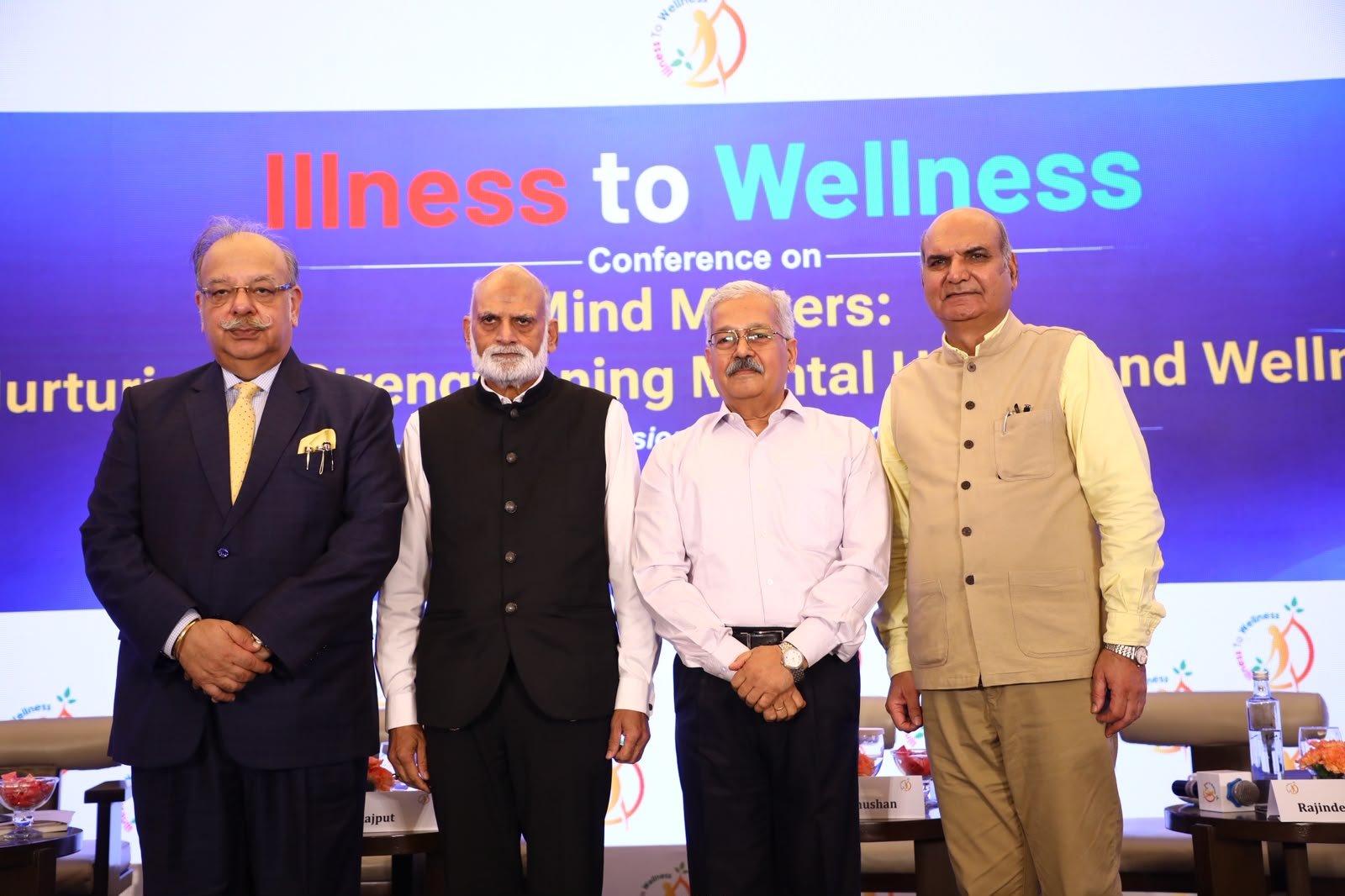
Healthcare Professionals Call for Holistic Wellness, Early Support and Stronger Community Engagement at ‘Illness to Wellness’ Conference
Ahead of World Mental Health Day 2026, the Illness to Wellness Foundation organised a conference in New Delhi under the theme “Mind Matters: Nurturing & Strengthening Mental Health and Wellness”, bringing together leading mental health experts, healthcare professionals, policymakers and other stakeholders to highlight the need for open conversations, stigma reduction, early intervention and community participation in mental health. The conference focused on making mental wellness a broader public health priority through preventive approaches, accessible support systems, healthier lifestyles and greater participation from families, workplaces, educational institutions and communities.
Prof. (Dr.) Rajinder K. Dhamija, Director, Institute of Human Behaviour and Allied Sciences (IHBAS), Government of NCT of Delhi, highlighted the need to address stigma and encourage people to seek help. He said, “There is still considerable stigma around mental health, and we need to create an environment where people can come forward and say that they have a problem and need professional help. Mental health cannot be addressed only through clinical and curative medicine; prevention and wellness are equally important. While policies can provide the framework, their implementation requires societal involvement, with families, institutions and communities working together to reduce stigma, improve awareness and encourage people to seek timely support.”
Stressing the importance of taking mental health services closer to communities, Mr. Rajesh Bhushan, Former Secretary, Ministry of Health & Family Welfare, Government of India, said, “Mental health matters in families, schools, colleges and workplaces. We must remember that India does not reside only in metropolitan cities; we also need to expand access in tier 2 and tier 3 cities and rural areas. The government is strengthening this through initiatives such as Tele-MANAS and by involving frontline health workers such as ASHAs and ANMs in early identification and referral. We also need more people who can provide basic counselling and psychosocial support, so that anyone who needs to talk, share their stress or seek help has access to support. None of this can succeed without the support of the community.”
In his address, Mr. Anil Rajput, Chairperson, Advisory Council, Illness to Wellness Foundation, underlined the importance of conversations and supportive environments in addressing mental health. He said, “Mental strength does not mean that we never experience mental stress, fear, doubt or distress; it means having the wisdom, support and resilience to work through them and begin again. We need families where people can speak about their emotional struggles without fear of judgement, and workplaces where wellbeing is recognised as an essential part of a healthy environment. Above all, we need to remove the stigma surrounding mental health and make seeking help as normal as seeking care for a physical health problem. Sometimes, prevention begins with something as simple as a
conversation—someone asking, ‘Are you alright?’ and being willing to listen without judgement.”
(Padma Shri) Prof. (Dr.) Sanjeev Bagai, Founder & Director, Zenré and Chairman, Nephron Clinic, emphasised the need for a holistic approach to mental wellness and early intervention. He said, “We need to look at the mind as part of the whole body rather than focusing only on physical symptoms. Mental health conditions continue to be associated with shame, isolation and stigma, preventing many people from seeking timely help. Mental wellness therefore requires a holistic approach that includes movement, nutrition, sleep, stress reduction and social connection, alongside early diagnosis and intervention.”
The conference featured two sessions exploring key dimensions of mental health and wellness. The first session, “Healthy Minds, Healthy Institutions: Workplace, Educational & Community Well-being,” focused on rising stress, anxiety and burnout among students and employees, highlighting the need for supportive environments, healthy routines, early intervention and community participation. And, it was followed by a session on “Breaking the Silence: A Holistic Approach to Rethinking Mental Health & Redefining Wellness”, which addressed stigma and the need for open conversations, while emphasising resilience, emotional balance, healthy lifestyles and mindfulness practices for holistic mental wellness.
Concluding the session, Anandpeethadhishwar Acharya Mahamandaleshwar Shree Swami Balkanand Giri Ji Maharaj, Taponidhi Panchayati Shri Anand Akhara, emphasised the importance of inner discipline in maintaining mental well-being. He said, “Controlling our senses is essential to maintaining a clear and balanced mind. When the senses are disciplined, the mind becomes calmer, more focused and better equipped to deal with the challenges of life. By cultivating self-awareness and inner discipline, we can create greater balance within ourselves and strengthen our mental well-being.”
The conference concluded with a shared call for greater awareness, open conversations and collective action to make mental health and wellness an integral part of healthier individuals, families and communities
Got a story that Healthcare Executive should dig into? Shoot it over to arunima.rajan@hosmac.com—no PR fluff, just solid leads.