
Building Excellence, But Not Enough Hands to Deliver Care
By Arunima Rajan
In an interview with Arunima Rajan, Sojan Antony, Additional Professor at NIMHANS, says that India has built centres of excellence in mental health, but without enough trained professionals at the grass-roots level and a missing social-care system, treatment still does not reach most of the people who need it.
Where are you from, and why do you do what you do?
I am from Kerala and settled as psychiatric social work faculty at the National Institute of Mental Health and Neurosciences (NIMHANS). My background is, I'm a postgraduate in social work and continued my Master of Philosophy (MPhil) and Doctor of Philosophy (PhD) at NIMHANS, and then I became a consultant. For the last 10 years I have been working as faculty here, as an additional professor in psychiatric social work. And I am also a consultant in adult psychiatry as part of the clinical team.
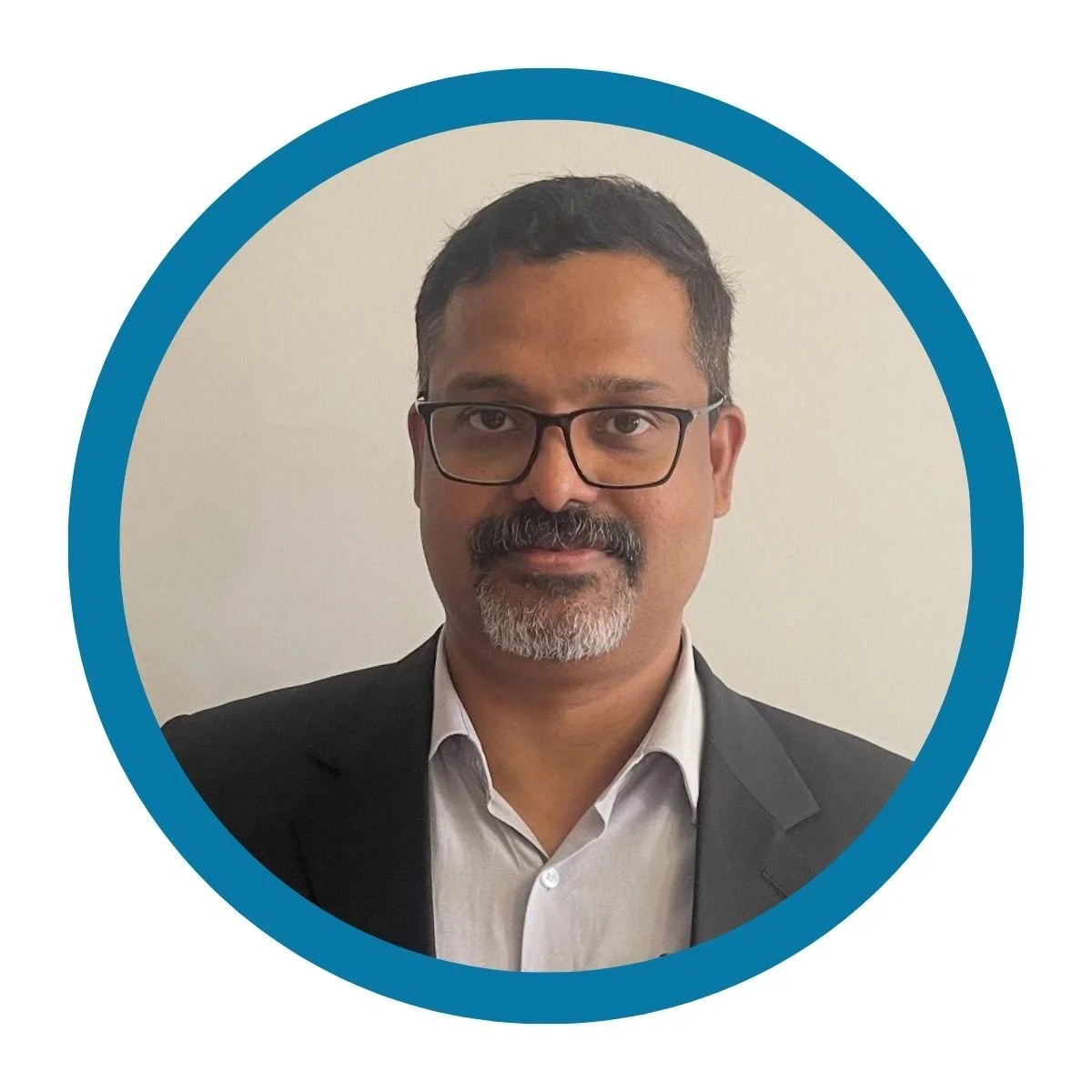
Sojan Antony, Additional Professor, NIMHANS
Even with more awareness in recent years, most Indians with depression or serious mental conditions still don't have access to treatment. In your view, what are the real barriers to accessing care in India today?
We know about mental illness, but even today we are not very clear whom to approach, where to approach, and what kind of treatment is required for different types of mental illness. That is not very clear in our society, even till today. So we will go and approach a psychotherapist for a severe mental illness, and they will miss your treatment. There is no proper clarity about where to treat, or from whom to take treatment. The global gold standard is a multidisciplinary team. In India, it is not happening.
Is cost the biggest barrier? Even basic therapy can cost a minimum of 1,500 to 3,000 rupees a session. Is that also a barrier?
We started a national mental health programme and district mental health programme to reduce the cost of care. Unfortunately, the national mental health programme could develop many centres of excellence, but we couldn't develop enough professionals ready to work at grass-roots level or in small towns. In the existing programme we have created a multidisciplinary team, but in many places these posts are vacant. A qualified psychologist, a qualified psychiatric social worker, sometimes the psychiatrist may not be full time. So we see these kinds of system-related issues.
The second issue is cost. When service is less, cost will increase. Demand and supply economics matters here. There is a very small number of trained professionals, and they are skewed to urban areas and urban-based clinics. We have planned for covering these services under insurance schemes. Health insurance should cover both psychiatric consultation and psychotherapy. But it's not happening fully. That is also a challenge in this area.
There are more apps and more therapists than before. So why are people still not getting better?
Chat-based or digital tools are helpful to identify that we have some problem. At that level it has grown. But in therapy a major element is therapeutic alliance, or empathy, and I am still sceptical about that. You get the information, but you don't feel that your feeling is understood.
We should not be very pessimistic about technology. We need to improve our chatbots and digital therapy for early identification, early screening, and self-help guides. Self-care, to an extent, works. But we lose many people because they depend more on self-care than on medical care. This public-health understanding has to change.
There's a lot of talk about artificial intelligence (AI) replacing therapists.
AI is not going to replace medical care, because it is that complex, and it requires that kind of multidisciplinary approach. AI may replace self-help methods. Self-care can be advanced to any level, and I'm not undermining the market for self-care. It can become a big industry, and there AI will grow. It can grow, but it doesn't mean that it is an alternative to actual medical care.
What's your take on burnout among working-age people? What kind of cases are you seeing, and what would it take for workplaces to treat mental health as important?
We still give importance to hard work, and extended working hours are considered the gold standard in work life. But extended working hours and hard work are not going to make India a developed country. It will kill your creativity and efficiency.
We need to have defined working hours. If you want to be efficient, your mind, body and environment have to be in balance. When your sleep is disturbed, when your physical activity is disturbed, when your social connectedness is disturbed, it directly hits your mind. It disturbs the way you regulate your emotions, the way you use your creativity in solving problems, the way you express empathy. All these areas get affected, and it causes adjustment issues for you as well as others.
So I strongly recommend five working days a week, and if possible, six working hours a day. This principle of hard work, extended working hours, superheroes in the workplace. All of it is going to affect our mission to become a developed country. And it hits the youngsters who are waiting for jobs, who may do much better than the so-called superheroes in the workplace.
Earlier there was stigma, and you wouldn't tell even close friends if someone at home was unwell. Now people share their mental-health stories openly, and everyone uses terms like "trigger" or "trauma" or "attachment styles." Are we trivialising these terms?
We are very happy that these dialogues have started. At least people are speaking about mental health now. A lot of what is being said is not fact, and we are aware of that, but we don't want to discourage the dialogue, because we can drive it towards the science of facts.
But sometimes a message spreads that we can solve everything through self-care, or through supplements like vitamin D or chamomile. A lot of that is happening, and especially aged people and vulnerable, less-informed people become victims of these dialogues. Silently, they suffer. So those who are doing these dialogues, please be careful and know more, and let's speak a little more fact and science.
Should there be some control over how people, including influencers and even self-described experts, share mental-health advice on social media, since many people treat it as expert advice?
A few things. A patient sharing their experience, a family caregiver sharing their experience. There is freedom of speech, and we should encourage that, because they are telling their lived experience. We need such stories.
But there are many people who are not legally qualified speaking about mental health. That will mislead people, they will waste their hard-earned money, and they will extend their suffering. Somebody will say hypnosis can be used to handle severe mental illness, when there is nothing like that.
Mental health has defined qualifications across the world; you can refer to the Mental Health Care Act. Bachelor of Medicine, Bachelor of Surgery (MBBS) with training in psychiatry, and Doctor of Medicine (MD) in psychiatry, are eligible to practise. Similarly, MPhil in clinical psychology; MPhil in psychiatric social work; and Bachelor of Science (BSc) nurses with training in psychiatric nursing. People with any other degree preaching mental health are going to do harm, because they don't have enough experience or training to judge situations. Your self-experience is not enough to teach another person.
There are very few institutes of excellence like NIMHANS. Are our institutes able to manage these huge loads, and are we investing enough in mental health?
We are not prepared; that is the reason all these things are happening. There is some positive news. Every state, almost, has a state institute of psychiatry, and all the southern states do. But if you ask me, is that enough? Not enough. We need more professionals.
So now we are planning bachelor's-degree programmes in psychology and social work, as part of allied health care, like BSc nursing, so that graduates can provide psychological first aid. We are also planning public-private participation, and private institutes are taking up this initiative. At least they won't do harm. Like nurses, they will either care or facilitate care.
What I visualise next: in another two decades we'll have a sufficient primary-care system in mental health. But specialist care will take longer, maybe another three decades to reach enough specialists in our country. And government investment is not enough. Why not state government? Health is a state subject too. Why can't a state decentralise its mental health systems, with at least six regional institutes within Maharashtra, designed around local culture and local needs?
Private players are ready to invest in cardiac or cancer care, because profit is more. But in mental health, private hospitals may not invest heavily. There is no surgery, no costly investigation, our medicines are not that costly, so people think it may not be profitable. So we need to make our treatment more cost-effective, and create more opportunities in psychiatric care.
There are new private players setting up hospitals, including inpatient care. Earlier, the atmosphere in such hospitals was very different. Are these new players changing that?
Some private players have designed care with a resort-like ambience, where you don't feel you are in a mental hospital, and there are no jails. For safety, the external premises may be controlled, but inside the campus it feels like a home, a community, a village kind of experience. These models are profitable, and clients are happy. We want many more such models.
So I tell new psychiatry graduates: don't only think about clinical practice. There is a business opportunity and a profit, and the employment opportunities are doubling. Therapists are getting employment, online consultations are starting. This spreading of services by professionals will reduce the space for fake treatment.
In India, even when people consult a doctor, they often try everything else alongside it. How do you see that?
If you try to handle it by yourself, you will mess it up and face a lot of trouble. You meet a trained, qualified expert, they guide you, there is less chaos, and you can return to your routine life much earlier than with self-remedies or home remedies.
Coming to the district mental health programme, how does the model work, and why do community models matter? Task-shifting, training local workers to reach people outside the big cities. Where is this working well, and what would make it stronger and last longer?
In our health system the baseline community workers are Accredited Social Health Activist (ASHA) workers and Anganwadi workers, who share responsibility especially for maternal and child health. School and college teachers also help reach people, because they are educated people available in the community.
People can travel 30 or 40 kilometres to a community health centre, so they don't have to make a 500-kilometre overnight journey to reach NIMHANS. The district mental health team aligns with local physicians; if they find a problem, they can refer to the District Mental Health Programme (DMHP), and the DMHP supplements the medication. I have visited a primary health centre in Karnataka where medications for severe mental illness, such as risperidone, and for depression and bipolar disorder are available. The local doctor can diagnose in consultation with the district-level doctor, or refer up, and patients can be referred back to the primary health centre for monitoring. If any adverse events happen, they can be referred back to the DMHP, and telephone numbers are available 24/7.
The major challenge is funding and attrition. Salaries for social workers and psychologists in the DMHP are very low, far below what a graduate earns at a premier institute or in the private sector. So they won't stay back in rural areas; they migrate. Attrition is very high. Those are the two challenges.
How do you address continuity of care, especially in Tier 2 and Tier 3 towns?
The issue is insight. Somebody thinks, "I don't have any problem," and then handling medication becomes extremely difficult. We don't treat that as a challenge in treatment. We consider it one of the symptoms of the diagnosis. It is very common in bipolar disorder, schizophrenia and schizoaffective disorder.
That is why we need community outreach, tele follow-ups, hospital-driven care, community-based treatment, community re-entry programmes. What is missing is social care. In Germany, social-care visitors go to homes and just check how things are. India needs to establish social care. We have health and family welfare, but that is not enough for the social-care part. Somebody who is not willing to take treatment, somebody who thinks "I am all right," all these people need to be reached.
We had ASHA workers as an alternative, but they are not trained enough to negotiate treatment, and they are multitasking, with pregnancy-related work, infection control, a lot of work. By 2050 we will have a much larger aged population. How will we ensure their care? Will children ensure it? I don't think so. So we need someone to look into the mental health of people at the community level. It is completely missing.
We tend to ignore children's mental health, and there are very few specialists for them. Are many children coming to you, and how do we bridge this gap, can schools play a role, or only psychiatrists?
School mental health is not my area, I'm in adult psychiatry, but I can share what I see. The number of schools with counsellors is very, very small. College counsellors exist only in the colleges that can afford them. Anganwadi workers do good outreach, and we have trained enough of them to identify intellectual disability and early-childhood problems and refer. But do we have enough child mental-health specialists? The answer is no.
Do we get children? Yes. Our out-patient departments are full. Parents can't get leave, children can't get repeated leave from school, so it is complicated, and the resource shortage is huge. Children with mood disorders, depression, dissociative disorders, attention deficit hyperactivity disorder (ADHD), autism, and intellectual and developmental disability are getting some form of service, but learning disability is a hugely neglected area. Identification and remediation of learning disability: almost nothing is happening.
Got a story that Healthcare Executive should dig into? Shoot it over to arunima.rajan@hosmac.com—no PR fluff, just solid leads.