
Caring for the Caregiver: An Overlooked Priority in Epilepsy Care
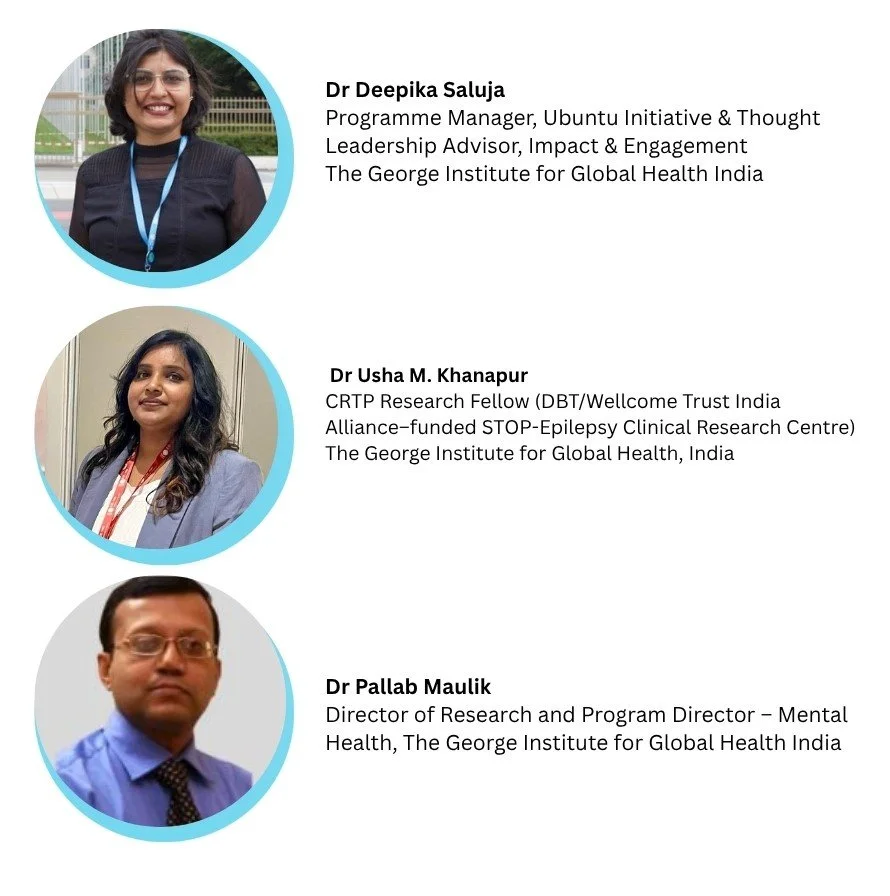
By Dr Usha M. Khanapur, CRTP Research Fellow (DBT/Wellcome Trust India Alliance–funded STOP-Epilepsy Clinical Research Centre) The George Institute for Global Health, India
Dr Deepika Saluja Programme Manager – Ubuntu Initiative & Thought Leadership Advisor, Impact & Engagement, The George Institute for Global Health India
Dr Pallab Maulik, Director of Research and Program Director – Mental Health, The George Institute for Global Health India
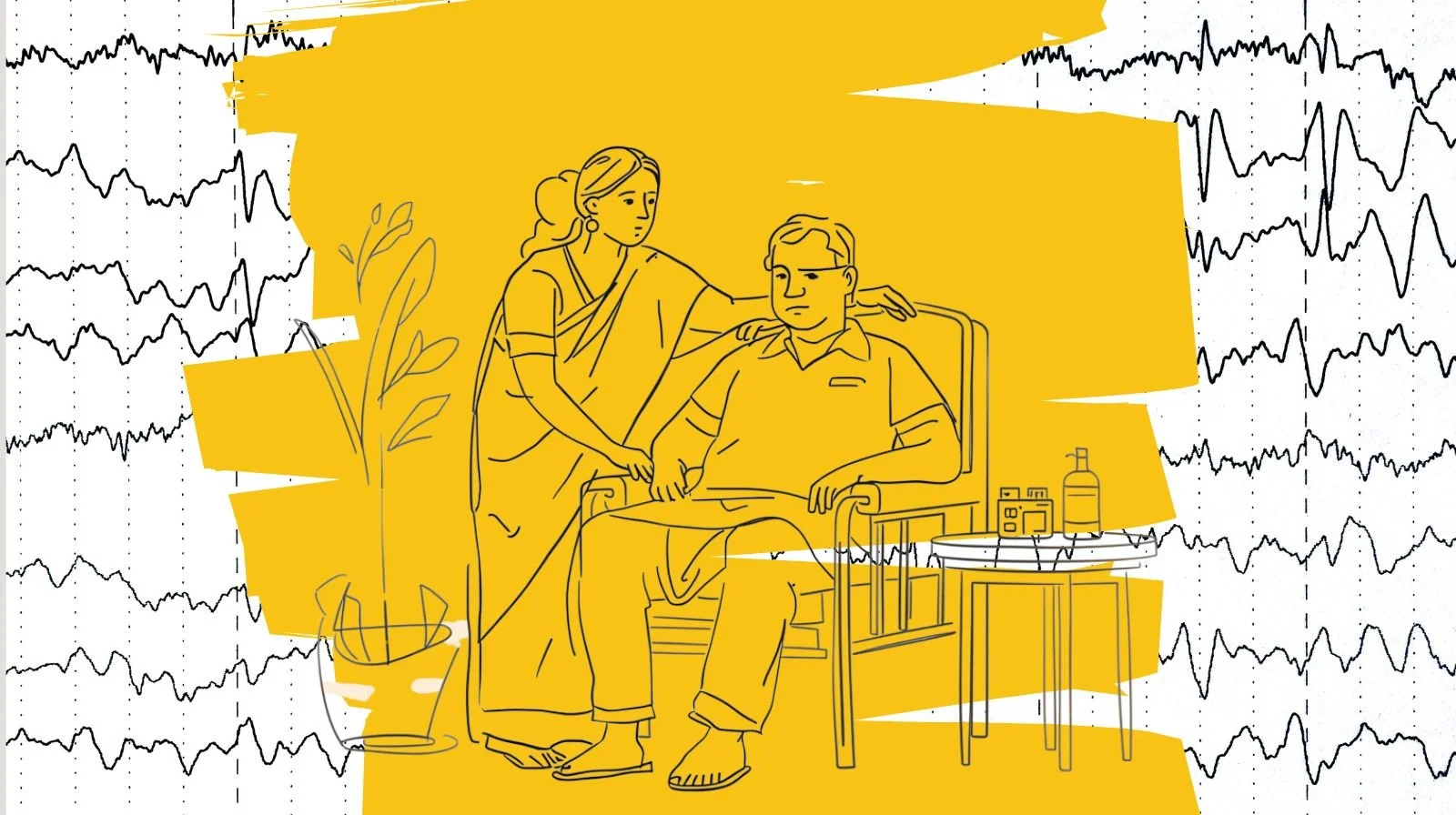
“He needs constant supervision. I cannot sleep at night because I keep watching for his seizures,” said one caregiver during our field interviews in Punjab. Another parent, speaking about his young daughter, admitted quietly, “With expensive long-term treatment, it has become very difficult to manage even basic household expenses.” - Voice from our ongoing study titled “Scaling up the competency of primary care workers to manage epilepsy by task sharing”
Epilepsy is a chronic neurological condition characterised by recurrent seizures, often accompanied by behavioural and psychosocial changes. It affects nearly 50 million people worldwide, with India accounting for over 12 million cases.
The stressful reality of informal caregiving: An invisible burden
Family members, commonly referred to as informal caregivers, play a central role in epilepsy care. They help clinicians make informed decisions, ranging from medication adherence to surgical options. They provide emotional and financial support and play a critical role in preventing seizure-related injuries, including burns, falls, drowning, and premature death. Consequently, epilepsy imposes substantial physical, psychological, social, and financial burdens not only on individuals living with the condition but also on their families.
Despite their indispensable contributions, caregiver wellbeing remains largely neglected. This neglect is most acute among, and those living in rural areas, where limited access to services intensifies strain. The unpredictability of seizures forces caregivers into constant vigilance, at night, in school, at work, and in public places. In some cases, this means carers must withdraw from education or employment altogether, deepening their financial vulnerability. Studies consistently show that epilepsy caregivers experience high stress, poorer quality of life, and symptoms of anxiety and depression. These lived realities are also observed in villages where the STOP-Epilepsy project is currently being implemented.
Caregivers also experience stigma rooted in persistent misconceptions that equate epilepsy with contagion, insanity, or supernatural forces. While caregiver burden is a global phenomenon, cultural norms and social structures shape how it is experienced in different countries and contexts.
Further, in patriarchal societies with strong cultural norms like India, caregiving typically falls on a single family member —most commonly women (1,2,3). Burdened by guilt, shame, gendered expectations, and moral obligation, many caregivers remain silent about their stress and neglect their own health, even as family and community support falls short.
The need for formal recognition and systematic integration of caregiver support into the epilepsy care ecosystem
Global policy frameworks point towards a different approach. The World Health Organisation’s Intersectoral Global Action Plan (IGAP) for epilepsy and other neurological disorders calls for the systematic inclusion of caregivers through structured training to identify and reduce caregiver stress, providing respite services, mental health support, and access to practical resources such as Mental Health Gap Action Programme (mhGAP), iSupport, and caregiver skills programmes. It also emphasises social protection measures, including flexible work policies, financial benefits, and anti-stigma legislation.
Global initiatives such as Embracing Carers™, supported by the International Alliance of Carer Organizations (IACO), call for formal recognition of unpaid caregivers remains limited in low- and middle-income settings.
In India, caregiver recognition is still at an ad-hoc, nascent stage. Despite the introduction of caregiver‑related provisions under the Rights of Persons with Disabilities Act (RPwD, 2016) or through state caregiver allowances (INR 1000 per month), such as in Karnataka, epilepsy often remains excluded from coverage. In other cases, poor implementation or barriers, including restrictive eligibility criteria, complex documentation processes, and bureaucratic delays, further limit access to these provisions.
In India, initiatives such as Caregiver Saathi, Karunashraya, and the Swayam Foundation attempt to offer counselling, self-care programmes, and a peer support network for caregivers, but awareness and access to these services remain limited or uneven.
Time to act
Our study (STOP-epilepsy) reinforces earlier investigations and demonstrates a largely overlooked reality: the relentless and often invisible strain borne by caregivers of people living with epilepsy in India.
Policymakers and health systems must move beyond viewing caregivers as invisible bystanders and instead formally recognise them as essential partners in epilepsy care. Recommendations include establishing caregiver clinics, integrating caregiver screening into routine consultations, and extending financial and social protection measures are no longer optional enhancements.
These are foundational requirements for shifting the current patient centered system towards an equitable, resilient, sustainable and genuinely family-centred epilepsy care ecosystem.
Supporting caregivers is not an adjunct to epilepsy care—it is central to it. The time to act is now.
Got a story that Healthcare Executive should dig into? Shoot it over to arunima.rajan@hosmac.com—no PR fluff, just solid leads.