Can an RNA-Based AI Platform Really Shift India’s Cardiac Narrative from After-Damage to Advance-Warning?
By Arunima Rajan

Bayosthiti AI, an AI healthcare company, announced recently a partnership with Narayana Health, to develop AI models that predict cardiovascular disease in Indian patients. The collaboration leverages RNA sequencing to read the active molecular instructions in cells, combined with gen AI to identify heart disease risk earlier and more accurately than conventional methods.
Coronary artery disease affects 65 million Indians and strikes at younger ages than in Western populations. Yet, diagnostic tools remain largely calibrated to European and American patient data, creating what clinicians call the "data gap." Standard risk scores miss critical patterns in South Asian biology shaped by distinct genetic backgrounds and environmental factors, leading to late-stage diagnoses when intervention options narrow.
Narayana performs over 60,000 cardiac procedures annually, generating clinical data. Bayosthiti's BIRT(Barcode-Integrated Reverse Transcription) technology sequences complete RNA profiles at a fraction of traditional costs by processing multiple patient samples in parallel. The partnership will help to build the massive datasets required to train AI models tailored for Indian populations.
Current diagnostics rely on anatomical imaging or protein markers, both of which detect disease after it has physically manifested. RNA sequencing captures the instructions cells are executing in real time. By analysing which genetic instructions are being transcribed (actively used to make proteins) and at what levels,the company claims that, Bayosthiti's AI, can detect when biological systems shift toward disease states, potentially months or years before structural damage appears.

Rishabh M. Shetty, Head of Business Development and Clinical Applications, Bayosthiti AI
In an interview with Arunima Rajan, Rishabh M. Shetty, Head of Business Development and Clinical Applications at Bayosthiti AI talks about the company’s RNA-driven partnership with Narayana Health aims to build India’s first large-scale, population-specific cardiac risk model, a shift that could influence clinical practice, public policy, and long-term prevention strategies.
India has long relied on cardiac risk models based on Western populations. Your project with Narayana Health aims to train AI on Indian molecular data. Why has it taken this long for Indian research to create its own large-scale genomic or transcriptomic datasets?
The single biggest barrier has been the lack of technological innovation and prohibitive cost. Legacy sequencing technologies are too expensive for this scale, forcing India to rely on a one-size-fits-all medical model based on Western data, which has disadvantages in South Asian populations due to the known genetic and environmental diversity. Our BIRT™ technology using RNA data instead of DNA data enables a 70% cost reduction, which makes it viable to build these India-specific molecular datasets. There have been small-scale studies in India in the past, but the cost of genomic sequencing and the dependence on static, DNA-based data means that the ROI for a population-scale study is low and the appetite for undertaking it, lower. Moreover, DNA data unlike RNA data is not dynamic enough to capture real-time risk, let alone integrate the learnings with AI-insights to guide clinical decision making for predictive and preventative care. This is where our proprietary technology and AI algorithms, allow us to support a population-scale clinical trial that aims to build a foundational dataset for cardiac care.
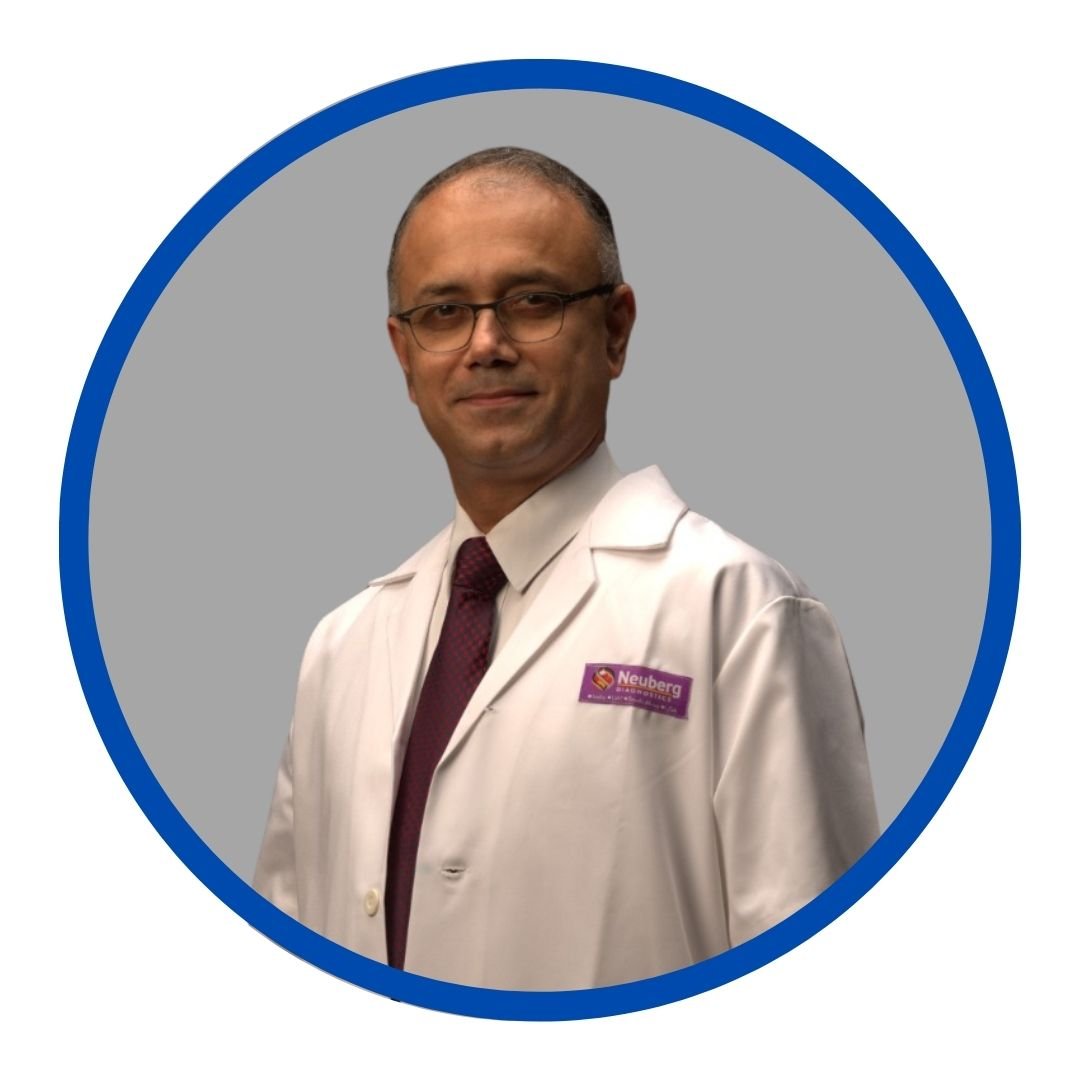
Dr. Sujay Prasad, Chief Medical Director, Neuberg Diagnostics.
From Cold Chains to Clinical Trust: Dr Sujay Prasad Explains the Real Barriers to RNA-Based Care
From sample integrity to frontline scepticism, Dr Sujay Prasad breaks down the practical barriers that determine whether RNA-based care can scale.
Can district hospitals adopt such tests given their infrastructure gaps?
District hospitals will always lag slightly behind major urban centres in terms of infrastructure. Even so, investment in healthcare infrastructure is steadily improving across all levels. As equipment becomes more compact, affordable, and digitally integrated, the gap will narrow. Adoption of advanced molecular and AI-based diagnostics will gradually become feasible, especially through phased upgrades, referral networks, and hub-and-spoke models.
Can labs maintain RNA integrity without cold-chain failures?
RNA quality is directly tied to how well a sample is collected, stored, and transported. Modern cold-chain solutions using improved insulation materials, phase-change cooling packs, and IoT-enabled temperature logging help ensure stable conditions throughout transit. When district facilities adopt these systems, RNA-based diagnostics become practical and reliable — even outside major cities.
Is AI-based predictive medicine compatible with Ayushman Bharat reimbursement models?
No comments other than this area is still evolving. Clarity on reimbursement for emerging technologies depends on regulatory direction, clinical evidence, and demonstrated cost-effectiveness.
Will frontline doctors trust an algorithm over clinical history?
Trust depends on experience. Some clinicians embrace algorithms; others remain sceptical. Transparent validation using real-world data, where AI supports rather than replaces clinical judgment and builds confidence. The more clinicians see accurate, reproducible outcomes, the more they will use these tools as part of routine decision-making.
What does RNA sequencing actually measure?
RNA sequencing identifies which genes are actively being expressed in disease. It shows how underlying DNA mutations translate into altered pathways, enabling more precise selection of pathway-targeted therapies. In short, it tells us what the tumour or disease is doing rather than just what it is genetically.
How stable is RNA?
RNA is highly vulnerable to degradation, especially at room temperature. Cooling slows the process; deep-freezing halts it. For long-distance transport, −80°C or cryogenic conditions provide optimal preservation. Stabilizing reagents and rapid-processing workflows help maintain integrity, making district-level implementation increasingly viable.
How is the sample collected?
Collection depends on the clinical situation: 1. Fresh tissue immediately after surgery 2.FFPE tissue for retrospective analysis 3. Whole blood, body fluids, or minimally invasive aspirates for liquid-based profiling. Standardized handling and pre-analytical controls are critical across all . scenarios.
What are the sources of error?
Most errors arise before sequencing ever begins: 1. Incorrect or non-representative sampling
2. Degradation during storage and transport
3. Inefficient RNA extraction
4. Low RNA yield or quality within the sample
5. Mis-selection of RNA targets or incorrect analysis pipelines
You’re using RNA sequencing and AI to predict heart disease much before symptoms appear. How realistic is it to expect such technology to be adopted widely in a country where even basic lipid testing isn’t routine?
This technology is necessary precisely because basic tests are not enough. Those tests detect disease after it has physically manifested as blockages or damage. Our RNA-based approach, however, detects the molecular instructions for disease months or years before symptoms appear. This allows us to move from reactive treatment to proactive treatment. For example, this could become part of an individual’s annual general checkup and as the study progresses, we will actively engage with government programmes so that the test will be accessible across the entire Indian population. Let us break it down a little more:
We know that 50% of heart attack patients have 'normal' cholesterol levels. The current standard of care is failing. Why would we invest in making a test that's wrong half the time more routine? It's like pushing for wider landline adoption in the age of the smartphone.
We are not trying to "catch up" to Western medicine. We are building a new, more accurate standard of care that is data-driven and biologically relevant to our population.
It's about total cost, not test cost. The skeptic sees the cost of the RNA test. We see the total cost of care. The RNA test is a single, predictive, blood-based test. The alternative? A lifetime of ineffective medicine, a 5-figure angiogram, a 6-figure bypass surgery, and the economic cost of a family's primary earner being disabled. This technology is about prevention, which is always cheaper than intervention.
You claim that your BIRT™ platform reduces sequencing costs by processing samples in parallel. What is the actual cost per test likely to be, and will this make early detection affordable beyond private hospitals?
By achieving a 70% cost reduction compared to traditional methods by using a patented technique to process multiple patient samples in a single run, we aim to bring down the cost per test to <₹10,000. Our technology is constantly improving and getting more cost-efficient and the adjacent technologies in our pipeline are getting more affordable with each passing year. This will make this test widely accessible. While it's too early to state a definitive final price, this high-throughput, low-cost platform is designed to make molecular diagnostics in cardiac care affordable and scalable for the entire healthcare system, not just premium hospitals.
Most diagnostic AI tools face challenges when moving from lab validation to real-world clinical settings. How will you ensure these models are tested rigorously and validated across diverse Indian populations, including those outside urban centres?
This collaboration is structured as a formal, multi-year research study with a validation framework built in. The entire project is defined by a formal Protocol approved by Narayana Health's Institutional Ethics Committee.
The project is broken into three distinct phases:
Phase I: Feasibility Study
Phase II: Expansion Study
Phase III: Prospective Validation
This phased approach ensures we move from initial feasibility to a large-scale expansion (growing to 16,000 subjects) and finally to a prospective validation. This methodical process is designed to test and validate the models in a real-world clinical setting under the supervision of designated co-ordinators from both organisations before any consideration of wider deployment.
Clinical Deployment: Rolling out the validated test for real-world clinical use, first within Narayana’s ecosystem, and thereafter, other clinical systems across the country.
By starting with a large, diverse, real-world patient dataset from a network like Narayana Health which performs procedures on patients across the whole of India (not just urban centres), we are ensuring our models are trained and validated from day one. Our study follows all the ethical, regulatory, and patient data privacy guidelines and has been approved by Narayana’s Institutional Ethics Committee already.
Narayana Health performs more than 60,000 cardiac procedures a year. How will this collaboration use that data responsibly? Who owns the patient data once it’s fed into your AI model — the hospital, the startup, or the patient?
This study is built on a foundation of explicit patient consent and data stewardship. Patients are not enrolled automatically; they are specifically recruited for this research study.
Before participation, every potential participant is given a detailed Patient Information Sheet (PIS) that explains the study’s purpose, what data will be collected, how it will be used, and their rights. They must then voluntarily sign an Informed Consent Form (ICF) to formally agree to participate. These have already been vetted and approved by Narayana’s Institutional Ethics Committee and the collaboration ensures that Patient data will be used responsibly through a process governed by strict, documented consent.
This process ensures that data usage is explicitly explained to and approved by the patient before any data is collected. In line with DPDA guidelines, the patient remains the owner of their data, while Narayana Health acts as the custodian. Bayosthiti is only granted access to anonymised and pseudonymized data for the sole purpose of this clinical trial and building the AI models through its R&D pipelines.
Transcriptomic data is far more personal than a blood sugar reading. What data-protection safeguards are in place to prevent misuse, especially if this technology is later commercialised or used by insurers?
Our data protection strategy is multi-layered and complies with all DPDA (Digital Personal Data Protection Act) guidelines.
First, as mentioned, no data is collected without the patient's explicit, informed consent, and is always within the ethical committee’s oversight.
Second, all clinical data collected for the study (which is detailed in the Case Report Form, or CRF) is fully anonymized and pseudonymized before it is used for research, removing all personal identifiers. The safeguard is that Bayosthiti will only receive, use, and retain de-identified data.
The contract expressly forbids any attempt to re-identify any individual from the data. As an additional safeguard, if any personally identifiable information (PII) is inadvertently received, the agreement legally binds Bayosthiti to promptly notify Narayana, return the data, and permanently delete all copies. Bayosthiti is also contractually responsible for implementing its own de-identification protocols and maintaining appropriate safeguards to prevent any unauthorized access or disclosure.
If this technology does work as expected, how soon could it be translated into a screening test deployable in public hospitals or government health programmes? Are there any discussions underway with policymakers or the ICMR?
This is a multi-year scientific and clinical validation process. We are currently in the first phase of patient recruitment, data generation, and model building. This will be followed by clinical validation and then clinical deployment. A deployable test would only be available after the successful completion of our clinical validation and subsequent regulatory approvals as necessary. Therefore, any formal discussions with policymakers or the ICMR, while currently premature, will be conducted in parallel with the clinical validation phase.
Only after the successful completion of all study phases will both parties jointly pursue regulatory approval from CDSCO. The project timeline schedules this regulatory submission for late 2027, with a target for initial commercialization in Q2 2028, subject to receiving that approval. The initial deployment in public hospitals and government health programmes, as agreed upon in the course of the project by both parties, would be in early-to-mid 2028.
Finally, there’s growing concern about AI tools widening the gap between rich and poor patients. How do you ensure that an innovation like this doesn’t end up benefiting only those who can already afford high-end cardiac care?
Our company's core mission is to close that gap. The 70% cost reduction achieved by our BIRT™ platform is the key. From Day 1, we are focused on building a tool that can be scaled for mass screening, enabling proactive, preventive, and personalized care for all Indians, not just those who can afford high-end diagnostics.
The purpose of this collaboration, as stated in the agreement, is to develop these tools.
Got a story that Healthcare Executive should dig into? Shoot it over to arunima.rajan@hosmac.com—no PR fluff, just solid leads.