Why Your Postcode should Not Decide your Cancer Treatment
By Arunima Rajan
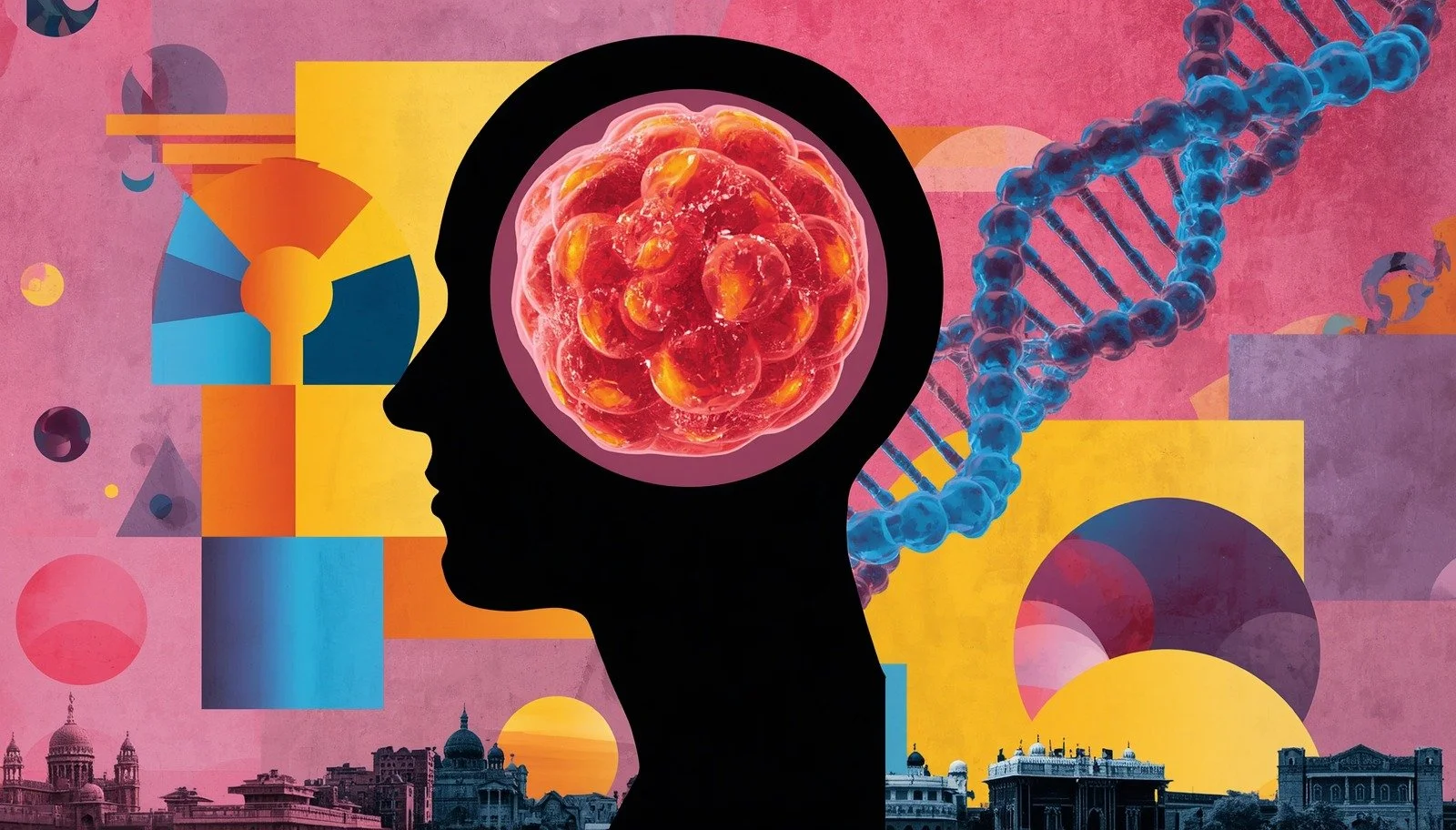
Dr. Boben Thomas, Senior Consultant, Medical Oncology at Caritas Cancer Institute, tells Arunima Rajan how the hospital's tie-up with 4baseCare is shifting tier-2 India from protocol-driven cancer care to therapy shaped by tumour biology.
Precision oncology has been a buzzword for some time now, but access has remained largely confined to metro cities. How does the Caritas–4baseCare partnership change the equation for patients in Kottayam and surrounding regions?
For a long time, patients from Central Kerala had to travel to major metros for advanced genomic testing and precision-led treatment planning. The Caritas–4baseCare partnership fundamentally changes that. Today, patients in Kottayam and nearby districts can access world-class genomic testing, interpretation, and treatment guidance locally, without delays or logistical burdens. It brings high-end molecular diagnostics and clinical decision support directly into routine care, making precision oncology more equitable and accessible rather than a privilege limited to large cities.
In the long run we want to expand collaboration to not just look Genomics markers but advanced AI to take better, multi-modal data driven treatment decisions
Walk us through what this collaboration looks like in practice. When a patient walks into the Caritas Cancer Institute today, how does genomic testing change clinical decisions?
Ivory was founded in 2023 by Issac Mathew John and Rahul Krishnan. The company says it has reached over 50,000 users since launch, and works with more than 100 clinician partners. It featured on Shark Tank India in March 2025. John, who leads Ivory, spent 18 years at Discovery APAC, HealthifyMe and PUMA before co-founding the company.
In an interview with Arunima Rajan, conducted shortly after the partnership announcement, John discussed the drivers behind Ivory’s launch, the challenges of deploying a digital cognitive assessment in Indian clinical settings, the company’s position on data privacy and misuse, and what it will take for the CANTAB Pathway rollout to scale.
You are building a brain health company in a country that barely does basic preventive checkups. What made you believe India is ready for something as abstract sounding as “cognitive health,” and what were the moments that nearly broke that conviction?
In practice, the collaboration is fully integrated into our clinical workflow. When a patient is diagnosed or when treatment decisions become complex, we have our tumour board meeting to evaluate whether genomic profiling can provide actionable insights. Once decided, the patient is explained the expected benefits from these tests. Samples are processed through advanced testing platforms, and the results are reviewed with structured clinical interpretation.
These insights often help us identify the ideal targeted therapies, determine immunotherapy eligibility, or avoid treatments unlikely to benefit the patient. In many cases, it allows us to move from a standard protocol-driven approach to a far more individualised treatment plan based on the biology of the tumour. The objective is to achieve the best possible outcomes for patients.
With two decades in oncology, you’ve seen cancer care evolve significantly. What’s the single biggest shift precision medicine brings to the doctor-patient relationship?
The biggest shift is the move toward truly personalised interventions. Instead of discussing treatment in broad statistical terms, we are now able to explain therapy choices based on the patient’s unique tumour profile. This makes patients more engaged and reassured that their treatment is tailored specifically to them. It strengthens trust, because decisions are no longer generalised, they are grounded in each patient’s biology and clinical context.
One challenge with genomic testing has been patient literacy. How do you help patients understand what their results mean and why their treatment may differ from another patient with the “same” cancer?
Communication is key. We take time to explain that cancers which appear similar under a microscope can behave very differently at a molecular level. Using simple analogies and visual aids, we help patients understand that genomic testing reveals what is driving their specific cancer and how that influences treatment.
Our team, including genetic counsellors where needed, ensures that patients and families clearly understand the purpose of testing, the implications of results, and how it informs the treatment pathway. This transparency helps reduce anxiety and builds confidence in the chosen treatment plan.
You’ve been a pioneer in multidisciplinary tumour boards. How does a precision oncology framework strengthen or complicate the multidisciplinary approach?
Precision oncology strengthens multidisciplinary care significantly. Tumour boards now have richer information, genomic insights, targeted therapy options, and predictive markers — which leads to more informed and collaborative decisions.
While it does add a layer of complexity in terms of data interpretation, structured reporting and expert support ensure that the information is actionable. Ultimately, it enhances the quality of discussion and allows us to arrive at more nuanced, patient-specific treatment strategies.
Kerala has a relatively high cancer burden, and Kottayam serves a large surrounding region. What does it mean to you personally to bring this capability closer to home?
It is deeply meaningful. Many patients in this region previously had to travel long distances for advanced diagnostics, often at significant emotional and financial cost. Being able to offer comprehensive precision oncology services locally means patients can access the best possible care within their own community. Advanced personalised therapies mean long term survival, and we want Kerala to lead India in not just literacy rates but cancer survival rates. For me, it represents an important step toward more inclusive and patient-centric cancer care in Kerala.
Given your interest in paediatric oncology, are there specific applications of genomic testing you’re excited about for younger patients?
In paediatric oncology, genomic insights can be transformative. They help us identify targeted therapies and refine diagnoses, often allowing us to reduce exposure to highly toxic conventional treatments. For children, this is particularly important because minimizing long-term side effects can significantly improve quality of life and survivorship outcomes. Precision medicine offers the possibility of more effective and less harmful treatment pathways for young patients.
For hospital administrators and healthcare leaders considering similar partnerships, what would be your honest counsel? What does it take to integrate precision oncology into clinical workflow?
Integrating precision oncology requires commitment at multiple levels, clinical, operational, and educational. It involves building awareness among clinicians, establishing clear testing pathways, and ensuring timely interpretation of results. Institutions often underestimate the importance of training, coordination, and patient communication.
However, when implemented thoughtfully, the benefits are substantial: better-informed treatment decisions, improved patient confidence, and stronger clinical outcomes. My advice would be to view precision oncology not as an add-on, but as an integral part of modern cancer care.
Got a story that Healthcare Executive should dig into? Shoot it over to arunima.rajan@hosmac.com—no PR fluff, just solid leads.