
India’s Cancer-Care Challenge Is Not Just Capacity. It Is Connection.
By Dr Sanket Mehta
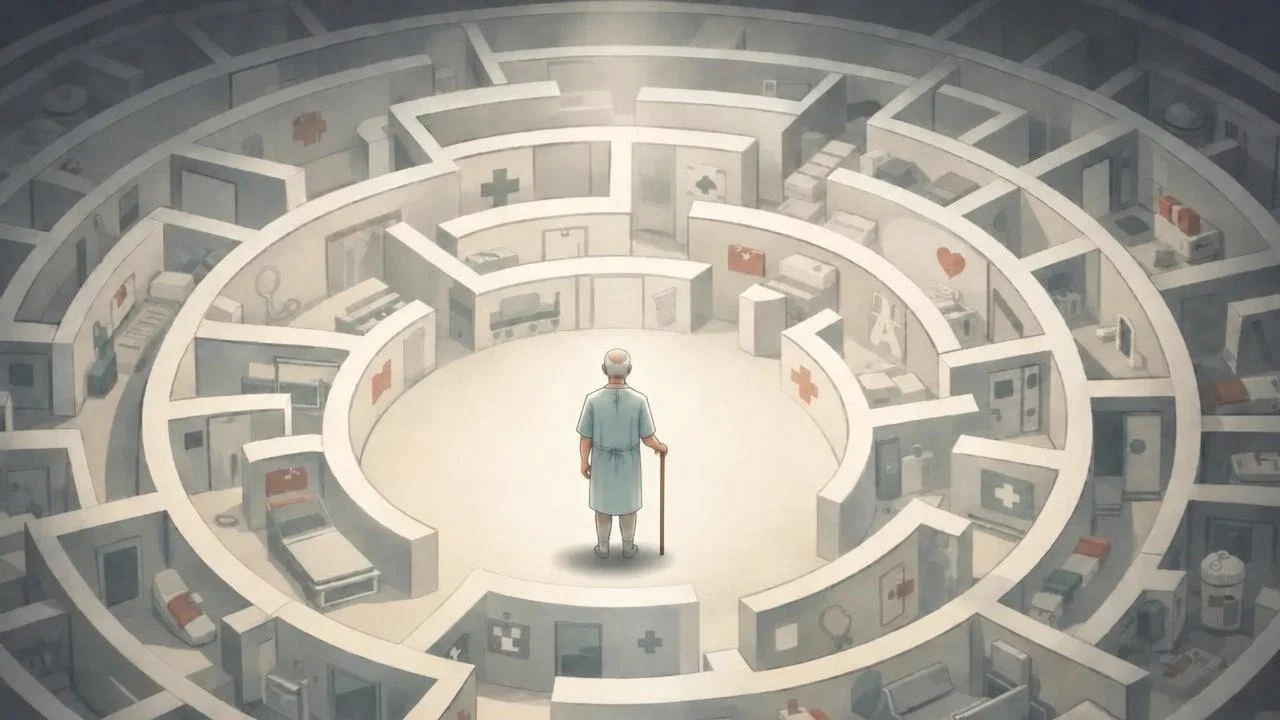
India’s cancer-care debate often begins with a question of numbers: how many hospitals, specialists, scanners, radiotherapy machines and treatment beds do we need? These are essential questions. But capacity alone does not determine outcomes. A patient can live within reach of a hospital and still lose valuable time between noticing a symptom, receiving a diagnosis and beginning treatment. The challenge is not only to expand cancer infrastructure, but to make the parts work together.
The scale of the need is clear. The International Agency for Research on Cancer estimated 1.41 million new cancer cases and about 917,000 cancer deaths in India in 2022. The National Cancer Registry Programme estimated approximately 1.46 million new cases for the same year using a different method. These estimates are not interchangeable, but both point to substantial demand for prevention, diagnosis and treatment. [1,2]
Dr Sanket Mehta, Founder & Lead Surgical Oncologist, SSO Cancer Hospitals
Capacity is unevenly distributed
India has built major cancer centres and strengthened treatment capacity, including through newer public institutions. Yet access to specialised care remains uneven. Advanced diagnostics, experienced multidisciplinary teams and treatment facilities are concentrated in larger cities. Patients from smaller cities and rural districts may need to travel for a biopsy, specialist opinion, surgery or radiotherapy—often arranging each step separately and absorbing travel costs, lost wages and accommodation expenses.
Radiotherapy illustrates the infrastructure challenge. A recent analysis based on India’s projected cancer burden estimated a requirement of roughly 1.1–1.8 radiotherapy machines per million people, depending on assumptions about workload and treatment capacity. It also highlighted the uneven geographic distribution of machines. Equipment, however, is only one part of the equation: radiotherapy needs trained radiation oncologists, medical physicists, technologists, maintenance, quality assurance and reliable referral pathways. [3]
The same principle applies to surgical oncology. Counting specialists is not enough if expertise is concentrated in a few centres or patients cannot reach the right specialist in time. India needs investment in people and systems alongside equipment: training pathways, retention of skilled teams, pathology and imaging capacity, and referral networks that work.
Why organ-specific oncology matters
Cancer is not one disease, and surgical oncology should not be treated as a single undifferentiated service. Breast, colorectal, liver, pancreatic, thoracic and head-and-neck cancers require different anatomical knowledge, operative planning, reconstruction and recovery pathways. Organ-specific surgical oncology enables teams to build depth in a defined group of cancers, develop consistent protocols and learn systematically from outcomes.
This model does not mean every hospital must duplicate every subspecialty. It means organising expertise around the needs of the disease and creating clear pathways to access that expertise. Operationally, it requires dedicated surgeons, coordinated medical and radiation oncology, radiology, pathology, anaesthesia, critical care, nutrition and rehabilitation. Regular multidisciplinary tumour boards are central: they help determine not just whether surgery is possible, but whether it is the right treatment, when it should happen and what other treatment may be needed before or after it.
At SSO Cancer Hospitals, our organ-specific approach is intended to bring specialised surgical expertise into a coordinated model rather than leave patients to assemble their own team. As the network expands across locations, the challenge is to maintain common clinical standards, referral protocols and multidisciplinary decision-making while responding to local needs. The measure of a network is not the number of sites it opens; it is whether patients can access consistent, appropriate care across them.
The missing links in the patient pathway
Patients can be lost at several points: a symptom is dismissed; a screening result is not followed by confirmatory testing; a biopsy or pathology report is delayed; the patient does not understand the next step; or treatment costs make them pause or abandon care. A study examining cancer-care pathways in Telangana found substantial leakage between a positive screening result, confirmation of diagnosis and treatment completion, estimating losses of around 70%–90% across that pathway. The finding is state-specific, but it shows why screening numbers alone are not a sufficient measure of success. [4]
Hospitals can address part of this through patient navigation: a named coordinator, a written next-step plan, active tracking of reports and appointments, transparent cost discussions and rapid follow-up when a patient misses a step. Diagnostic turnaround times should be measured, not assumed. Pathology and imaging findings should be reviewed in context, and patients should not have to navigate referrals without guidance. Digital tools can help track the pathway, but technology works only when someone is accountable for acting on the information.
Early detection also needs careful framing. Screening is appropriate for specific cancers and eligible populations; it is not the same as testing everyone for every cancer. Awareness campaigns must connect people to confirmatory diagnosis and treatment capacity. Otherwise, they risk generating anxiety and queues without completing the care pathway.
Financing must follow the patient
Cancer treatment is often a sequence of costs rather than a single hospital bill: consultation, imaging, biopsy, surgery, medicines, radiotherapy, travel, accommodation and time away from work. Financial protection must account for this full pathway. Public schemes such as Ayushman Bharat–Pradhan Mantri Jan Arogya Yojana (AB PM-JAY) have an important role. The government has reported more than 6.8 million cancer treatments under the scheme, worth over ₹13,000 crore, with substantial utilisation among rural beneficiaries. [5]
The next task is to make coverage work smoothly in practice. Package rates need to reflect clinically appropriate care and be updated as evidence and costs change. Pre-authorisation and claims processes should be predictable; patients should not face avoidable delays because hospitals are uncertain about reimbursement. State schemes can complement national coverage by addressing local gaps, while public and private providers should coordinate referrals without financial or administrative barriers becoming the patient’s burden.
Payers should consider the whole episode of care, including diagnostics and follow-up, rather than incentivising isolated procedures. Hospitals, meanwhile, must communicate costs honestly, identify financial vulnerability early and connect eligible patients with public schemes, insurance or charitable assistance. Financial counselling should be part of cancer care, not an afterthought.
Build a connected system, not just more buildings
India needs more specialists, radiotherapy capacity, diagnostics and treatment centres. But these investments will deliver their full value only when linked through reliable referral networks, organ-specific expertise, multidisciplinary decisions, patient navigation and financial protection. Government must plan capacity according to population need and geography; hospitals must measure delays and outcomes, not just activity; and payers must reimburse care in ways that support timely, evidence-based treatment.
The goal should be straightforward: a patient’s outcome should depend on the biology of the cancer and the quality of care—not on how far they live from a specialist, how many systems they must navigate or whether they can afford to complete treatment. Expanding infrastructure is necessary. Connecting it around the patient is what will make it effective.
Sources
[1] International Agency for Research on Cancer (IARC), Global Cancer Observatory, GLOBOCAN 2022: India Fact Sheet. https://gco.iarc.who.int/media/globocan/factsheets/populations/356-india-fact-sheet.pdf
[2] Mathur et al. “Cancer incidence estimates for 2022 & projection for 2025: Result from National Cancer Registry Programme, India.” Indian Journal of Medical Research. https://pmc.ncbi.nlm.nih.gov/articles/PMC10231735/
[3] “Epidemiological analysis of radiation therapy utilization and its implications for cancer care in India.” BMC Cancer (2025). https://pmc.ncbi.nlm.nih.gov/articles/PMC12210425/
[4] “Projected cancer burden, challenges, and barriers to cancer prevention and control activities in the state of Telangana.” PubMed (2023). https://pubmed.ncbi.nlm.nih.gov/37450553/
[5] Press Information Bureau, Government of India, PM-JAY cancer-treatment utilisation and public cancer-care capacity (2025). https://www.pib.gov.in/PressReleasePage.aspx?PRID=2118795&lang=2®=48
Got a story that Healthcare Executive should dig into? Shoot it over to arunima.rajan@hosmac.com—no PR fluff, just solid leads.