AI can be an Ally in Mental Health. It Cannot be the Therapist
By Arunima Rajan
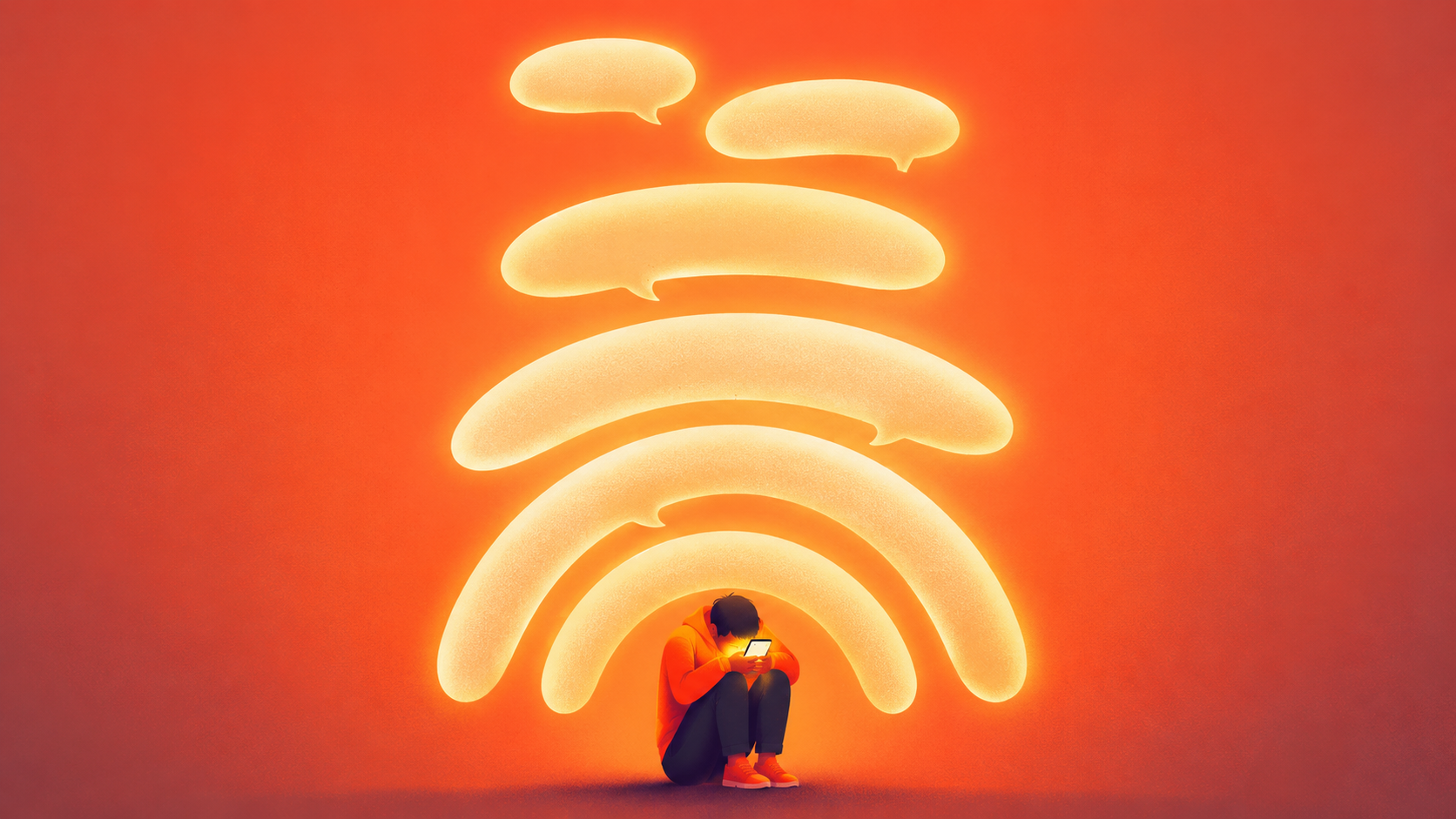
As more Indians turn to AI for mental health support, Dr Ketoki Mazumdar of FLAME University offers a caution: "We should be careful not to confuse efficiency with healing."
Where are you from, and why do you do what you do?
I'm Dr Ketoki Mazumdar, and right now I'm doing the interview from Finland, but I'm based out of Pune, where I work as an assistant professor at the Department of Psychological Sciences, FLAME University. I had my training in psychology from the Tata Institute of Social Sciences in Bombay, where I did my MPhil and my PhD, and then I was working there. After finishing, and while doing my PhD, I started getting trained in psychotherapy, and in different modalities of psychotherapy. Currently, my work sits at the intersection of gender and mental health, wherein I work extensively with women and the maternal population, looking at women's mental health, maternal mental health, postpartum distress, and sexual and reproductive transitions. So that's where I'm currently placed in terms of work. I'm also a certified couples and family therapist, which allows me to work across different stages of life and with different sets of people: couples who are planning to get married, couples who are married, and couples who are many, many years into marriage and require therapy. So I'm pretty much engaged with therapy as a therapist, and I also teach, and I'm a researcher, so I wear many hats. That's where I'm at.
Because you're actively involved in therapy, let's start with that. Has the meaning of therapy really changed? Because a few years back it had to be in person, or even when done online it was a 50-minute session with the therapist, so there was a sort of structure to it. But today, with these chatbots and AI mental health journals, there are multiple ways in which people are trying to access therapy. So do you think the meaning of therapy itself has changed, and are these online sessions, or the in-person sessions, really relevant in today's day and age?
I can relate to this question, especially because, like you said at the beginning of the conversation, therapy had to be in person. Therapy had to be for 50 minutes. It was more structured. There was more method to this madness, as I like to call it. But post-COVID, things changed a lot. Mental health became a household term. Trauma became a household term, stress became a household term, which could be interpreted both ways: it could be a boon or a bane. People became more aware that yes, people are getting affected, people need help, there is a need to seek help. So a lot of stigma around seeking help was also being spoken out loud. And that made therapists across the world sit up and learn the tricks of the trade, to come online, use Zoom, or use any other protected space that allowed them to continue working with their clients online. So I think that was a good development, if you might want to call it that, for therapists and for clients. And I think that shifted a lot of the ways in which therapy was looked at, and the ways therapy was approached. A lot of my clients have had social anxiety, anxiety of stepping out, and even clients from different parts of India who I would not have had the chance to collaborate and work with if it had been just in-person sessions. So yes, the online therapy space has definitely opened up the need, and has okayed the access to seeking help. But having said that, there is still a lot of work that needs to be done. Definitely, because in terms of confidentiality, in terms of using appropriate, secure spaces where you are conducting your sessions, how are you offering your sessions, where are you drawing the confidentiality? If you're doing it from your home, then how are you maintaining the confidentiality? Where are you storing your data? All of that also needs to be really taken into account. I also feel that opening up these spaces, yes, it has been beneficial, like I was saying, but also, how much are we actually allowing the marginalised communities, rural populations, older adults, or people from non-dominant linguistic and cultural backgrounds to actually access therapy? And for these people, options like ChatGPT or other chatbots have given them that space to access them.
Is there a risk of abuse when you're using tech as a platform to reach out to your patient?
Much like when we practise therapy in person, in in-person therapy sessions in clinics, we don't allow any intern to be the third person privy to the conversation, to the session, because of confidentiality. Because whatever is being discussed is of the highest, utmost confidential information. And it is our oath, it is our ethics, that we don't really disclose any of it unless there's a risk of harm. So when there is this third person, there is definitely that risk of abuse. The third person being a third AI party or third technical party, I don't know what to call it, but there is definitely that risk of abuse.
So do you think all the startups currently are sticking to these sorts of regulations? In India, do we have those kinds of strict regulations to ensure the privacy of someone accessing mental health care from a tech company?
I'm not too sure, because I haven't personally used any AI chatbot or any particular organisations or startups. But there is the GDPR regulation. Yeah, it's again largely followed in Europe. And in America, we have the HIPAA regulations. So that's why I think we have to be very careful: what chatbot are we using? How much access are we giving it to personal information? Of course, they will have access to all information, all the conversation. How and where is it being stored? That needs to be really thought of.
So when it comes to healthcare, even if it's robotic surgery, one of the main points that people discuss is, can a machine really replace a doctor when it comes to medicine? The same thing is applicable to mental health. So do you really think a machine can replace a therapist, or a psychiatrist or psychologist?
No, I don't think so. In my opinion, no. At least not fully, because of course a machine can simulate conversation, can offer a lot of psychoeducation, can offer a lot of immediate psychological first aid, if at all. But I think therapy, being a therapist myself, and being in therapy myself, involves a lot more than what a machine can offer. Therapy involves empathy, therapy involves ethical judgments, therapy involves relational understandings, cultural sensitivity, the ability to sit with human distress, human ambiguity, and suffering. I think all of this is part of what makes a good therapist, and I don't think a machine can really do any of this. Especially when we are working with trauma, grief, or complex emotional experiences that I do work with. My clients are not simply looking for answers an AI chatbot can offer. They're looking for connection, they're looking for understanding, they're looking for attunement. So all of these chatbots, or AI bots, may definitely act as support tools, for sure, in healthcare. But I don't think replacing therapists entirely is what should happen. And if the time comes when it is replaced, then mental health care would be just information exchange, rather than a humane process, which is what it is.
We have such limited infrastructure when it comes to mental health, especially if someone needs admission. It's a nightmare to find the right sort of facility. Some of them are so badly designed that it's almost like sending someone to jail, with those iron bars, and many are very poorly maintained compared to other hospitals in the same area. And to reach a quality institution like NIMHANS, you have to travel hundreds of kilometres, and even there the waiting times run into hours. So I wanted to understand, from someone on the inside, your perspective on the infrastructure in India. Is it changing now?
I think that's a very valid question, especially given the demand and supply, given the treatment gap that we have. So the last all-India survey on mental health was done in 2015-16. And whatever data we are quoting is from that particular survey. Look up the NMHS, the National Mental Health Survey 2015-16, and that itself has shown a huge treatment gap that exists in our country, given the number of people in need, and the very few trained professionals there to offer their help to such people. So of course there is this major issue, that there is a huge gap between mental health needs and the available services. There are high costs to it, long waiting times, like you said, and also, not to forget, the stigma around seeking help. So technology that way has gained importance, partly because traditional systems have not been able to meet the emotional distress that people are experiencing. AI tools offer immediate psychological first aid, and are thus being seen as something that can be scalable, affordable, and accessible alternatives. So yes, given the infrastructure, there is definitely a need to improve upon it. There's a lot of work that needs to be done. But the other question that we, as mental health practitioners, or whoever is a caregiver, or has been a caregiver and understands the mental health infrastructure, should ask is, why are people turning to machines for emotional support in the first place? And what does it say about our current infrastructure, healthcare systems, and the social structures around it? You can also look up the amount that is allocated in the budget towards mental health every year. That itself shows the seriousness with which it is being looked at.
But there are some problems for which the solution works, and certain things for which you can't use these tech solutions. Is there a demarcation like that?
I think it is a constantly evolving space. No technology works equally for everyone. And that's again where the humane part of therapy comes into the picture. Access to help, or even access to technology, depends on language, depends on literacy, depends on internet access, disability access, economic privilege, especially in our country, and cultural relevance also. Given the diversity that we have in our country, I think all of these really make a lot of sense. And many of the AI systems are still built around dominant Western assumptions and English-language datasets. Maybe they are getting constantly trained on these Western-centric assumptions and datasets. So, just hypothesising a situation: say a young person from a corner of Chhattisgarh is really looking for help and is saying, "I'm extremely anxious, I don't have a job, my parents are farmers and they are in debt. What do I do? I'm getting a lot of anxiety." Then this AI-assisted bot might ask them to look for a job, or, I don't know, offer solutions that might not be culturally relevant for this particular individual. Am I making sense here?
So again, we have to keep in mind that apps like Calm or Headspace are based on very culture-fair techniques of just taking care of yourself. And both of these are culture-free, very easy to access spaces that anyone can use and benefit from. But again, it is very much in the moment. So if a person has anxiety and has been experiencing anxiety for a long time, then of course it's not going to be of any help. Then that person needs to seek proper professional help. And that's again where the exclusivity of using these tech-based services really starts to show up.
Should we use it as an ally in mental health?
I think there is no all-or-none response to it. I think the goal should not be blind adoption or total rejection. Technology needs to be used very responsibly and should be approached critically and ethically. So the professionals who are aware of the pitfalls of using too many technology-based approaches should then be careful, should tread carefully, and should also spread the message. But the important question here is, does technology genuinely support human well-being, dignity, and care? I personally feel, and I've spoken to a lot of people who have used AI, that AI can absolutely be an ally, definitely. For example, in psychoeducation, accessibility, immediate access, like I was saying, administrative support, or reaching the people who are still at risk of getting stigmatised for seeking help. But professionals and students also need critical AI literacy. That's again where larger AI literacy needs to be brought into the picture. We definitely need to understand both the possibilities and the limitations, rather than assuming that new technology automatically means better care. It does not. To give my thoughts a quick closure: I think technology can definitely support mental health care, but we should be careful not to confuse efficiency with healing. Healing human vulnerability still requires human responsibility.
Got a story that Healthcare Executive should dig into? Shoot it over to arunima.rajan@hosmac.com—no PR fluff, just solid leads.