
After Harish Rana: Why India's Right To Die With Dignity Still stops at the ICU Door
By Arunima Rajan
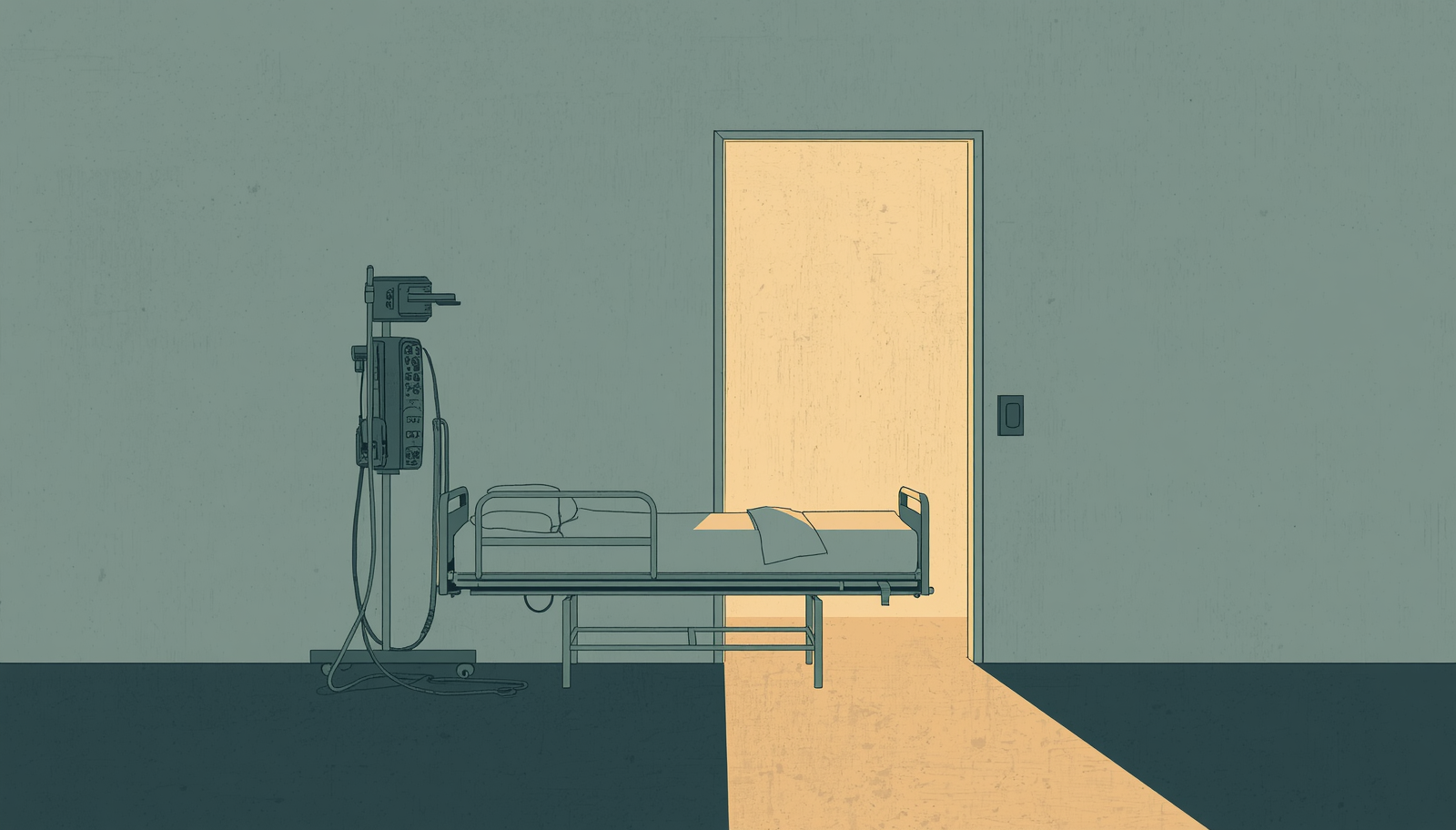
Three of India's leading voices on end-of-life care, Dr Roop Gursahani, Dr Smriti Khanna, and Prof. Sushma Bhatnagar, on what the Harish Rana judgment changes inside Indian hospitals, and what it cannot.
The Law is the Easier Part
In conversation with Dr Roop Gursahani, Consultant Neurologist, P.D. Hinduja Hospital, and member of the End of Life Care in India Taskforce (ELICIT)
In 2013, a nineteen-year-old college student fell from a fourth-floor balcony. His story, by any ordinary reckoning, should have ended then, in a hospital ward, with relatives and a death certificate and the slow arithmetic of grief. Instead, Harish Rana spent the next twelve years suspended between the living and the dead, kept breathing by tubes and machines long after the self that once inhabited his body had gone. His parents spent those years fighting, patiently and painfully, for permission to let him go. Not to kill him. Simply to stop.
On March 11 this year, a two-judge bench of the Supreme Court finally granted that permission. It ruled, for the first time, that artificial feeding is itself a form of life support, and that it may be withdrawn from a patient with no hope of recovery. The judgment braided together the court's earlier reasoning, the 2018 Common Cause verdict on patient autonomy, the 2023 revision that quietly stripped out the unworkable requirement of a judicial magistrate, and pulled it all down from the realm of principle into the far more difficult territory of the living, breathing hospital. For the first time, an Indian family had been told, in so many words, that they could let their child die.
And yet, as Dr Roop Gursahani will tell you, the law is now the easier part. A consultant neurologist at P.D. Hinduja Hospital in Mumbai and a member of the national End of Life Care in India Taskforce (ELICIT), Dr Gursahani has spent years arguing that the ruling most Indians need is not one a court can deliver. Hospitals still do not stock advance directive forms at their OPD counters. ICU physicians still flinch from the question of prognosis. Families still make life-and-death decisions with half the information they need. And the phrase "passive euthanasia", which the Harish Rana bench itself called obsolete and confusing, continues to do quiet damage to the conversation.
We spoke to Dr Gursahani about what the judgment changes, what it cannot, and why, in the end, the hardest work is cultural.
Let us begin with language, because you have been unusually firm about it. You have argued, consistently, that "passive euthanasia" is the wrong term, and that "withdrawal of life support" is both more accurate and less freighted. In a country where the media and even the judiciary have long used the two interchangeably, why does the word we use matter so much at the bedside?
Euthanasia is a term that originated about a hundred years ago. The Nazis began their gas chambers with disabled neurology and psychiatry patients, and they called it euthanasia. That was the slippery slope that led to the genocide of the Jews. There is no such term as passive euthanasia anywhere else in the world.
The Supreme Court, in its last judgment, clearly decried it. The bench observed: "However, there seems to be a general consensus on the fact that 'passive euthanasia' is an obsolete and a rather, confusing term. We are also of the view that imprecise terminology unnecessarily obscures the legal position. Therefore, to ensure clarity in this judgment, we will henceforth adopt the following definitions/phrases: a) 'Euthanasia' will refer strictly to active euthanasia, which remains impermissible. b) 'Withdrawing or Withholding of Medical Treatment' will replace the term 'passive euthanasia'." (See page 109 of the Harish Rana judgment.)
Harish Rana's parents find the loose use of the term very distressing, and they have requested us to please convey to the media that they did not perform euthanasia on their child. We have moved the Press Council to proscribe use of this term.
The March 11 judgment did something quite specific and, for many families, quite radical. It said that artificial feeding is itself a form of life support, and can be withdrawn when there is no realistic hope of recovery. That is a line many Indian hospitals have been unwilling to cross. Does this ruling give families genuine new ground to stand on, or does it still leave them at the mercy of whichever clinical team happens to be on duty?
It does create meaningful protection. Families who are aware can now push this issue. Palliative care doctors are always willing to support and guide.
In 2023, the court made advance directives substantially easier to register by removing the judicial magistrate requirement, which had effectively rendered the 2018 verdict inoperable. Three years on, has that unblocked things in practice, or is the real blockage now elsewhere, in hospital systems, in family culture, in our collective unwillingness to talk about dying?
Living wills are now quite easy to make. The barriers that remain in implementation are cultural and institutional.
You have mentioned institutional barriers before, and I want to push a little on what that actually looks like inside a hospital. Is it active resistance from administrators, or the quieter problem of there being no form, no counter, no one whose job it is to ask?
The institutional barriers are concrete. There is no availability of standardised forms at hospital OPD counters. There is no protocol for checking if someone has made an Advance Medical Directive, or if they would like to make one.
Hinduja runs a Living Will Clinic, which is still a rarity in India. What does it actually do on a given day, and what is the simplest version of it that another hospital could set up without a great deal of fuss?
The Living Will Clinic mainly serves as an educational and counselling service for someone who wants to make an AMD but does not know how to do it.
Let us turn to the families themselves. By the time a patient reaches the ICU, decisions are often being made under conditions that no one would describe as fair. How often, in your clinical experience, do families actually know what they are deciding? How often are they operating on partial information, or on hope that nobody has the heart to correct?
This varies from hospital to hospital. Hinduja Hospital prides itself on its transparency and the trust of our patients. The process of prognostication and communication is formalised through our palliative care department. Unfortunately, I am not so confident of any other major Mumbai hospital.
That is a striking thing to say on the record. Without naming names, what does a hospital that handles this poorly tend to look like from the inside, in its processes, its culture, the signals its leadership sends?
A cousin of mine with terminal malignancy developed kidney failure after her 4th chemotherapy regimen failed. Her oncologist who had been treating her for 2 years advised admission to the ICU for "better management". When my cousin asked the oncologist to her face: "Am I dying?", the doctor deflected the question and then made it clear that she had no further treatment to offer and she would not be involved any further. The ICU then team literally badgered my cousin's sisters to put her on the ventilator and start dialysis. When the family asked for palliative care, one of them said "So you are giving up on your sister?"! My cousin finally passed on after 10 days. I cannot imagine this happening in Hinduja. I do not need to spell out what this says about the processes and culture in that hospital but lay people may well be justified in believing that this is a place that focused on revenues above all else.
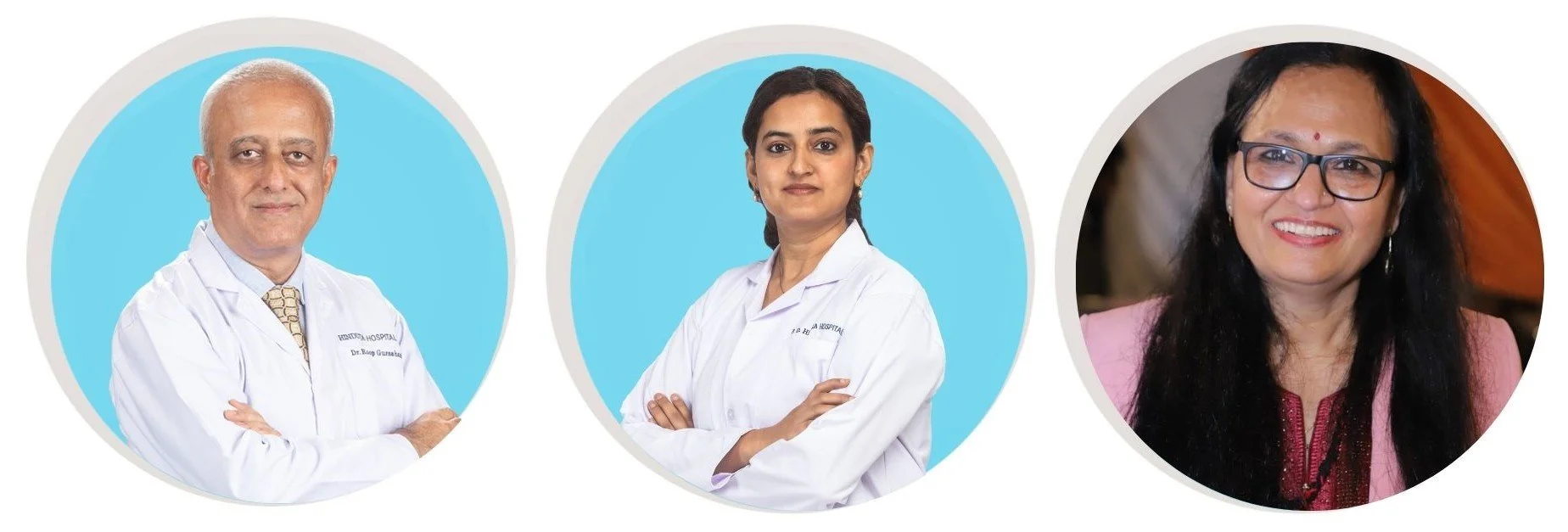
Dr. Roop Gursahani, Dr. Smriti Khanna and Dr. Sushma Bhatnagar
And what, in your view, would it take for a hospital administration to treat this as a priority rather than a peripheral issue, a matter of compassion rather than compliance?
Sorting this out needs buy-in from top management to make it a priority to make sure there clinicians are up to the mark. In Hinduja hospital, I believe (cannot document) that after the culture changed, complaints to management about patients who die in hospital have dropped significantly.
If you could ask the ICU physician in India to change one thing in the wake of this ruling, what would it be? And is there a global model, a curriculum, a framework, that you would hold up as the standard we should be measuring ourselves against?
Shift in ICU physicians: they need to learn Communication Skills formally, with testing and certification. As of now it is a voluntary process and most seniors cannot believe that they need to be taught these skills. The global models are RespectingChoices and Serious Illness Conversation Guide, both trademarked, patented and expensive.
Finally, a question about those of us in the media. Your Frontline piece makes the point that death literacy is as much a public responsibility as a medical one, and that journalists carry some of the weight. What does responsible coverage of end-of-life decisions look like to you? Where are we getting it wrong?
Avoid using the term "Passive euthanasia" to begin with. Understand the landscape of this decision making. Write more about this issue, the public is hungry for this information.
Inside India's First Living Will Clinic
The clinic Dr. Gursahani mentions in passing is the one he co-founded with Dr. Smriti Khanna, Consultant in Palliative Medicine at Hinduja Mahim. Launched in June 2025, it is India's first. We asked her what the law looks like on a Saturday morning, at a clinic counter.
What does a patient's first visit to India's first Living Will Clinic look like? Who typically walks in, what are they most afraid of, and what do they leave with?
People of all ages, irrespective of whether they have an illness or not, come into the Living Will Clinic. We have seen patients come in between the ages of 18-91. Most of them come in to make a Living Will because they do not want their family to bear the guilt of having to make difficult decisions. One other reason is not wanting to suffer through a prolonged, irreversible illness. Many people are afraid of being bedridden, or dependent for daily activities such as washing, bathing and cleaning. They leave from the Clinic with a draft of their Living Will. The decisions documented in the Living Will usually require some thinking over, and they are also encouraged to discuss these with their loved ones and/ or their family physician.
What is the most common misconception patients and families carry about advance directives or living wills when they first come to you?
One common misconception many people have is regarding how effective CPR (cardiopulmonary resuscitation) is in a terminal illness situation. Most of this misconception stems from the miraculous responses to CPR we have seen happen on television on in the movies. For a patient with terminal illness, CPR is usually ineffective. Another misconception that patients have is that if your heart fails, you have to get CPR. This is wrong- CPR was never meant to be given to everyone, and it cannot reverse the process of normal dying from organ failure or dementia.
The Supreme Court directed AIIMS to manage Harish Rana's withdrawal specifically through its palliative care department. What does that signal about the role palliative care must play in Indian hospitals going forward, and how ready are most hospitals for that responsibility?
It is the sad truth that most hospitals do not have a palliative care department. With this Supreme Court judgement, it is now quite clear that if you are not providing good supportive and palliative care services, you are deficient in patient care. A palliative care team improves patient satisfaction, reduces rates of discharge against medical advice, and makes sure that appropriate medical care is continued till the end of life. Most Indians are now dying from chronic diseases, and cancer rates are increasing. This makes the role of palliative care more important than ever, and patients are now also choosing hospitals that have palliative care services.
The Supreme Court directed the palliative care department at AIIMS to take care of Harish Rana at the end of life, because at the end of life a patient can have many symptoms. If a patient suffers, the family also suffers. A palliative care team is trained to manage these symptoms, so that there is no suffering at the end of life
What would you want a hospital CEO reading this story to do differently?
I want to give them 3 actionable items- start palliative care services, introduce a Living Will Clinic, and incorporate an end of life care policy within their hospital protocol. They all impact chronic illness management, and most of hospital admissions nowadays are for patients with chronic illness. It is also a way for the hospital to earn goodwill for the community it serves.
A Continuation of Medical Treatment
If Hinduja, in Mumbai, has built a clinic, AIIMS, in Delhi, has built a protocol. Prof. Sushma Bhatnagar designed it. Formerly Professor and Head of Palliative Medicine at AIIMS Delhi, now Principal Director of Palliative Medicine at Max Smart Super Speciality Hospital, she has, by her own count, explained the withdrawal of treatment to thousands of families.
I have explained to thousands of families about the withdrawal of treatment. I would call it a continuation of medical treatment. This is part of the medical treatment. We work very hard for diagnosis and treatment, and we should continue as long as it is working or giving some good outcome to the person. However, if we are 100% sure that the treatment is not working and the end is inevitable, then rather than continuing with various heroic measures, like putting patients on any kind of artificial support, which is just prolonging the life and suffering of the patient as well as the relatives, we always explain to them that this prolongation is not in the best interest of the patient. Most of the time relatives understand, and they don't go for it. There was no problem in our past treatment planning like this.
It is nothing new. We have been doing this for the last 30 years, and there was not a single time when there was a problem like this. Good care of a patient means we should work very hard so that the patient survives and does well. But we should always work on both the quantity and quality of life. Quantity of life matters, but quality matters a lot. When treatment is working well and we are giving good quality of life to the person, definitely, we should continue. But when quality of life starts suffering because of the treatment or the support, it should stop. If hospitals have a dedicated or integrated palliative care programme, which is structured and which people understand well, then this problem will never arise. We, in the palliative care department, have been working with such patients for many years, and have never had any problem. This case is a landmark, which gives a loud voice to the need for an integrated palliative care programme in the healthcare system all over India.
I anticipate that this judgement is an eye opener for everyone. It should have been done before, but it was not, and so they went to the Supreme Court and finally, we did it. This type of judgement is an eye opener for the medical fraternity all over the country: there is no need to keep on treating or supporting a person where we know that the end is inevitable and support is futile, to the extent that it starts affecting the quality of life and the physical and emotional well-being of loved ones. When such a condition arises, we are not going to hasten the end, but we will not prolong it either. We are not going to give any medication so that the patient ends fast, but we will not prolong life by supporting them with artificial ventilation, nutrition, and hydration.
With this judgement, this should come out immediately: every hospital should have an end of life care policy. Every hospital should have dedicated advanced medical directives and living will planning, so that all such patients, if they are conscious or in their senses, can provide an advanced medical directive and decide, "this is the way I want to end my life." This will only be possible when hospitals become aware of these concepts. This is a nice moment, and momentum has already picked up. Every hospital should start working on this: they should have a dedicated palliative care programme, a dedicated end of life care policy, and advanced medical directives and living will clinics.
I have set up an end of life care policy in AIIMS, Delhi, a four-step process. First, the primary physician recognises that the end is inevitable and whatever treatment we are giving is futile. Then he consults with one more doctor in the team, and if both of them agree that yes, we are unnecessarily prolonging the suffering and the treatment is futile, then we sit down with the relatives. We keep explaining and counselling them till the time they understand. Once they are on the same page as the doctors, we document everything and start end of life care. That means we are not going to desert this person, but we will continue the treatment which is supportive and gives comfort to the patient. For example, if the patient is having severe pain, then we give painkillers, or if other symptoms are there, then it is our responsibility to treat those symptoms and give them an end with dignity, without any symptom, so that the patient can be comfortable and happy till the end, and the relatives are also comfortable when they see good symptom management. We keep counselling them and give them realistic hope and honest information.
Got a story that Healthcare Executive should dig into? Shoot it over to arunima.rajan@hosmac.com—no PR fluff, just solid leads.